
Climate taz
World Climate Conference in Antalya: Australia's Prime Minister is keeping quiet about coal
Prime Minister Albanese boasts about the expansion of renewables at the COP. But he leaves out Australia's responsibility for climate change. more...
Deutsch (original) ·Auto-translated to English
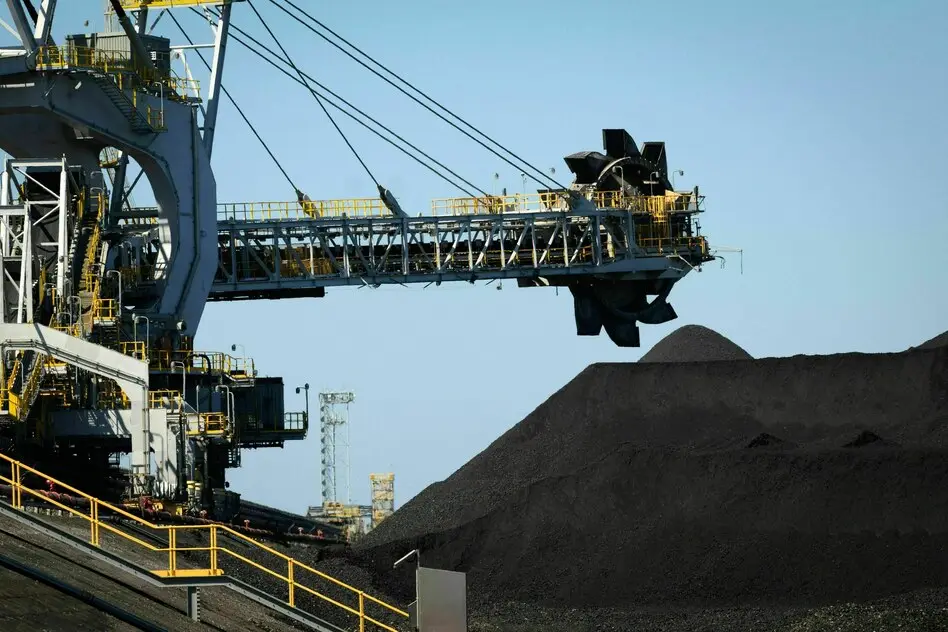
When Anthony Albanese addressed heads of state and government at the UN climate conference COP31 in Antalya, Turkey on Wednesday, he spoke of a “solemn responsibility” for governments to combat climate change. Australia is proud to be a leader in renewable energy, the Prime Minister said. However, he never once mentioned coal and natural gas.
The omission was all the more noticeable because shortly before, UN Secretary-General António Guterres had announced an unmistakable message on the same stage: Anyone who wants to achieve the internationally agreed goal of limiting global warming to 1.5 degrees must forego new coal projects. “Heads of state and government cannot simultaneously expand fossil fuel production and claim they are committed to the 1.5 degree target,” Guterres said. By 2035, coal-fired power generation must fall by at least 75 percent.
Albanese, on the other hand, pointed to his country's progress. Australia has doubled electricity production from renewable sources within six years. Around half of the electricity now comes from wind, solar and other renewable systems. Australia is also one of the world's leading markets for rooftop solar systems and home storage systems. Although these successes are also seen as significant by critics, they do not answer the question of what responsibility a country that continues to be one of the largest exporters of fossil fuels bears.
Albanese's omission is politically explosive. Australia is the second largest exporter of thermal coal and the world's largest supplier of coking coal for steel production. In addition, around a fifth of the liquefied natural gas (LNG) exported worldwide comes from Australia. Revenue from the raw materials business is an important economic factor; Entire regions and thousands of jobs depend on it.
Adam Bandt, former leader of the Green Party and now head of the Australian Conservation Foundation, accused Albanese of deliberately ignoring the UN Secretary-General's message. It was not just a missed opportunity, but a snub to Guterres. The renowned Australian climate scientist Bill Hare from Climate Analytics also called the silence “disturbing”. Since Albanese came to government in 2022, his government has approved 38 fossil energy projects.
Figures from the public broadcaster ABC show how big the discrepancy is between the domestic climate footprint and the export business. Emissions from burning Australian coal and gas abroad have almost doubled since 2005. Last year they achieved around 1.2 billion tons of CO₂. However, according to the rules of the Paris Climate Agreement, these emissions are attributed to the respective importing country and therefore do not appear in Australia's national climate balance.
The conflict is also a concern for science. More than 500 Australian academics called on the Albanese government in an open letter to stop approving new or expanded coal, oil and gas projects and to submit a binding exit plan. The government, on the other hand, refers to the individual assessment of such projects and to global energy needs. Energy Minister Chris Bowen argued to the Guardian Australia newspaper that other countries cannot give up fossil fuels overnight. You would have to bridge this transition period.
Australia and Turkey are now promoting a common goal in Antalya: by 2035, the share of electricity in global final energy consumption should increase from around a fifth today to 35 percent. This would be an important step towards the electrification of transport, industry and buildings. However, it does not solve the problem as long as new coal and gas deposits are developed at the same time.
This contradiction is difficult to accept, especially for the Pacific island states, which are particularly suffering from rising sea levels and extreme weather events. Albanese likes to invoke Australia's responsibility to its “Pacific family”. In Antalya it became clear how far apart political rhetoric and economic interests still are.