
Germany · taz · · 2h
Weimer colonizes colonial memory: the way he does it, he does it wrong
Deutsch (original) · Auto-translated to English
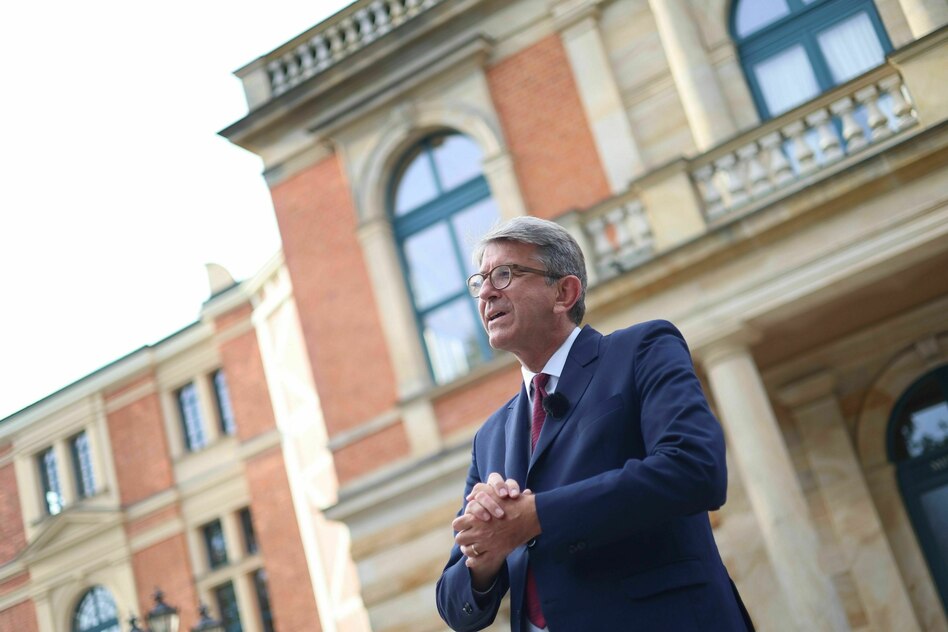
Bremen should therefore become the central memorial site for the crimes of German colonialism. On Monday, rather casually as part of a culture committee meeting, the non-party Minister of State for Culture Wolfram Weimer announced this: He apparently did not consider consultation with the victims' descendants, civil society decolonization actors, with the historical associations and remembrance institutes for his decision.
Even in Bremen people were caught off guard by the decision. And although the desire to build such a center there has long been reflected in left-green-red coalition agreements and even longer in green election programs, no one there is cheering.
“You can’t make a decision like this without the community,” says Ralph Saxe, deputy mayor and, not only in Bremen, has been one of the driving forces for social reappraisal of the crimes of colonialism for decades. It was only in August - on the anniversary of the genocide against the Herero and Nama - that his group reiterated the demand for a national memorial and a documentation center for this in Bremen and Bremerhaven: the author of the position paper was Saxe.
But the current decision from above is really “no reason to celebrate,” he says. There is a lot to be said for the state of Bremen as a location: “The Migration Museum in Bremerhaven conducts research on this topic.” In addition, the Hun speech was given there - with this the emperor initiated East Asian raids. In Bremen itself, the colossal brick statue of an elephant, erected near the main train station in 1932 by the revanchist right-wing extremist German Colonial Society, has been rededicated as a noticeable anti-colonial monument since the beginning of the century.
Inside, a crypt, events, concerts, lectures and sometimes exhibitions take place. In addition, the only memorial commemorating the genocide of the Nama and Herero on German soil was inaugurated in front of her in 2009 by then Namibian President Nangolo Mbumba. There, Afrodiasporic and colonialist initiatives, together with the Senate, university and educational institutions, hold commemorative events every year to mark the anniversary of the Battle of Waterberg.
“The thing started with us,” says Saxe. The Bremen merchant Adolf Lüderitz, together with Heinrich Vogelsang, fraudulently took over the land in southwest Africa in 1883, which was later declared a protected area by the Reich, called “German Southwest Africa” and “colonized” using brutal methods. “But there is also a lot to be said for Berlin.”
There, the so-called Congo Conference of 1884/85 divided the continent of Africa between the European powers. Crimes like the Maji-Maji War were planned and controlled from there; as a state crime of the Empire.
It is “necessary and overdue for a national memorial and remembrance site to finally be created,” emphasizes Saxe. It is therefore important that the actors in memory politics do not allow themselves to be divided. Weimer's decision, as much can already be said from the reactions from Berlin, has the exact opposite effect. It cannot be ruled out that this is exactly the main goal of the erratic decision.
Read the full story at the source
Source: taz