
Germany taz
What makes Nvidia so important: The hardware behind AI
AI chatbots in their current form would be unthinkable without Nvidia's chips. Germany also wants to be close to the US group. more...
Deutsch (original) ·Auto-translated to English
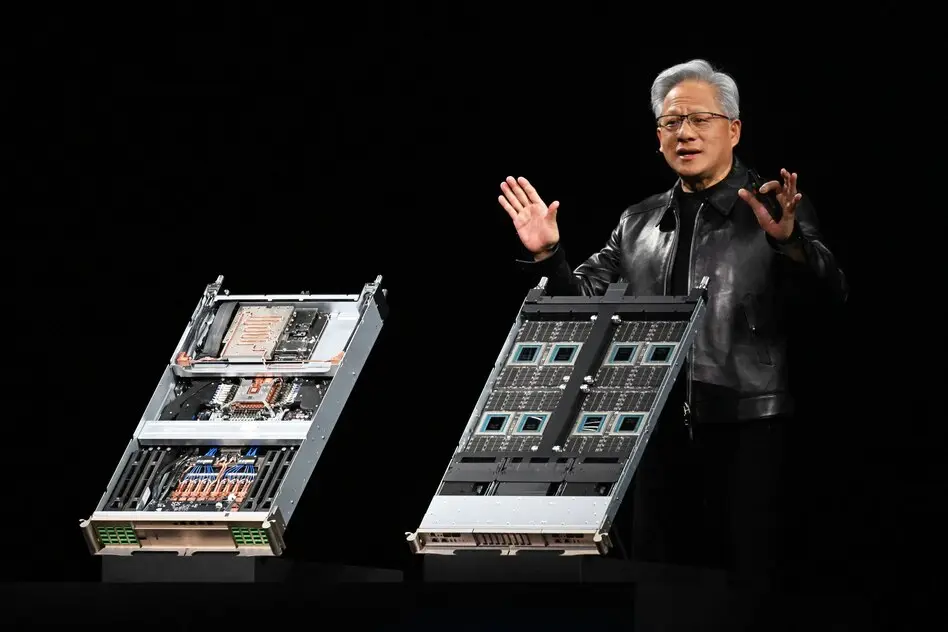
Only recently Germany got a bit of the big Nvidia hype. The company held its GTC in-house trade fair, which usually takes place in San José, California, in Berlin. Jensen Huang, co-founder and company boss, spoke and fans cheered him like a pop star. At the federal government's investor summit there was also some glamor for politicians: the economics and research ministries signed a declaration of intent with Nvidia to cooperate in the field of artificial intelligence.
Nvidia, founded in 1993, is the world's most important manufacturer of high-performance AI chips and one of the most highly valued listed companies. The current market value is around 4.5 trillion US dollars. Although Nvidia went public in 1999, it remained somewhat under the radar in public perception for a long time. The focus was more on the tech companies whose products customers come into direct contact with: Google, Amazon, Facebook (later as part of Meta), Apple, Alphabet, Microsoft.
Nvidia received a boost both in terms of economic importance and awareness with the popularity of large language models in the field of artificial intelligence. These models are the basis for AI chatbots like ChatGPT or Claude. And special high-performance chips are necessary for training the models. Nvidia is the market leader in the production of these chips; the list of business partners includes Anthropic, Google, Meta and Microsoft.
However, the fact that Nvidia is not only a supplier of chips - but also an investor in AI companies, for example Anthropic, and also a customer for AI services - is causing concern for the industry. In such closely interconnected constellations, even a controversial company decision, a bad investment or a change in the political framework can trigger slides throughout the entire industry.
According to industry observers, the recent price losses after the midterm elections in the USA could be a salutary course correction. If the valuations of AI companies are actually too high across the board and a bubble has arisen, gradual course corrections could prevent an abrupt burst.
And Germany? Experts see the recently agreed cooperation with Nvidia as fundamentally positive because it gives the local industry access to market-leading chip technology. At the same time, however, it harbors a risk of dependency: Such cooperation should not be confused with technological sovereignty, warned Patrick Glauner, Professor of Artificial Intelligence at the Deggendorf University of Technology, to the Science Media Center: “Europe must simultaneously strengthen its own providers of hardware, infrastructure and software.”