
World taz
Warning of US attacks: Khamenei threatens a “geographically unrestricted response”
Iran's Supreme Leader warns against an expansion of the war. Meanwhile, diplomatic efforts to prevent further escalation are in full swing. more...
Deutsch (original) ·Auto-translated to English
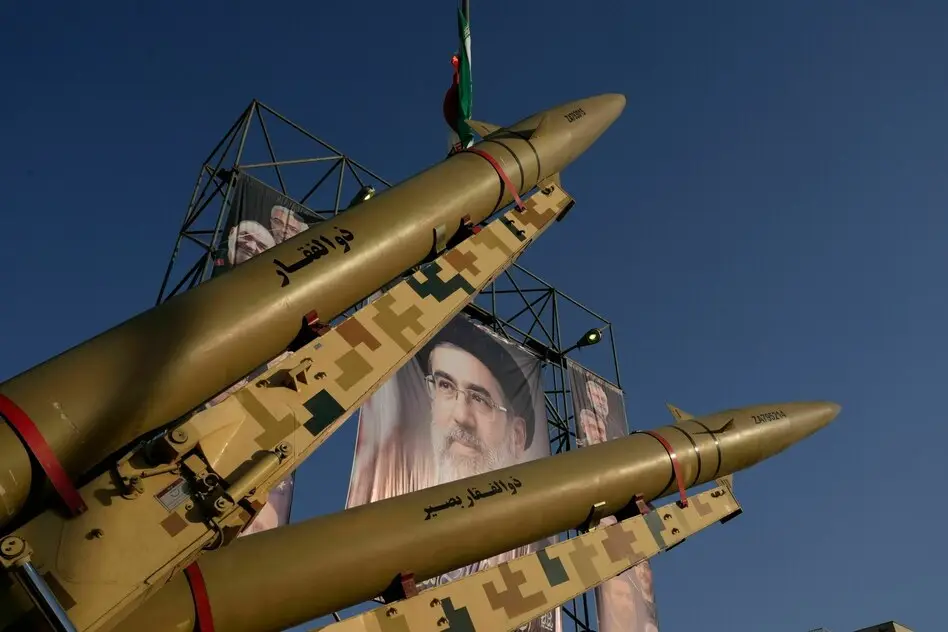
afp/ap/dpa/rtr | Iran's Supreme Leader Moschtaba Khamenei has warned the US of new attacks on his country and threatened retaliation. “Any kind of threat must be followed by an immediate, effective and geographically unrestricted response,” Khamenei told senior Iranian military commanders, according to a statement released on Saturday. If “the enemy” attacks Iran and provokes new conflicts, Tehran will “determine the time and conditions for their end.”
The Iranian army also warned of the consequences of new US attacks. If US President Donald Trump "departs again for regional adventures, the flames of war will undoubtedly cover a much larger geographical area," army spokesman Mohammed Akraminia said on the online service
The Iran War began at the end of February with attacks by the USA and Israel on Iran. After the collapse of an agreement between Washington and Tehran in June, diplomatic efforts stalled. There had recently been speculation about possible new US attacks on Iran after the US congressional elections next Tuesday.
Diplomatic efforts to prevent further escalation are currently in full swing. A Qatari delegation arrived in Tehran on Friday for talks with senior Iranian officials. Qatar mediates between the warring parties. In addition, according to a US media report, US Vice President JD Vance contacted Iran's head of the Supreme National Security Council. According to the Wall Street Journal, the letter is more about a “possible negotiating framework” than the details of a peace proposal. Tehran confirmed receipt of the letter but has not yet announced a response.
Modshtaba Khamenei is the successor to his father, Ayatollah Ali Khamenei, who had headed the Islamic Republic since 1989 and was killed on February 28 on the first day of the US-Israeli war against Iran. Modschtaba Khamenei has not appeared in public since then. No audio or video recordings of him have been published yet.
According to Foreign Minister Abbas Araghchi, the Iranian leadership is currently not planning to meet with US representatives. Araghchi told Arabic broadcaster Al Jazeera that there was no need for this under the current circumstances. Iran's conditions are clear and consultations with mediators are ongoing. Araghchi confirmed that the leadership in Tehran had reviewed a letter from US Vice President JD Vance. He described the attempt to open the door to dialogue and broader understanding as a positive step. But if Washington's goal is to sow discord, this would be another mistake.
According to the Wall Street Journal, Vance is exploring options for negotiations in a letter to Mohsen Resai, Secretary General of the Iranian Security Council. According to the newspaper, the US government wants to examine whether planned military strikes against Iran can be averted diplomatically. The US portal Axios reported, citing a government official, that Vance is making the inclusion of Iran's nuclear program a condition for negotiations.
Egyptian Foreign Minister Badr Abdelatty warns of massive consequences of a new escalation in the war between the USA and Iran. A continuation of the fighting would be even more destructive and have far-reaching consequences, he explained at a security conference in Bahrain. “We have to learn lessons from the past,” said Abdelatty at the IISS Manama Dialogue.
Mediator Pakistan, however, expressed cautious optimism about the prospects of success of the latest efforts to find a diplomatic solution. If there were no positive signals, Pakistan's chief negotiator Asim Munir would not have traveled to Tehran twice in October, a military spokesman said. The talks with the Iranian leadership are a good sign. One is always “cautiously optimistic”. However, there are still “influential disruptive forces and opponents” who believe that the conflict benefits them. The spokesman did not say who he meant. Army chief Munir was last in Tehran on Monday accompanied by representatives from Saudi Arabia and Turkey. Qatar is also trying to de-escalate and recently presented a new proposal to resolve the conflict
According to Iranian information, the USA attacked two fishing boats near the island of Keshm. A fisherman was injured, Iranian state broadcaster IRIB reported, citing a representative from Hormosgan province. There was initially no confirmation from the USA.
Iran's Foreign Minister Abbas Araghchi has threatened massive military strikes and damages of well over $100 billion in the event of a new war. Araghtschi responded on Platform X to statements made by Chancellor Friedrich Merz (CDU) during his visit to South Korea. According to Merz, Germany has a strong economic interest in ending the Iran conflict as quickly as possible. The increase in energy prices cost Europe alone over 100 billion euros. Araghchi said on Platform Red lines were a thing of the past.
According to Iranian sources, another supertanker hit a sea mine in the Strait of Hormuz and caught fire after an explosion. The ship with more than two million barrels of oil on board was traveling on an unauthorized route, state media reported on Friday, citing the Revolutionary Guard. The crew abandoned the burning tanker at the entrance to the strait. The name of the ship was not disclosed.
State media also reported fires on three tankers that also hit mines. The ships switched off their navigation and tracking systems and tried to leave the Persian Gulf via unauthorized routes with the support of the US military. They ignored repeated radio warnings. Iran did not provide further information about the tankers and their crews.
The British Navy's Maritime Trade Authority (UKMTO) reported that a small boat planted two explosive devices on the hull of a tanker traveling about 46 kilometers northeast of Khasab, Oman. The explosions caused a fire in the engine room and made the ship temporarily unable to maneuver. The fire has now been extinguished and the ship continues its journey. The crew was safe and the environment was not damaged. The UKMTO did not say who was responsible for the attack. It also remained unclear whether the incident was related to the fires reported by Iran.
Oman reported that a Panamanian-flagged tanker was attacked in the Strait of Hormuz and caught fire about three kilometers off the coast of Musandam governorate. The Omani Center for Maritime Safety said 25 crew members had been brought to safety. It was unclear whether the incident was related to the fires reported by the Iranian and British sides.
Musandam is located on the southern coast of the Strait of Hormuz. Iran virtually closed the strait, through which about a fifth of the world's crude oil is shipped during peacetime, after the Israeli-American attacks began in late February. He now claims control of passages and rejects a route through Omani waters. Iran has repeatedly warned ships not to transit the strait without Tehran's permission. He has claimed responsibility for attacking ships that do so anyway.