
Germany · taz · · 2h
Migratory Species: The Dangerous Journeys of Piping Plovers and Pied Flycatchers
Deutsch (original) · Auto-translated to English
Cranes, martins and pied flycatchers are on the shortlist for the vote for Bird of the Year by the Nature Conservation Association Nabu. But they have even more in common: they are migratory birds. The pied flycatcher, a small, black, brown and white songbird, flies to its winter quarters in tropical Africa. He crosses the Sahara in two and a half days without interruption. It only returns late in spring - and because it comes earlier due to global warming, its nesting places are often occupied by birds such as titmice, which spend the winter here.
The Pied Flycatcher is having a hard time, and not just him. According to the “State of the World’s Birds” report from the umbrella organization BirdLife International, 45 percent of the populations of all migratory bird species are declining, and one in nine is threatened with extinction. For seabirds it is even one in three. The report is published every four years and was recently presented in Nairobi. In addition to 120 other nature conservation organizations from all over the world, Nabu was also there as a German representative.
The report sees the greatest threat as climate change, the intensification of agriculture and forestry and the loss of land due to development. “Migratory birds in particular can be affected by the loss of territories,” said Vera Brust from Nabu. On the train itself, the animals are exposed to adverse weather conditions and predators. That has always been the case, but today they are also plagued by road traffic, hunting, high-voltage lines, glass facades and wind turbines.
There are more than 2,200 species of migratory birds worldwide. Most migratory birds move from north to south in autumn. Germany plays a role in three ways: as a transit country, as a starting point for bird migrations that move south, and also as a wintering area for bird species that have spent the summer further north. Around 150 species of migratory birds breed in Germany, and 300 rest or overwinter here. It is particularly important to protect habitats like the Wadden Sea: “Twice a year it becomes the hub of bird migration for several million resting wading birds,” said Brust.
For example, seabirds, marine birds and shorebirds die from plastic waste that they mistakenly believe to be food. Over a million seabirds also die as a result of bycatch in the fishing industry. Another million waterbirds are killed every year in Europe by poisoning with lead-containing ammunition residues, which end up on the ground as waste products from hunting birds and which the animals mistake for food.
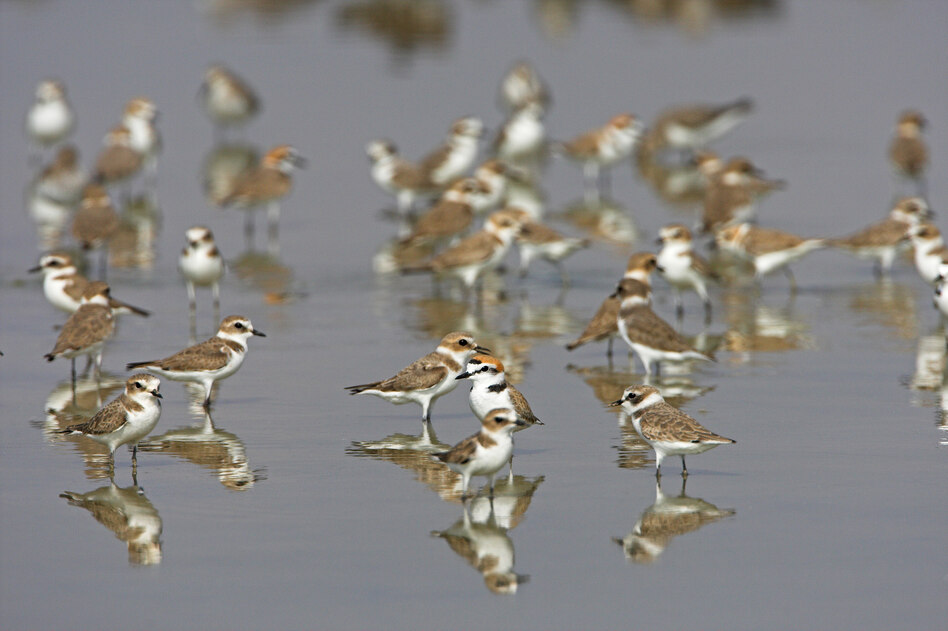
The Michael Otto Institute (MOIN) at Nabu is providing initial solutions: research into the endangered Kentish plover has led to the design of a national species assistance program for beach-nesting birds. The program is funded by the Federal Agency for Nature Conservation with over one million euros and runs until February 2027. In addition to the ringed plover, the ringed plover and the little tern are also among the species examined.
The aim of the project is to specifically protect resting and moulting areas in the Wadden Sea. Moulting places are places where birds retreat to moult. While they change their plumage, the birds are unable to fly for several weeks. They need peace and quiet, seek protection from predators in the reeds and need a food-rich environment because they have less energy available.
To protect the beach nesters, so-called “beach islands” are being set up, said Brust. Electric fences are also being tested to keep rats, cats and dogs away from eggs and young animals. According to Brust, one of the most important wintering areas for the piping plovers is the Saloum Delta in Senegal. Extensive investigations into the habitats used and threats on site are currently taking place there in collaboration with Senegalese actors.
“In order to protect migratory birds all year round, their summer and winter locations and their migration routes must be taken into account,” said Brust. International cooperation must take place with local partners. “They know the circumstances best and can carry out appropriate measures and campaigns on site,” said Brust.
The election of bird of the year, for example, is intended to draw attention to migratory birds in this country. You can vote until October 15th, and the nationwide Birdwatch weekend will take place on the weekend of the third and fourth October at the peak of bird migration. However, the pied flycatchers have already been on their way to Africa for a long time - they are probably resting somewhere in Spain.
Read the full story at the source
Source: taz