
World · taz · · 51m
Forest fires in Europe: Dry food for the fire
Deutsch (original) · Auto-translated to English
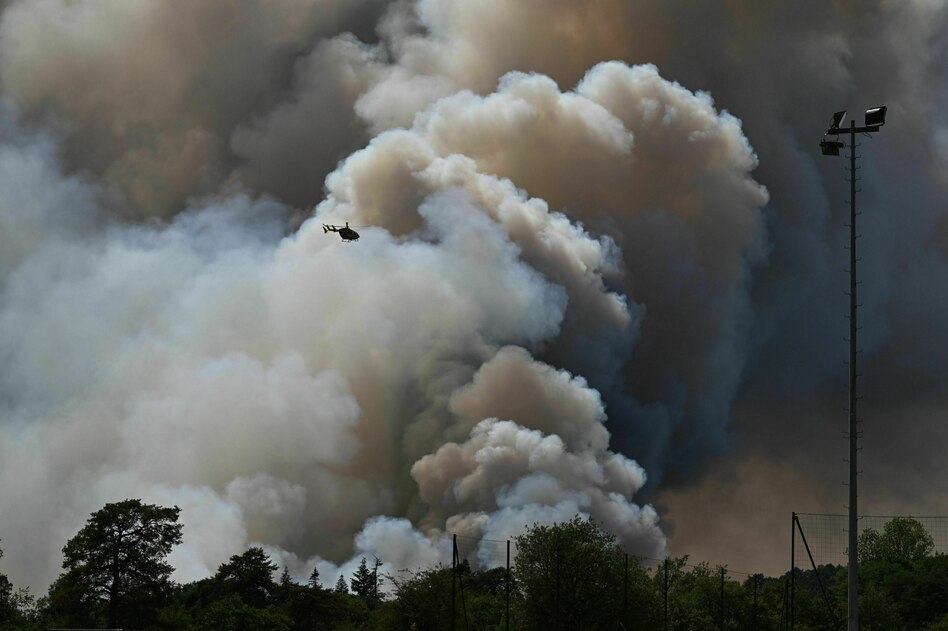
The ground is no longer smoldering, and yet after this summer many things are no longer as they were. In France, the Gironde department with its capital Bordeaux, in the southwest of the country, was particularly affected by the fires. Around 37,626 hectares of forest burned there this summer alone, an area that corresponds to around three quarters of Lake Constance. The department has never lost so much area to fire since satellite evaluations began by Effis, the European forest fire information system. Almost the entire area burned in July. What exactly was going on?
Pyrocumulonimbus was, among other things, to blame. Not only is the word a monster, so is the cloud that it describes. A pyrocumulonimbus is an extremely high thundercloud that can form from pyrocumulus clouds when large fires and unstable conditions in the atmosphere collide. Such clouds are known from areas such as Australia and the USA. It was first verifiably spotted in France in July 2026. The cloud formation is feared because it creates its own weather: Pyrocumulonimbus causes strong gusts of wind close to the ground that fan the fire again and again, making extinguishing work almost impossible. “You can't get it under control,” says meteorologist Francesca Di Giuseppe, who works as a senior scientist at the European Center for Medium-Range Weather Forecasts in Reading, UK. If extinguishing operations are impossible, the only option left for fire departments in the affected areas is to contain the fire and slow its spread until the winds decrease. Another problem is that such a giant thundercloud can use lightning to ignite other small fires outside of the actual source of the fire.
July was devastating, and not just in France. While the flames raged around Bordeaux, large forest fires also spread in various parts of the country in Spain. According to Effis, a total of around 677,000 hectares have burned in Europe in 2026 - this corresponds to an area that is around twice as large as the island of Mallorca. Compared to the record year 2025, in which more than 1 million hectares of land were burned, 2026 is well above the average value, but at least does not set a new record in Europe as a whole.
Nevertheless, it is worth taking a look at France and Spain. In France, more than 107,000 hectares of forest burned across the country by September 22, 2026, a sad all-time record for the Grande Nation. In Spain, where historically a larger area burns per year than in neighboring France, around 311,000 hectares of burned area were recorded in 2026, around 90,000 hectares less than in the record year of 2025. However, this is not a reason to breathe a sigh of relief: this summer the forest fires have also reached regions that were less affected in previous years, such as Belgium. The fire hit the Hohes Venn nature reserve, not far from the German border. According to Effis data, more than 3,100 hectares of forest burned there, more area than ever before in Belgium in one year.
The emergency services in France and Spain had to fight huge wildfires. They also faced another challenge: the fires broke out in different regions and in both countries almost simultaneously. Normally, in individual fires, firefighters from other parts of the country or neighboring countries can come to help. However, if there is a fire in different places at the same time, this is hardly possible and the capacities of the emergency services will quickly be exhausted. One reason for this simultaneity of fires, as Di Giuseppe calls them, is climate change, as various attribution studies have already shown. The general rise in temperatures was exacerbated by the weather at the beginning of the year. “Years with extreme forest fires often have a particularly wet spring,” says Di Giuseppe. That's exactly what happened in France and Spain this year. It sounds absurd, but it is precisely the moisture that later becomes a problem: the vegetation greens, blooms and sprouts happily before it dries up in the summer - and provides an ideal breeding ground for the fire. Di Giuseppe calls this “fuel continuity”, which in German means “fuel supply”.
The wet spring was followed by several heat waves in the summer of 2026, which particularly affected France and Spain and resulted in the previously well-thriving vegetation suddenly being confronted with an acute lack of water and drying out - you can imagine it like firelighters. The heat waves affected France and Spain so extensively that there were, in the worst sense, the best conditions for forest fires across the country.
But a high risk of forest fires does not necessarily have to be accompanied by severe forest fires. Even in such a highly dangerous situation, a trigger is still needed. “In Europe, 90 percent of fires are started by people, although not always intentionally,” says Di Giuseppe. It doesn't always have to be arson - sparks from power lines or agricultural machinery can also ignite the parched landscape.
However, the fires in France this summer had another special feature that Di Giuseppe points out. “The fires are occurring more and more at the transition from settlements to nature,” she says. In doing so, they increasingly threatened villages and cities. In the French department of Gironde alone, more than 200,000 people were temporarily evacuated from their homes in July due to the danger posed by huge fires. "Settlements are spreading more and more into the wilderness. This means that people have much more contact with biomass that can burn," she says.
Di Giuseppe calls for a holistic approach to European politics that “prevents fires before they even start.” The prevention of forest fires must be thought of more globally - which brings us back to measures against climate change. Until these take effect, fire departments and politicians in Europe must expect that the forest will burn in many places at the same time, as this year. And find a way to deal with it.
Read the full story at the source
Source: taz