
World taz
Election campaign in the US state of Michigan: Abdul El-Sayed on the trail of Barack Obama
In the workers' state of Michigan, of all places, the Democrats are relying on a young left-wing Muslim for the Senate election. It's a risky strategy. more...
Deutsch (original) ·Auto-translated to English
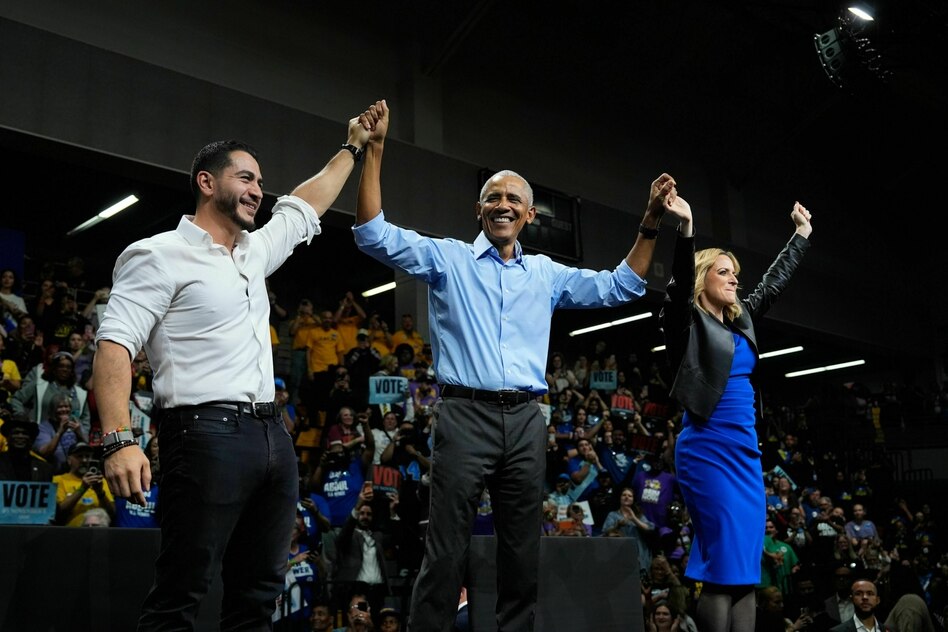
To the sounds of Tupac Shakur's “Changes,” Abdul El-Sayed walks into the packed auditorium of Cass Technical High School in Detroit. Right at the start of the rally on this sunny Saturday, the 41-year-old US Democratic candidate for the state of Michigan threw aside his dark jacket and rolled up his shirt sleeves. “Money out of politics, money in your pockets, Medicare for all” – he chants his slogan along with the cheering crowd.
“It shouldn’t be this hard to afford a second bag of groceries, fill the gas tank, pay your rent or mortgage, or see a doctor in the richest and most powerful country in the history of the world,” El-Sayed said. “And it shouldn’t be so hard to pay your taxes and know that they’re being spent on you and your children and not on dropping bombs on other people and their children.”
When Abdul El-Sayed won the US Democratic primary for the Senate election in Michigan at the beginning of August, a murmur went through the party establishment. It was long believed that in the workers' state, the heart of the auto industry, which voted for Donald Trump twice, the Democrats could only win with conservative candidates.
But El-Sayed, born in a suburb of Michigan's largest city Detroit to Egyptian parents, was able to score points with his sharp opposition to Trump, his unpopular war in Iran and the associated high gasoline prices. The 41-year-old doctor with degrees from Oxford and Columbia, who has headed the health departments in Detroit and Wayne County, wants to expand the statutory health insurance Medicare, which has so far only been available to seniors and people with disabilities, to all Americans.
As a swing state, Michigan is particularly important for the outcome of the US midterms. If El-Sayed wins the Senate election on November 3rd, he would be the first Muslim senator in US history - and along with Democrat Elissa Slotkin, Michigan would then have a Jewish woman and a Muslim man in the Senate.
“I love the guy,” cameraman Abbas says of El-Sayed. The 23-year-old stands in front of his SUV in the parking lot of the Islamic Center of America in Dearborn, the largest mosque in the USA. Behind him, a golden dome with a crescent moon and two minarets rises into the blue sky. The American flag flies in front of it. "Gasoline prices are really high right now, groceries are expensive. If he could lower the prices, I think that would be great."
The fact that El-Sayed is a Muslim like him does not play a special role for Abbas. Michigan is the state with the largest Arab minority in the USA. In Dearborn, every second person is Muslim. In 2019, Rashida Tlaib, a daughter of Palestinian parents, was elected here as one of the first two female Muslim US congressmen.
Abdul El-Sayed is offensive about his origins. He can talk well, appears confident and always has a joke on his lips. Unlike most US politicians, he does not accept direct donations from business, but instead relies on many small donations. He reminds me a bit of New York Mayor Zohran Mamdani. But he seems to be less successful in creating a real feeling of togetherness.
Black voters play an important role in Michigan. About three-quarters of Detroit's population is black. Even in smaller cities like Flint, the birthplace of the automobile giant General Motors, African Americans make up the majority. But El-Sayed rarely calls them by name. He talks about “these communities” or “those people.” Even in the demands for equal treatment and anti-racism on his campaign website, black people are hardly mentioned directly.
Instead, the Middle East conflict appears to be becoming a crucial arena in the election campaign. El-Sayed sharply criticizes Israel's actions in Gaza and wants to stop arms deliveries to the US ally. These positions have earned him a lot of sympathy in left-wing circles. But they also provide a target for attack.
A small group of demonstrators with US flags gathered before the rally in Detroit. “Fuck Palestine,” a man wearing mirrored sunglasses and a bulletproof vest shouts repeatedly. “Fuck you Muslims, go home,” another shouts over a microphone.
El-Sayed's contacts with anti-Zionist streamer Hasan Piker and his statement that the USA “deserved” September 11th caused controversy. El-Sayed's Republican opponent in the race for the Senate seat, former FBI agent and multimillionaire Mike Rogers, misses no opportunity to bring the Democrat closer to terrorists and the Islamist Muslim Brotherhood. The Israel lobbying organization AIPAC (American Israel Public Affairs Committee) invested an unprecedented $30 million in the primary campaign of Haley Stevens, who lost to El-Sayed in the Democratic primary.
President Trump himself also repeatedly called El-Sayed a jihadist and joked about his middle name: Mohamed. The background is an open letter to former Egyptian President Mohamed Morsi from the Muslim Brotherhood, which El-Sayed signed as a student in 2012. In addition, his mother, with whom he did not grow up, worked in the past for an NGO that has now been classified as terrorist in the USA.
Such accusations entangle the population. If you ask people on the streets of Detroit or Flint, in addition to a lot of support for El-Sayed, you will always hear that they have heard “bad things” about the candidate.
El-Sayed's lead in the polls, at times a whopping seven percentage points, has recently shrunk. On this penultimate weekend before the election, Team Abdul pulls another ace up its sleeve - former President Barack Obama.
El-Sayed had repeatedly criticized Obama in the past, including for his drone attacks on Pakistan and Yemen. At the rally in Detroit, however, both signaled unity. Obama speaks at length about corruption, about Donald Trump enriching himself as president, and about how average Americans can no longer afford houses and health insurance.
“Whenever a movement emerges that challenges this broken system, the people who benefit from the status quo will say and do everything to stop it,” shouts the ex-president. “They will use lies, they will use fear and sometimes they will even use your name.” He knows it all too well himself. “It didn’t work for me, it didn’t work in Michigan, and it won’t work for Abdul either!” The crowd chants, “Abdul, Abdul, Abdul!”
The research was made possible by a Daniel Haufler scholarship from the taz panter foundation.