
Germany · taz · · 3h
Elections in Bosnia and Herzegovina: Between exhaustion and the fight against electoral fraud
Deutsch (original) · Auto-translated to English
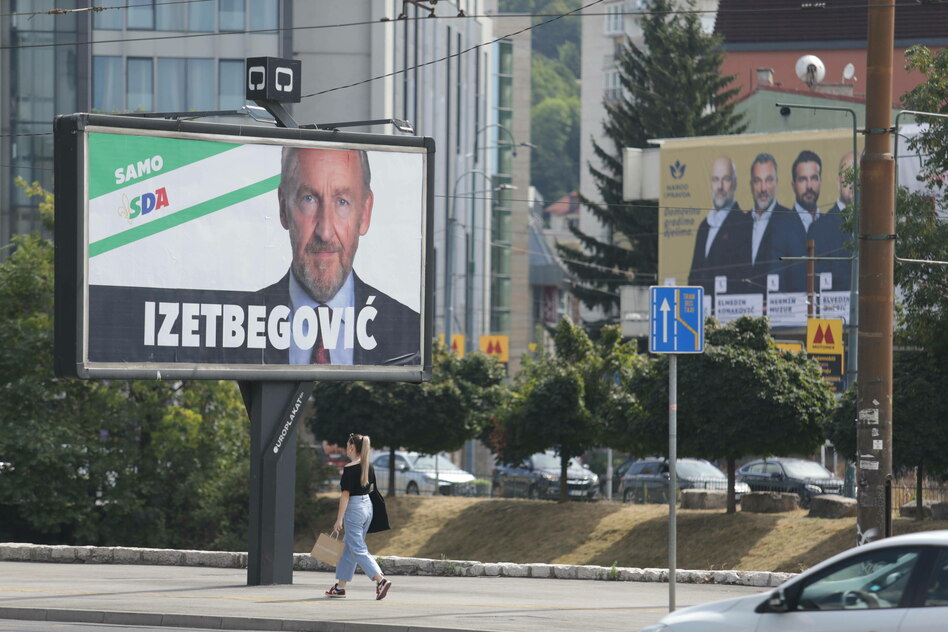
They hang everywhere in the streets of Sarajevo, capital of Bosnia and Herzegovina: huge billboards with the faces of familiar politicians looking out at the citizens. As the country heads toward its 10th general election since the 1995 Dayton Peace Accords next Sunday, slogans such as “civic state,” “building the homeland” and “living free” promise profound change.
But passers-by have completely different concerns. You want to get home quickly before the tap runs dry. Constant shutdowns – caused by a dry summer and an outdated, leaky pipe network – are part of everyday life. Recently, authorities hastily opened a new tram route - the first in decades - to demonstrate tangible progress. The country has been a candidate for EU membership since 2022.
"For the first time, I don't know who to vote for. The candidates are all the same. I'm not sure if I'll even vote," says 38-year-old Kenan, a Sarajevo resident. His indifference reflects the prevailing mood in the capital, with real political choice remaining as limited as ever.
In the cantons of the Federation of Bosnia and Herzegovina (FbiH) - one of the two entities of the state - and at the national level, a coalition called the "Troika" of social liberals, centrists and conservatives brought down the dominant, center-right Bosniak Democratic Action Party (SDA) in the last legislative period.
The alliance took advantage of the population's exhaustion by promising judicial reforms, the depoliticization of public enterprises and economic growth. However, the Troika was unable to meet the people's high expectations - a circumstance that the SDA is now taking advantage of in the election campaign. Power-sharing at the state level requires that election winners in the federation govern with their counterparts from Republika Srpska (RS).
To form a government, the Troika entered into an alliance with ex-RS President Milorad Dodik's nationalist SNSD - a move that critics had rightly warned against. The term was marked by persistent political paralysis, which culminated in a constitutional crisis in 2025. Dodik was legally convicted and removed from office for violating the decisions of the High Representative of the international community.
The SDA built its campaign for a return to power on criticism of the Troika during the crisis. Now it presents itself as the only force capable of defending national sovereignty. The SDA is expected to form a government in most cantons, the federation and at the national level with the Croatian Democratic Union (HDZ) and a partner from Republika Srpska (RS).
For the three-person state presidency, both the Troika and the SDA have nominated Bosniak candidates - Denis Bećirović and Bakir Izetbegović. A close race is expected here. The election also revives decades-long disputes over the Croatian seat in the state presidency. For years, the HDZ has been calling for a change in electoral law, arguing that the Croatian member of the presidium is determined by a majority of Bosniaks and not by “legitimate” Croatian voters.
However, the solution proposed by the HDZ amounts to further ethnic division of the state and the introduction of a purely Croatian constituency. This is unacceptable for pro-Bosnian parties. Since outgoing incumbent Željko Komšić is not allowed to run for a third term, his party – the left-wing Democratic Front – nominated another Croatian: Slaven Kovačević.
But Kovačević lacks the charisma of Komšić, who enjoys great popularity among left-leaning, pro-Bosnian voters. This opens up opportunities for HDZ candidate Darijana Filipović and makes the race for the Croatian seat unpredictable.
In the RS, the crisis triggered by Dodik apparently did not shake the SNSD. Although Dodik is not allowed to hold political office, he remains the dominant political figure there. The opposition, which was also nationalist, campaigned against corruption and crime in the government.
The outcome of the race for the RS parliament, the post of president of the Republika Srpska and the Serbian seat in the state presidency is uncertain, although the SNSD is still considered the favorite. As the pro-Bosnian blocs in the federation compete to prove that they will avoid an alliance with the SNSD, it remains to be seen whether the Serbian opposition can win enough votes to join the coalition at the national level.
For the first time, new technologies are being used in these elections to prevent voter fraud. All voters must register at the polling station with ID and fingerprint and scan their ballot papers themselves. Voter turnout has so far always been between 50 and 55 percent. However, since many voters currently have the feeling that every power constellation has already disappointed them, the polling stations are likely to be even emptier next Sunday.
Read the full story at the source
Source: taz