
Politics · taz · · 1h
Election in Mecklenburg-Western Pomerania: What if culture runs out of steam?
Deutsch (original) · Auto-translated to English
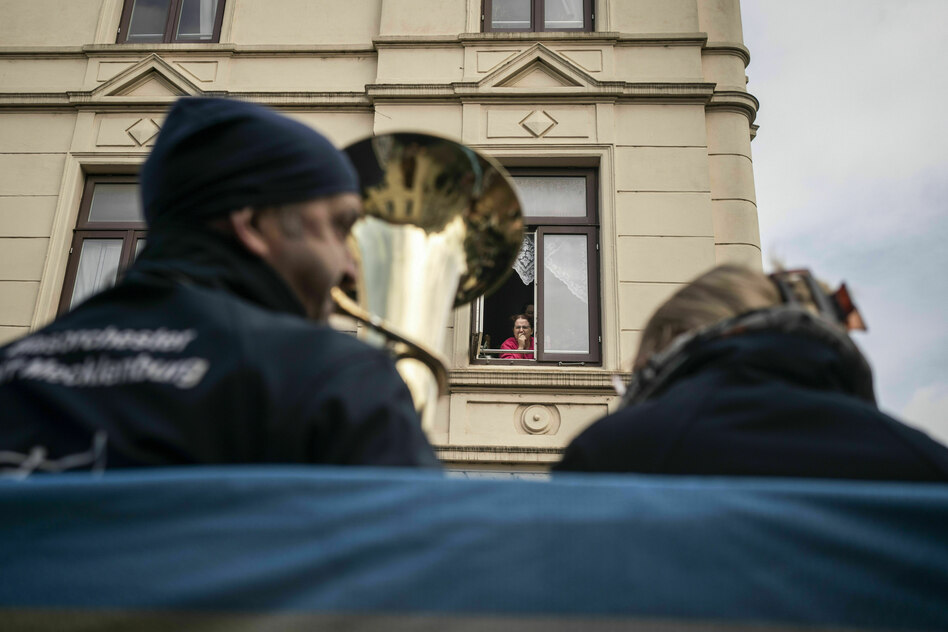
A converted trailer drives from place to place in the Mecklenburg Lake District and folds up into a stage: the KulturMobil from simsalArt e. V. It is exactly the image that comes to mind when we talk about culture in Mecklenburg-Western Pomerania - lone fighters in almost deserted villages who heroically create meeting places and are often exposed to hostility from the right.
Born 46 years ago in Rostock, she has been the program manager at the Literaturhaus there since 2016.
The image has its justification. But it distracts from the real problem. Because what emerged in Mecklenburg-Western Pomerania is more than a handful of heroic individuals. The country has created its own specialist departments - for socioculture, for cultural education, for literature, for libraries - and the fact that they exist at all shows how much has changed in the past legislative periods. Awareness of the importance of culture in rural areas as well as in small towns and large cities has grown, including among the governing parties and in the administration. In other words, something has been built that can be lost.
In Rostock, a voluntary initiative organizes special trips from the districts to the Volkstheater; the Literaturhaus establishes contacts with district offices and meeting centers in order to offer events there. When these initiatives are described, the underlying conditions are often lost sight of. Culture is a cross-sectional task that affects areas as diverse as economics, education, health and social affairs and even construction. However, so far it has only been financed from the cultural budget of the state and the municipalities, supplemented by programs such as “Living Democracy!” or with the help of individual foundations, of which there are only a few locally.
Before the state elections on September 20th, according to current survey results, institutions and independent actors can hope that a stable majority will be achieved without the AfD. Unlike in Saxony-Anhalt, the party in Mecklenburg-Western Pomerania is monosyllabic and less aggressive when it comes to cultural issues, only writes about “German and European culture” and wants to put “ideological matters” to the test - an afterthought that is quite difficult because it can be interpreted in any way.
But even without an AfD in the state government: culture in Mecklenburg-Western Pomerania is still far from secure. Sometimes there are detailed questions that do not cause an outcry and yet a lot of decisions are made on them. Committed projects remain temporary every year and have to reinvent themselves until the people who support them run out of energy. The art and music schools are stuck with their justifiably higher minimum fees because the funding does not grow with them. And the nearest library? It closes when the responsible specialist retires and the municipality lacks the money for a new one.
It probably won't take an AfD-led Schwerin state government or any interventions in artistic freedom to bring cultural life to a standstill in many places in two years. It is a very banal question of financing against the background of the catastrophic budget situation of the municipalities. While trade tax revenues are declining, expenses for mandatory tasks delegated by the federal government are increasing.
In Rostock, for example, a budget freeze was only recently ended, and the double budget will hopefully last until the end of 2027, as long as the state's. If you look at the forecasts from 2028 onwards, you can get dizzy, that's how deep the deficit is - probably not just in Rostock. Under these circumstances, cultural offerings can hardly be maintained as voluntary tasks for municipalities.
After the elections in Saxony-Anhalt and Mecklenburg-Western Pomerania, there is a threat of an AfD government for the first time. The taz reports what is at stake - and who is now defending democracy. All texts about the series can be found here.
At the state level, more than lip service is therefore necessary that recognizes the importance of culture for cohesion and participation. What exactly can change here? Promoting culture should be a matter for the boss. Culture would have to become a real cross-sectional task, and cooperation with health and social affairs, education and the economy should not just be an option, but should be financially sound. Or it gets bogged down in coordination rounds between the departments, with a bit of inflation adjustment.
It will be a huge challenge to continue to enable culture and bring it into the mainstream, both as a high culture and as a socioculture. But – can we actually afford to do without it? From a literary house perspective alone, I could describe how moving a reading in a district office, a savings bank branch or an assisted living facility can be - whether with the author who is nominated for the German Book Prize or with the regional author and his late debut. These moments, this coming together, last a long time.
In the same way, encounters in the cultural space can be challenging, like a recent discussion evening together with PEN Berlin: people came into the hall who had not felt addressed for a long time - but were picked up by the question “Is this still/already my country?” An older man said that since the Corona measures and all the gender language, this is no longer his home. When asked by another guest, he had to smile and said: Well, it's not that bad after all.
It might have been an exchange of blows online, but in public space the framework of the event was grounded and the experience that people really listened and asked questions - which continued after the event in the hall, in the hallway, in the beer garden.
However, it is not only decided locally or at the state level how many cultural meeting spaces there will still be in the municipalities. The federal government must act here. The relatively new agreement that the federal government will also pay for new “passed-on” compulsory tasks does not affect the previous social spending, which will sooner or later make the municipalities unable to act. The federal government urgently needs to relieve the local authorities here.
That sounds unrealistic in times when so many areas of pure public services are threatened with cuts. And yet: We need more places beyond work, school and the internet where we are more than “consumers”, worth more than what we can currently spend. Where they disappear, democracy loses one of its points of support. And it will be easy for the AfD to manage the shortage.
Read the full story at the source
Source: taz