
Germany taz
From Wagenknecht to Emde: Veni, Vedi, Vici
The Berlin Left is raising barbs against Vanessa Emde. But the Wagenknecht case must be a warning to everyone involved against fragmentation. more...
Deutsch (original) ·Auto-translated to English
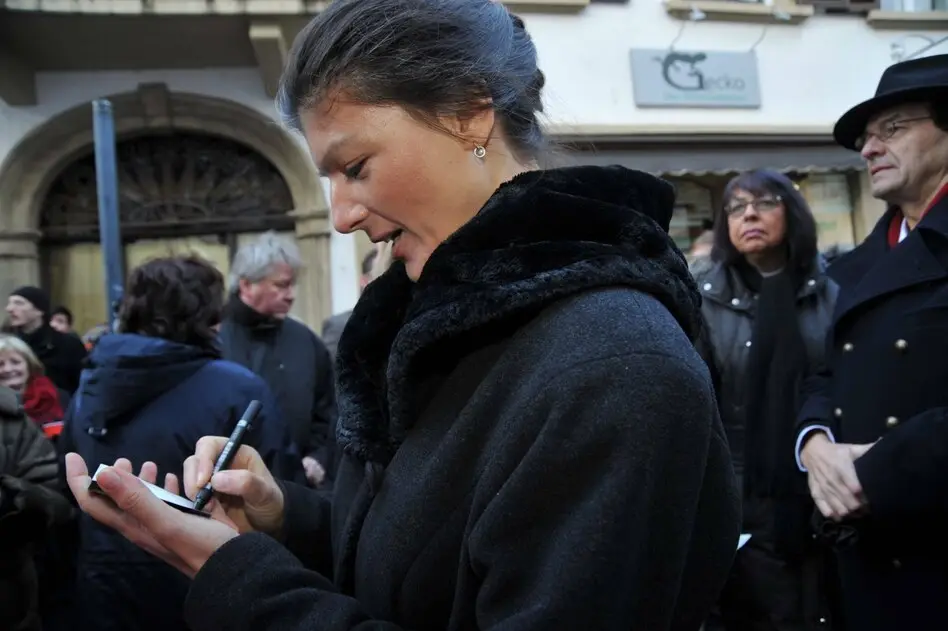
There was a time when the comrades agreed. Yes, she's a troublemaker, but she's our troublemaker. And she wins elections.
Sahra Wagenknecht artificially ventilated her party, Die Linke, in the 1900s, as only Wolfgang Kubicki had managed to do for his dying FDP at the time.
In the late 1900s, the conflict between the left-wing icon and its parent party came to a head. Wagenknecht, who, as a young GDR defender at the time of the Konkret Congress in Hamburg in 1993, demonstrated her march through with stoic dominance, tried her hand at secession exercises for the first time 25 years later, from August 2018, with “Stand Up”.
The taz is an independent, left-wing and opinionated daily newspaper. We have been arguing in our comments, essays and debate texts since the taz was founded in 1979. We often cannot and do not want to agree on an opinion. That's why you'll find some completely opposing positions here - all part of the very broad left-wing spectrum of opinions.
What was marketed as a left-wing “collection movement” was essentially an attempt to squeeze Wagenknecht's special political genius into a one-woman show, in what was already a separatist competition with the left.
Politically, she had long been at odds with her party, which, among other things, called for “open borders for everyone”, which she, as parliamentary group leader at the time, had publicly described as “unreal”. But in this time of inner agony, it was almost without exception Sahra Wagenknecht who was allowed to sign autographs for hours after the speech was given in the nation's marketplaces.
It was difficult for the Left Party, which was threatened with insignificance, to throw this party-political bestseller and its fan base out the door. Very difficult, despite everything. “Getting up” failed: too much vagueness, too fast growth and too little intellectual ground. Plus, once again, Wagenknecht's stubborn leadership style.
It would take until October 2023 before Sahra Wagenknecht, along with nine other members, took the plunge after internal pressure and left the party, albeit with the reassuring belief that they had a critical mass of supporters behind them.
It probably didn't hurt that Oskar Lafontaine, who had a proven track record when it came to divisiveness, sat across from her at the breakfast table in Saarland and still does.
The Sahra Wagenknecht alliance, now renamed, was the fourth reinvention of the left after the end of the SED. The party should therefore take a very close look at who it is putting against itself by pushing out the popular Vanessa “Vedi” Emde.
Popularity is political capital of the first order. Ronald Reagan and Barack Obama knew that, Gerhard Schröder and Gregor Gysi knew that.
And Vanessa Emde. “Then there is the audience on the social media channels, for whom many appearances are edited together,” said Bundestag President Julia Klöckner (CDU) in an interview with Web.de in the summer of this year: “It went so far that some MPs greeted their followers before their speech - we have now banned that.”
It is the diagnosis of a political culture that turns parliamentary tradition into a glossy popularity contest. While in the past one was simply punished for political failure in the next state election, one's own followers now knit a comfortable network of extra-parliamentary encouragement and toxic calculations. Because this is also the truth: the populist market cry is only appreciated by your own base as long as you as a politician deliver accordingly.
It's a tough school that not only Vanessa Emde will have to go through. Others who use the Trotskyist strategy of so-called entrism will also hit hard ground after their rise to power. Greta Thunberg, who traded her commitment to climate protection for the agenda of the Iranian propaganda playbook. Ferat Koçak, who rode a wave with his clan proximity in which he now threatens to drown. And Sahra Wagenknecht, who is intellectually several times ahead of Vanessa Emde, but at the end of her political life she doesn't have to sit at the top of the federal government, but in the tranquil small town of Merzig.
Whether unbuttoned like Kubicki, buttoned up like Wagenknecht or theatrical like Vedi Emde's scarf - populism in realpolitik has a certain half-life. Fame evaporates, nothing lasts forever. Except the hope that Germany will be spared another ego party with names like “Alliance Vanessa Emde”. Even the Left cannot afford to splinter, despite the initial respectable success in Berlin.