
Germany taz
From love of animals to hatred of monkeys: When Cape Town's baboons make monkeys out of the rich
Because baboons have problems with ownership rights, South Africa's Cape Town is now discussing an expensive monkey management plan. more...
Deutsch (original) ·Auto-translated to English
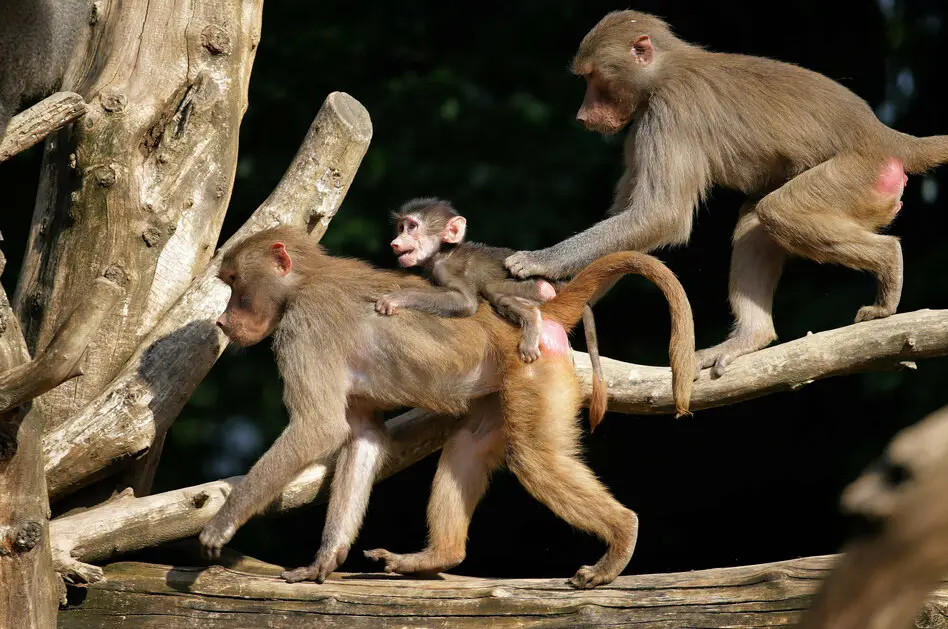
One word is enough to evoke strong feelings in Cape Town: baboon. Then the other person's eyes become wet or - much more often - narrow angrily.
Not all Capetonians are happy that the once threatened population of bear baboons (Papio ursinus) on the Cape Peninsula has recovered and is even thriving. When such a large primate sits on the kitchen counter with his fingers in a bag of chips or a jar of peanut butter, the otherwise cultivated hospitality ends. And when a furry relative opens the car door to steal the sandwich and banana in the passenger seat (on the left!), love for animals is over.
Recently, the hatred of monkeys escalated when the well-known baboon Fluffy was shot at several times with shotgun pellets and injured in his spine and internal organs. Videos showed the alpha male of the baboon troop CT2 laboriously dragging his hind legs. Fluffy had to be put down; he is the latest victim of an old conflict.
Baboons and humans have been living together on the southern tip of the African continent for 600,000 years, archaeological finds indicate. In 1652, however, Cape Town, the “mother city”, became the first European settlement in South Africa, initially simply as a stopover for ships on the route between Europe and Asia.
Vegetable and orchards were planted to feed the starving sailors. Because the baboons already had problems with the right to property and regularly plundered the flower beds, the settlers caught and killed the animals by the thousands. A bounty was paid for dead baboons until well into the 20th century, and in some provinces of South Africa there are still no restrictions on the number of baboons.
In Cape Town, however, the animals were placed under protection at the end of the 1990s, and the population grew from around 360 Tschakma baboons in 10 groups in 2000 to more than 600 animals in 17 groups. At the same time, more and more elegant houses were built on the lower areas of the Cape Peninsula, where the monkeys naturally search for food.
From Pavi's perspective, the menu has simply expanded thanks to the new kitchens, gardens and garbage cans filled with high-quality leftovers. This is what animal lovers on the peninsula argue. Get rid of the critters, demand other residents.
The monkey-human and monkey-watchdog conflicts have now become a serious human-human conflict. And Cape Town's administration didn't care about it for a long time. The Cape Peninsula Baboon Management Action Plan aims to bring peace ahead of South Africa's local elections on November 4th. Fences are to be installed and 44 animals from the Waterfall and 16 from the Seaforth troop are to be relocated to a fenced enclosure. If there is a significant increase in numbers, the plan also calls for “killing in accordance with animal welfare standards”. An “advisory group for baboon issues” supported by the city will ensure a balance of interests in the future.
Scientists are critical of the plan, animal rights activist Chad Cupido says: “If you live in an area where there are wild animals, then you have to live with these wild animals.”
The Liberal city government's baboon plan is also expensive. 33 million South African Rand, or around 1.8 million euros, will be made available for monkey management over a period of three years, but the actual costs could be much higher.
So much tax money again for the neighborhoods with sea views on the peninsula? Poorer and poorer Capetonians roll their eyes when they hear the word baboon: the rich should just close the window - and put a lock on their garbage can.