
Germany taz
Extension of the A100: an end with a question mark
The Left, the Greens and the SPD have already made it clear in the exploratory results: There should be no further construction of the A100. However, they have to reckon with the federal government. more...
Deutsch (original) ·Auto-translated to English
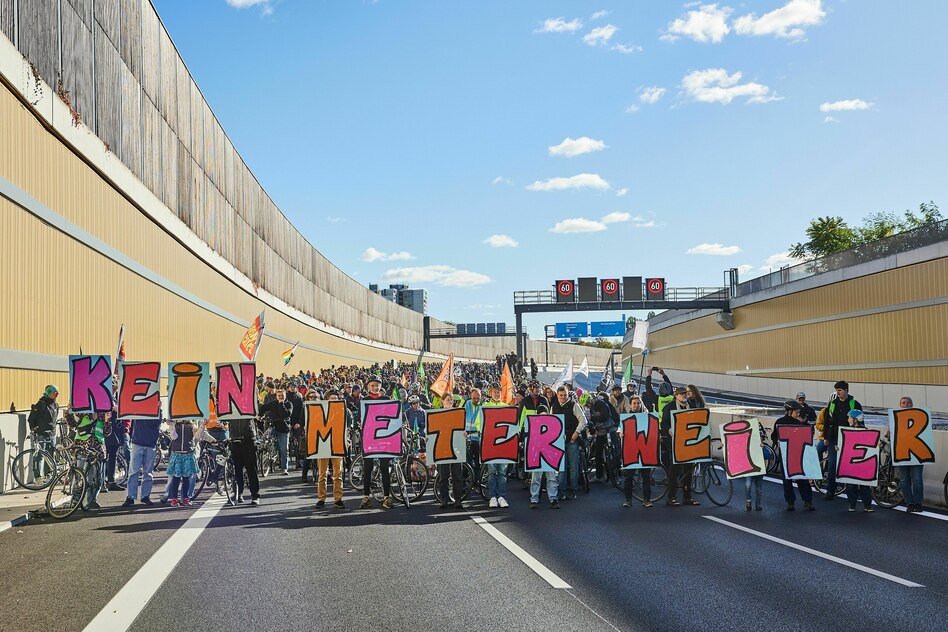
It's just a single and short sentence in the exploratory paper that the Left, the Greens and the SPD presented at the weekend: "We are lobbying the federal government not to implement the 17th construction phase of the A100," it says in the "Mobility" section. But if a coalition is formed and this promise is implemented, it would be a significant turning point in Berlin's transport policy.
The 17th construction phase was more of a ghost for many years: Under the state governments, which formed the same three parties between 2016 and 2023, the federal government's plans for the further construction of the city motorway up to the Pankow border were largely on hold. Until 2022, an FDP state secretary from the traffic light coalition almost single-handedly restarted planning activities and had services advertised.
Since then, there have been dozens of protest rallies and public debates about the almost 6 kilometer highway that will run from Treptower Park over the Spree or under it to Friedrichshain, under the Ostkreuz train station to Lichtenberg and then to Storkower Straße. A technically extremely complex, immensely expensive and fatal project for existing cultural infrastructure such as the clubs at Ostkreuz.
At a panel discussion in Lichtenberg, the transport policy spokeswoman for the Green parliamentary group, Antje Kapek, sarcastically commented on the absurdities of the project during the election campaign: for example, the possibility that the recently completed partial new construction of the Elsenbrücke could be demolished again in a few years to make way for the motorway extension. Now Kapek speaks to the taz of an “extremely great” result of the explorations and a “symbolic victory”.
“It shows how Berlin politics has developed,” said the Green Party. “Fifteen years ago, a red-green coalition ultimately failed on this issue.” Kapek is referring to the breakdown of coalition talks in 2011 on the question of whether the state should uncompromisingly oppose the federal government's implementation of the 16th construction phase of the A100. The SPD was divided on this issue at the time: The concrete faction included Klaus Wowereit, who was then able to remain governing mayor with the help of the CDU, and faction leader Michael Müller.
The 16th construction phase has now been in operation for a good year, and especially in the first few months after its opening, it caused considerable traffic chaos in the area around Treptower Park - also because the new Elsenbrücken half was not even finished at that time. Now that the fronts regarding the 17th construction phase have been clarified, the crucial question is: How does Berlin get this implemented?
Motorway construction is not only in the hands of the federal government; in the case of the controversial section, it already has the force of law. The project is included in the so-called requirements plan for the federal highways with the rating “ongoing and firmly planned”. And it won't be easy to get out of this, especially since the CDU has control of traffic in the federal government. On the other hand: Can the federal government give Berlin an inner-city motorway if the city absolutely doesn't want it?
“There has never been anything like this before, where a receiving country stands up against the federal government,” says Weert Canzler, mobility researcher at the Berlin Science Center for Social Research (WZB), “otherwise they were always enthusiastic about it.” Canzler, who fundamentally opposes massive new road construction and instead favors investments in maintenance, believes it would be promising if the House of Representatives called on the federal government to stop planning for the 17th construction phase and to reallocate some of the funds earmarked for the urgently needed repair of Berlin's federal motorways and roads. “Perhaps in the form of a special fund, that requires a bit of imagination.”
Antje Kapek sees it similarly; she believes in the power of targeted “diplomacy”. At least under the traffic lights there was a commitment not to carry out any highway projects against the will of federal states, and with the necessary funds - rumor has it that it is more than 1 billion euros - "several motorway junctions" could certainly be built in CDU-led states.
If negotiations are unsuccessful, Kapek will consider changing the Berlin land use plan (FNP): the areas intended for motorway construction would then have to be designated for other purposes.
Kristian Ronneburg, transport policy spokesman for the left-wing faction until the constitution of the new parliament, of which he is no longer a member, is more pessimistic about the FNP: This is not a legally secure path, after all, the federal government, as the planning authority, retains the right to object. If such a mixed situation were to arise, Berlin would only be able to “build a robust counterposition”, argue with noise and pollutant emissions as well as problematic urban development effects and, after submitting the planning approval decision, take legal action against it in a few years.
Ronneburg, who also considers the exploratory results to be a “great success,” suggests a “mosaic of measures” – but first and foremost, a potential red-green-red Senate should unequivocally and in writing ask the federal government not to initiate the plan approval process.
However, he doesn't think it's out of the question that the federal government could use the motorway as a political instrument against the state government: "It would be an effective means of making life difficult for Berlin and annoying the Senate - like a schoolyard bully who pushes others around and steals their lunch money."