
World taz
Negotiations in Abu Dhabi: The systematic destruction of Ukraine
While Ukraine is being negotiated again, Russia is continuing to systematically destroy ports and energy facilities. Ukrainians have no hope for peace. more...
Deutsch (original) ·Auto-translated to English
It's the standard question that you get asked as a Ukrainian in the EU: "So? What's happening with you right now? Is there a turnaround in the war yet?" Yes, there is. However, for the worse for the Ukrainian population.
Since the summer, the Russians have been bombing not only the infrastructure of the Black Sea ports in the Odessa region, but actually everything that has to do with logistics.
"They have started shelling cargo ships with cargo from the agricultural, mining and metallurgical sectors as they enter and leave. So ships that are neither maneuverable nor able to defend themselves. It's like shooting elephants from helicopters," says the chairman of the Association of Ports of Ukraine (Ukrport), Dmytro Barinov. "Of course, shipowners, captains and crew members refuse to risk human lives. Ten sailors have already been killed, one was Ukrainian, the others were Indian and Syrian citizens," he added.
These attacks are not even hidden or concealed. Tourists in Odessa can watch directly from the beach. Conclusion: The number of ships in the Odessa port region - i.e. in Odessa itself as well as in the ports of Chornomorsk and Pivdenne - has decreased eightfold.
The large-scale Russian war of aggression against Ukraine began with the invasion on February 24, 2022. The annexation of Crimea took place in March 2014, and shortly afterwards the conflict broke out in the eastern Ukrainian regions.
And all this at a time when farmers absolutely have to sell their grain. "The Ukrainian economy is export-oriented, and this is how we get our most important foreign currency income. And in principle this is only possible through the deep-water ports on the Black Sea. Furthermore, Ukraine simply does not have enough storage capacity for such quantities of grain," explains Dmytro Barinov. He adds: "Farmers need money to buy new seeds, gasoline and fertilizer and to be able to settle accounts with the cooperative members. All of this is now practically impossible."
While just a few months ago dozens of cargo ships were able to enter the port of Odessa, this is now only possible sporadically and on some days it is impossible.
Insurance companies sometimes simply refuse to insure a ship because the risk of a Russian attack is too great. And farmers not only have problems storing this year's harvest, they often haven't sold all of last year's harvest either. Although some is exported via the Danube ports, their capacities are limited and they are also threatened by Russian attacks. Ukrainian military officials believe these attacks are systematic. “The opponents are trying to do two things: a renewed blockade of the seaports in order to prevent food exports and thus isolate the Odessa region,” says the Ukrainian marine with the call sign “Istoryk”.
"That's why they systematically attack ports, docked ships, transport hubs, bridges, railways and border crossings. That's their strategy," he explains. Russia is constantly changing tactics to overcome Ukrainian air defenses, the soldier says. Instead of the previously common Shahed drones, they now used jet aircraft and fired various rockets and cluster munitions. They also experimented with water drones. “Odessa is a military testing ground for them,” says “Istoryk”. So far, Russia has not managed to completely seal off the Odessa region. Also because the Ukrainian Navy is making huge efforts to ensure the passage of civilian ships.
But it's not just ports that are being attacked, but also overland transport routes. In recent months, four border crossings between the Odessa region and Romania and the Republic of Moldova have been attacked. Attacks on trains have also increased, especially on passenger train locomotives. “This is all part of their strategy – to bring Ukrainian exports and imports to a standstill and to cut off Ukraine from the outside world,” says Dmytro Barinov.
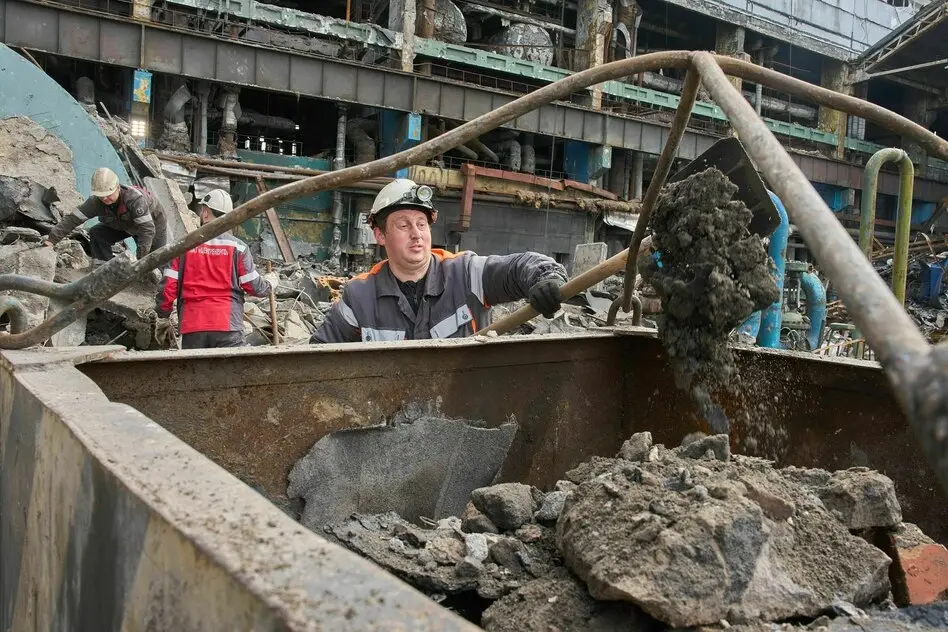
The constant power outages in Ukraine no longer particularly surprise anyone. But this year in the Odessa and Kyiv regions, not only substations but also thermal power plants are being increasingly attacked. If there is no electricity, the pumps that provide a stable water supply to the cities also fail. What does that mean? The authorities are predicting an “even harsher winter than the last” and are calling on the population to stock up on food and buy emergency generators. There aren't really any other suggestions.
In addition to the attacks on municipal infrastructure, there are now systematic attacks on wholesale chains. Warehouses, shopping centers and large post offices are destroyed. Empty supermarket shelves in Kyiv and Odessa are already the result. Retail companies are now trying to deliver their goods directly from manufacturers to stores, without going through distribution centers.
Gas stations are also systematically attacked. While this has only just begun in Odessa, refueling is already a real challenge in eastern Ukraine. And not just in the areas near the front. Already on the road between Kharkiv and Poltava, which lies far inland, you can see a whole series of burnt down gas stations. It is now forbidden to refuel in these areas during an air alert. And that can take hours.
“And what about the peace negotiations?” ask people in Western Europe. While last year people made ironic jokes about it, this year it's not even talked about anymore. Many Ukrainians are again thinking about moving abroad. Or buying a small house in a remote village to escape the massive bombing there. Or at least get a good night's sleep.