
Germany · taz · · 1h
Vegan agriculture: no more milk
Deutsch (original) · Auto-translated to English
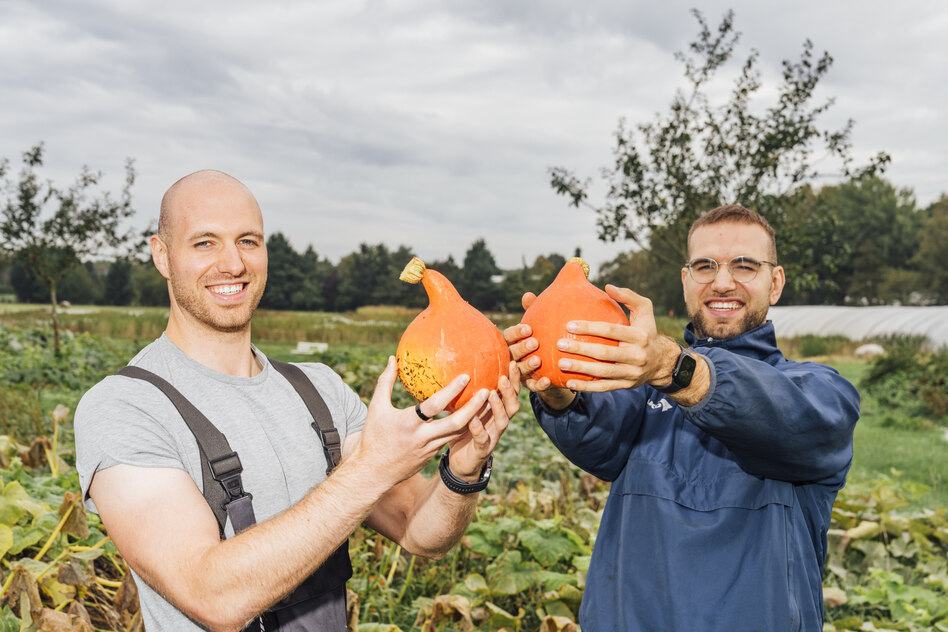
There are no longer any cows in the Möller family's stable. Farmer Maik Möller leads the way across the grating floor of the former cowshed and proudly shows the information boards that can be read here on the subject of dairy farming. Today, school classes walk through the animals' former home like in a kind of open-air museum - without the risk of stepping on cow dung.
When the 28-year-old took over the farm in Lentföhrden, about an hour's drive north of Hamburg, together with his older brother Marco at the beginning of the year, they said goodbye to livestock farming. The farm is now vegan, making it one of very few. There are only about as many vegan farms in Germany as there are federal states. There is the Möllers' farm in Schleswig-Holstein - no one else.
The old feeding troughs are still lying in the grass behind the cowshed. Möller doesn't really know what to do with it. While he's standing there, a cat comes running out of the tall grass straight towards him and meows. Möller bends down to scratch her under the chin. For a long time, Möller's love of animals was only for certain species, he says: "It was completely normal for me that our dog is a member of the family and 500 meters away the cows are there to produce delicious meat and milk for us humans." At the time, he wasn't interested in what happened to the cows that left the farm in a trailer. As a child, Möller rejected his parents' suggestion that he go to a slaughterhouse.
The male calves are of no use in dairy farming and are slaughtered shortly after birth. According to the Federal Statistical Office, this applies to around 300,000 animals per year in Germany. After four to six years, the female cattle have also had their day and are transported away. Normal everyday life for a farmer. The approximately 20 animals that the Möllers had kept were slaughtered to convert the farm. Only two survived the change and are currently grazing on the summer pasture a few fields away: Mausi and Jakob were their father's favorites and today only serve as popular figures for the guests of the holiday apartments.
Even before the farm was handed over, Maik and Marco's parents had built up another mainstay by setting up holiday apartments. “As a small farm, you have to be innovative and see how you can become profitable,” says Möller. They can now rent out around 40 beds. Since the abandonment of animal husbandry, it has become even more important to rely on additional sources of support. In addition to the tours for school classes, the Möllers also offer vegan cooking courses. In addition, there is the sale of portions of the harvest of home-grown vegetables.
In an open shed at the edge of the property, two gardeners in rubber boots stand and distribute the freshly harvested vegetables into dark green plastic boxes. In addition to potatoes and carrots, there are also oat roots this week. The slightly nutty-tasting vegetable is considered the “poor man’s oyster,” says Möller, grabbing one. He says he prefers to eat vegan kebab himself. Preferably the one on Holstenstrasse in Hamburg. The next day he is there again to deliver the vegetable boxes.
Möller looks over the seven hectares of land that he has been managing with his brother for several months now. In the distance, some employees are standing in the field weeding couch grass. The long, green weeds are stubborn and make it difficult to grow vegetables. Converting the soil from a cow pasture to one where you can grow vegetables is difficult and can take years, says Möller. The next step is to take soil samples. “We first have to check whether the soil is fertile,” says Möller.
From the fields the path leads back to the main house past the former manure tank, which is now empty. The scent of fresh wood wafts into your nose in a completely unclouded way: piled up next to the basin are mountains of wood pellets or, as Möller says, “wood chips,” which you need for heating. Like many things on the farm, the manure tank has not yet found a new function. Möller takes it calmly. A farm conversion like this doesn't just take a day.
This text first appeared in wochentaz, our weekly newspaper from the left!
Every week, wochentaz is about the world as it is – and as it could be. A left-wing weekly newspaper with a voice, attitude and the special taz view of the world. New every Saturday at the kiosk and of course by subscription.
The Möllers celebrated the handover to the younger generation by handing over a baton. But the parents continue to pitch in. Here everyone knows that every hand is needed.
The Möllers were supported in the changeover by the TransFARMation association. The association accompanied the Möllers in their fears and wishes and moderated discussions with the employees. Every year, around 2,600 agricultural businesses close across the country, according to the Climate Alliance Germany. But it's not just economic reasons that are driving farmers to rethink. Claudia Gerlach is a biologist and specialist at TransFARMation. For most companies, the switch to vegan is motivated by ethical and ecological reasons. Same with the Möllers.
Möller wants to do something about climate change and ends up on the topic of nutrition. According to the Federal Environment Agency, around 70 percent of emissions from food production come from the production of animal products. For Möller it starts with a meat-free Thursday. But that quickly becomes too little for him. He's starting a whole vegetarian month. “I wanted the challenge,” he says. Giving up meat is easier for him than he expected. A short time later he goes even further and becomes vegan. That was four years ago and rather unusual for someone like him. Möller learned the advertising slogan “Milk cheers up tired men” as a child and drank his calcium diligently.
The step from personal nutrition to operational change was not far, at least not mentally.
Almost half of the Möllers' income comes from renting out holiday apartments. Möller considers it questionable that the changeover could have been successful without this mainstay. Gerlach from TransFARMation also sees it similarly: “The loss of income from animal husbandry and problems with financing are likely to be the biggest obstacles for farmers when making the transition.”
There is also a lack of government funding and advice. In Germany, there are currently no advice offers from official bodies and no financial incentives for phasing out livestock farming.
Some farmers also find it difficult to market vegan agriculture, says Gerlach. Not so for the Möllers. Maik Möller, who studied Applied Computer Sciences, uses his IT skills to design the farm's own website and enjoys running a social media channel on Instagram. So far, they have recruited around 20 percent of all customers to buy the harvest shares.
When some people find out on social media that the Möllers have converted their farm to vegan, they leave nasty comments. Veganism is polarizing, especially in the agricultural sector. Some even claim that the grandparents are turning in their graves. Möller doesn’t believe that: “The pioneering spirit has always lived here.”
Read the full story at the source
Source: taz