
Germany · taz · · 2h
US troops leave Iraq: A new phase of uncertainty
Deutsch (original) · Auto-translated to English
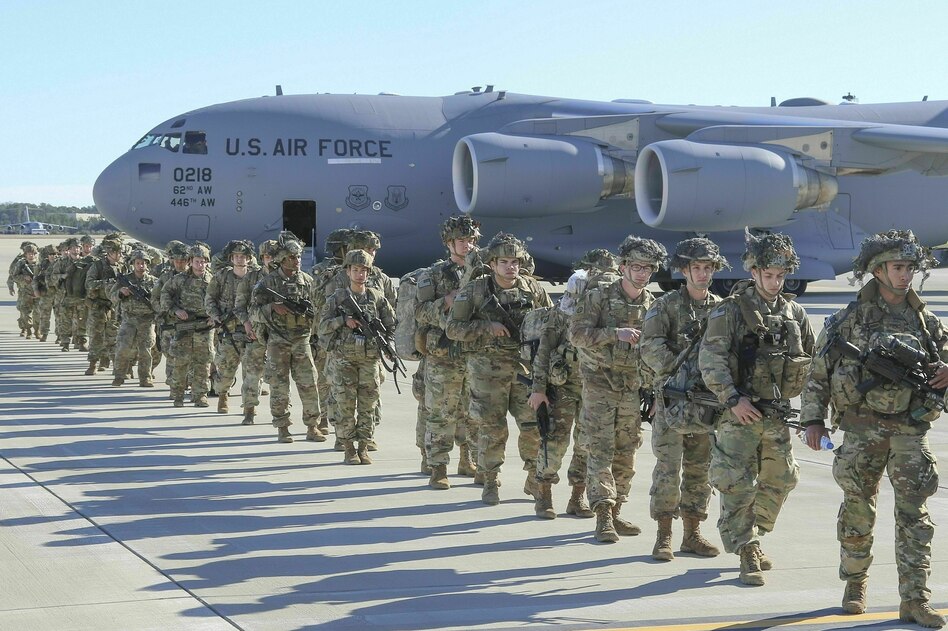
dpa | It is a turning point: more than 20 years after the fall of Saddam Hussein in Iraq and after years of bitter fighting against the terrorist militia “Islamic State” (IS), the last US soldiers are withdrawing from Iraq. The withdrawal should be formally completed on Wednesday. Wars, displacement, terrorism and political unrest have left deep scars. Without the US military, a new phase of uncertainty begins.
The step was formally decided in 2024. The US combat mission ended in 2021, and the last approximately 2,500 US soldiers were only in the country as advisors and trainers. The troops had already been completely withdrawn in 2011 - but then the IS terrorist militia advanced in Iraq and Syria from 2014 onwards, posing a new threat to the USA and the rest of the world.
The withdrawal is one of the key demands of Iraq's Prime Minister Ali al-Saidi and the country's powerful Iranian-allied militias. They were actually supposed to hand over their weapons parallel to the US withdrawal. The step has now been postponed to June 2027 - chances of success uncertain.
This has to do with the terrorist attacks in the USA in September 2001. The then US President George W. Bush declared a global “war on terror” and coined the term “axis of evil”: he thereby branded Iran, Iraq and North Korea for supporting terrorist networks.
The United States accused then-Iraqi leader Saddam Hussein of having ties to al-Qaeda and seeking weapons of mass destruction. Both later turned out to be false. Nevertheless, the US invaded Iraq with allies in 2003 and overthrew Hussein, during whose brutal rule hundreds of thousands died.
The invasion is considered by many historians to be the worst US foreign policy decision in history. Years of insurgency, chaos and violence between Shiite and Sunni groups followed, killing about 4,500 U.S. soldiers and tens of thousands of Iraqis. Photos of prisoners in Iraq's Abu Ghraib prison also went around the world, tortured and mistreated by the US military.
During and after the war, Iran and its allied militias significantly increased their influence. The power vacuum also strengthened Al-Qaeda and later led to the emergence of IS. The total cost of the war was estimated at up to $3 trillion. At times more than 160,000 US soldiers were stationed in the country.
With the lightning expansion of the Sunni IS terrorist militia from 2014 onwards, US troops returned at Baghdad's request. In ISIS's proclaimed "caliphate," Shiites and the Yazidi minority were murdered and the world was horrified with videos of executions. Terrorist attacks brought the threat of IS to Europe and the USA.
The fight to liberate Iraq and Syria from IS rule began with the US-led “Operation Inherent Resolve” (OIR), which was joined by more than 80 countries. The battles, which were heavy on losses, sometimes lasted for weeks and months. The British organization Airwars counted 1,400 US coalition dead and estimated up to 13,000 civilians killed. The Bundeswehr has also been involved in the operation since 2015.
Victory after tens of thousands of air strikes was only possible with the help of local ground fighters, including Kurdish Peshmerga. Today, IS in Iraq is concentrating on “its own survival,” according to the current OIR report. There, like in Syria, from where the US military withdrew in April, there are fewer attacks than in 2013. Thousands of IS prisoners are now sitting in Iraqi prisons.
The move plays into Iran's hands because it can maintain or expand its power in Iraq. The militias can continue to attack US facilities or energy infrastructure in the Gulf states. Critics fear a repeat of the US withdrawal from Afghanistan: a military farewell without adequately containing threats. With the US soldiers, the militias also lose one of their main arguments for armed “resistance”.
Washington will continue to push for their disarmament. The goal should not be to turn Iraq against Iran, says Lahib Higel of the Crisis Group. Iran is politically too powerful in Iraq for that and is also too important an economic partner. “Iraq needs space to find its own balance,” says Higel about the balancing act between Tehran and Washington.
The Kurds, who were attacked hundreds of times during the war and who are now losing their most important protective shield, are now even more at risk. As in Syria, they also have to fear for their project for self-government, which was created primarily with the protection of the West, writes the Atlantic Council think tank. The Kurdish Prime Minister Masrur Barzani spoke of a “disgrace” in an interview.
According to polls, the majority of Americans do not believe that the war has made the United States any safer. The withdrawal fits with Trump's stated goal of reducing US military operations in the Middle East and ending the “forever wars”. However, the Iran war, which Trump started together with Israel, could also become such a “forever war”.
Read the full story at the source
Source: taz