
Germany · taz · · 1h
US football star Colin Kaepernick: Complicated legacy of taking a knee
Deutsch (original) · Auto-translated to English
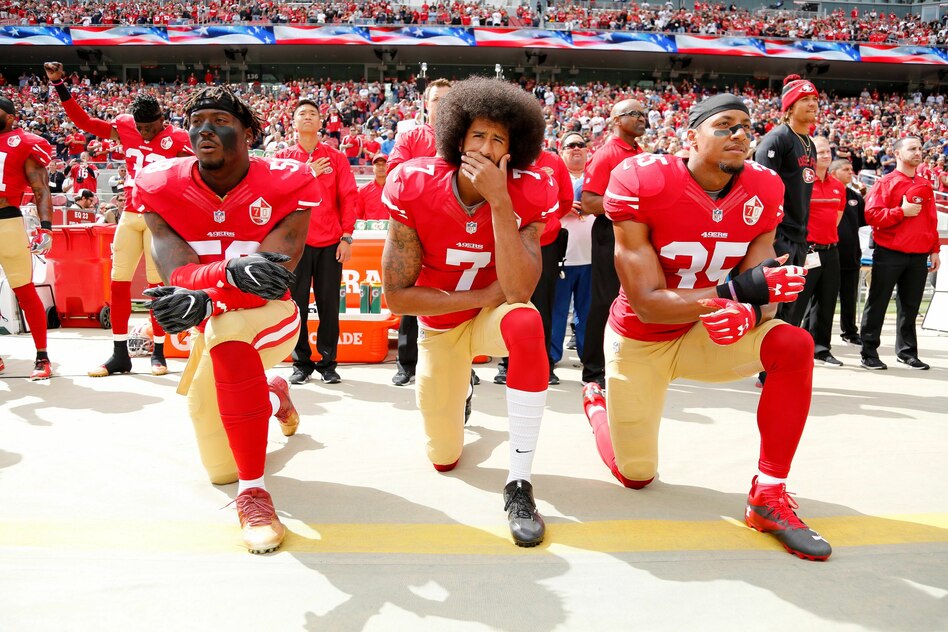
When Colin Kaepernick knelt during the playing of the national anthem before the National Football League game in San Diego almost exactly 10 years ago, on September 1, 2016, in protest against racist police violence, a shock wave went through the sports world. There had not been such an open political protest by a professional athlete since the time of Muhammad Ali and the US sprinters who caused a stir at the 1968 Olympics in Mexico City.
But the gesture that both fueled the Black Lives Matter movement and resulted in the politicization of athletes around the world did not come out of nowhere, like Kaepernick's rocketing career start four years earlier. “I worked on it for just as long as I worked on my skills as a quarterback,” he says in his autobiography, which will be published this Wednesday, just in time for the anniversary.
Kaepernick grew up as the adopted son of white parents in a conservative, predominantly white part of California. Of course, he was aware of the fact that he was Black from an early age and, he recalls, his parents always encouraged acceptance of his Black identity. But Kaepernick says he only learned what it really means to be black in the USA in college.
Not only was Kaepernick an extremely talented football player in college, he was also an exceptionally bright student. He completed his courses with straight A grades, but increasingly delved into “dangerous” literature. He read Angela Davis, Malcolm
He could have pursued an academic career if he hadn't liked sports better - the camaraderie among football players was like nothing he had ever experienced before. But his knowledge of systemic racism gave him no peace when the murders of Trayvon Martin, Michael Brown and Philando Castile tore the country apart. After sitting unnoticed during the anthem for several games, he knelt on the sidelines on September 1st. A gesture that, ironically, he had intended to be more respectful than simply remaining seated.
As we now know, the gesture ended his career prematurely. “The football was taken away from me,” Kaepernick writes. No one dared to openly tell him to his face that his political activism had disqualified him. In San Francisco it was said that they wanted to change the offensive. In Seattle and elsewhere he was told not to take it personally, but that he was bad for business.
Kaepernick still considers the latter to be a fatal mistake. His jersey was the best-selling in the entire league in the years following the protest. After his “Just Do It” campaign with Nike, the sports brand’s stock market price skyrocketed. “The NFL only had and only has the white fans in mind.”
Today, Kaepernick’s job title is “civil rights activist.” And even if he would still prefer to be back on the pitch at any time, he can live with that.
Meanwhile, his legacy 10 years later remains complicated. He has involuntarily become an icon of the Black Lives Matter movement, which was mobilized against at all levels of society under Trump 2.0. Kaepernick has normalized political gestures in football and other sports. So much so that leagues and associations, including the NFL, took part in it for image reasons, but without actually changing their behavior. And Colin Kaepernick remains one of the few public figures in and out of sports who really took a chance.
In this sense, he sees the women of the WNBA as his truest successors, who “stand up most steadfastly and consistently for their convictions.” However, among his former colleagues, the fear of losses and alleged damage to their image is all too often greater.
Read the full story at the source
Source: taz