
World taz
US Secretary of State in India: Oil for a new start
Marco Rubio promotes Venezuelan oil in India and defends US policy. But their tariffs put a strain on the relationship between the states. more...
Deutsch (original) ·Auto-translated to English
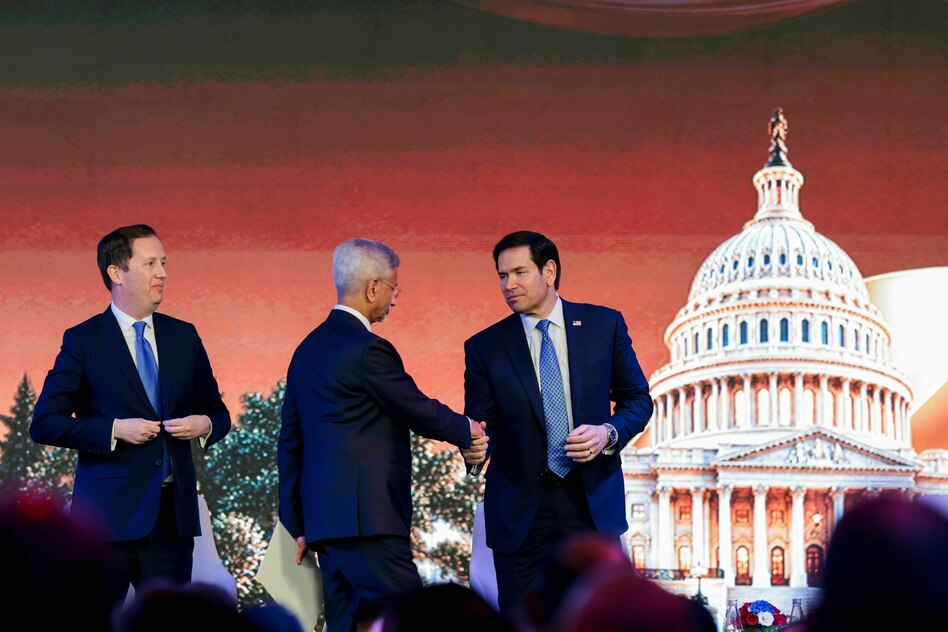
The western Indian city of Jamnagar is inextricably linked to one company: Reliance Industries operates the world's largest refinery complex there with a processing capacity of around 1.4 million barrels of crude oil per day. It became a destination for US Secretary of State Marco Rubio on Wednesday. The day before, he joked: “I don’t think we come often enough.”
Rubio had already traveled to Delhi in May to take part in the Quad security dialogue. At the time, he tried to mend what diplomatic porcelain had been broken by tariffs, immigration restrictions and comments by US President Donald Trump regarding India's conflict with Pakistan.
This time the focus was on the economy. In the financial metropolis of Mumbai, Rubio met his Indian counterpart as well as the chairmen of the influential companies Adani Group and Tata Sons, Gautam Adani and Natarajan Chandrasekaran. He then traveled to Jamnagar, almost 500 kilometers away.
Rubio called India a “refining superpower.” Jamnagar was about closer energy cooperation, higher imports of Venezuelan crude oil and exploring whether Reliance could start producing in Venezuela. “One of the few places where Venezuelan heavy oil can be refined is India,” Rubio told media representatives.
India is again importing oil from the South American republic after imports collapsed in 2020 due to high US sanctions on Venezuela's petroleum sector. In August 2026, deliveries reached around 358,000 barrels per day, according to analytics firm Kpler. Venezuela thus became India's largest oil supplier after Russia and the United Arab Emirates. For comparison: around 2.1 million barrels a day came from Russia.
Jamnagar is of interest to Washington because the modern facility can process heavy, sulfur-rich crude oil. The group produces gasoline, kerosene and diesel, which it also exports to the USA. Before the midterm elections, Trump is trying to stabilize oil prices.
Reliance is not just a major buyer of crude oil but a major player in the global energy market. The group's importance extends beyond the Indian oil business. In March, Trump announced a multibillion-dollar partnership with Reliance Industries to build the first major U.S. refinery in 50 years in Texas. The “America First Refining” project is also expected to create thousands of jobs.
Foreign policy expert C. Raja Mohan sees Reliance as a possible lever for better bilateral relations. CEO Mukesh Ambani, like India's Prime Minister Narendra Modi, comes from the western Indian state of Gujarat. He is said to have close ties to the government.
After all, Rubio said of a trade deal with India: “We are just weeks away from finalizing the deal.” Sameer Lalwani, a researcher at the US think tank Carnegie Endowment for International Peace, believes bilateral relations are more robust than public conflicts suggest. Cooperation will continue to be deepened, particularly in defense, technology and security.
But the contradictions remain. India accounts for a large portion of the U.S.'s highly skilled workforce, while the Trump administration is making immigration more difficult. The US government also suspended permanent work authorization processes at several companies, including the Indian IT companies Infosys, TCS and Wipro. At the meeting in Mumbai, India's Foreign Minister Subrahmanyam Jaishankar emphasized: "Indian talent and Indian expertise have helped shape the technology era in the United States."