
Germany taz
Judgment in the Frank S. case: What is fair?
The 69-year-old was sentenced to twelve years in prison for a series of rapes. The question is not whether the verdict is fair, but rather what signal effect it has. more...
Deutsch (original) ·Auto-translated to English
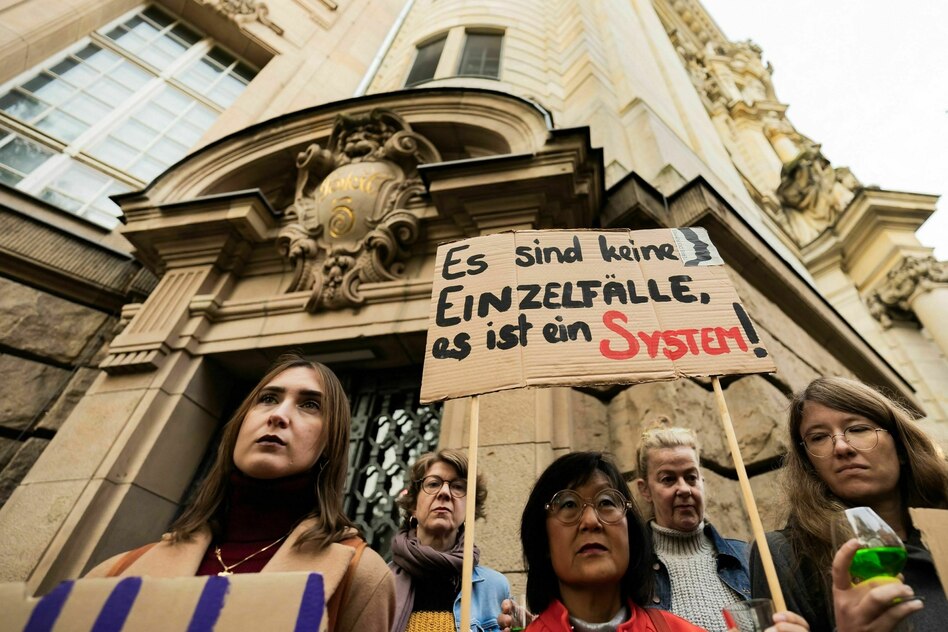
After 15 days of trial and a postponement of the verdict, Berlin's largest rape trial to date has come to an end. It is now clear: Frank S. has to be imprisoned for twelve years, and the Berlin regional court also ordered subsequent preventive detention because, according to the judge, he is still dangerous to the general public. In addition, he has to pay tens of thousands of euros in compensation to some of the victims.
Are you affected by sexual violence? You can get support from advice centers such as the Federal Association of Women's Advice Centers and Women's Emergency Hotlines, HateAid, Weisser Ring e.V. or the "Violence against Women" helpline on 116 016. The Antistalking-Haecksen offer technical help against cyberstalking at antistalking.haecksen.org.
The 69-year-old drugged and raped 14 women, some of them multiple times, and posted videos of the crimes online. He met the victims on dating apps between 2016 and 2022. The police assume that the number of victims is significantly higher. On his secured hard drive there is material showing 59 women. Some of them have now died, other cases have expired.
After Frank S. confessed to the rapes in August, the defense demanded eight years in prison and the public prosecutor's office demanded 13 years with preventive detention. The verdict is now comparatively harsh. But is it fair?
The taz is an independent, left-wing and opinionated daily newspaper. We have been arguing in our comments, essays and debate texts since the taz was founded in 1979. We often cannot and do not want to agree on an opinion. That's why you'll find some completely opposing positions here - all part of the very broad left-wing spectrum of opinions.
A question that is difficult to answer. After all, how can justice be achieved after multiple rapes? Is that even possible? And justice for whom? What is much more important is the question of what signal effect the judgment has on society.
Because of its similarity to the cases in France, the trial was also known as the German “Pelicot” trial. But the Berlin trial hasn't received nearly as much attention. And this despite the fact that all major media reported and feminist groups such as “No Show for Perpetrators” or Terre des Femmes called for solidarity with the victims and for demonstrations in front of the courthouse.
The lack of attention can be explained, on the one hand, by the fact that in order to protect the privacy of the victims, the court excluded the public for most of the trial days. On the other hand, a large part of German society still finds it difficult to seriously deal with sexual violence in its own country. There is a lack of interest when it comes to real patriarchal violence.
The importance of the process for those affected cannot be underestimated. It is still an exception for victims of sexual violence to be listened to and believed. Such cases rarely end up in court and when they do, they usually end in an acquittal for the defendant. Fortunately, that is different in this case.
It would now be important that the process also brings about social changes. Legal demands can easily be derived from it: cases of rape must not expire, “No means no” must become “Yes means yes” or the criminal liability of all members of a chat group in which rape is planned, glorified or depicted.
What would be even more important, however, would be for cases like Frank S.'s to be noticed much more quickly so that further crimes can be prevented. This not only requires journalists who do investigative research (the Frank S. case also came to attention because of a case in Lower Saxony that was uncovered by journalists) and police officers who work more sensitively and broadly when dealing with sexualized violence, but above all a society that doesn't look the other way.