
Germany · taz · · 5h
Unequal wealth in East and West: Eastern commissioner for redistribution via inheritance tax
Deutsch (original) · Auto-translated to English
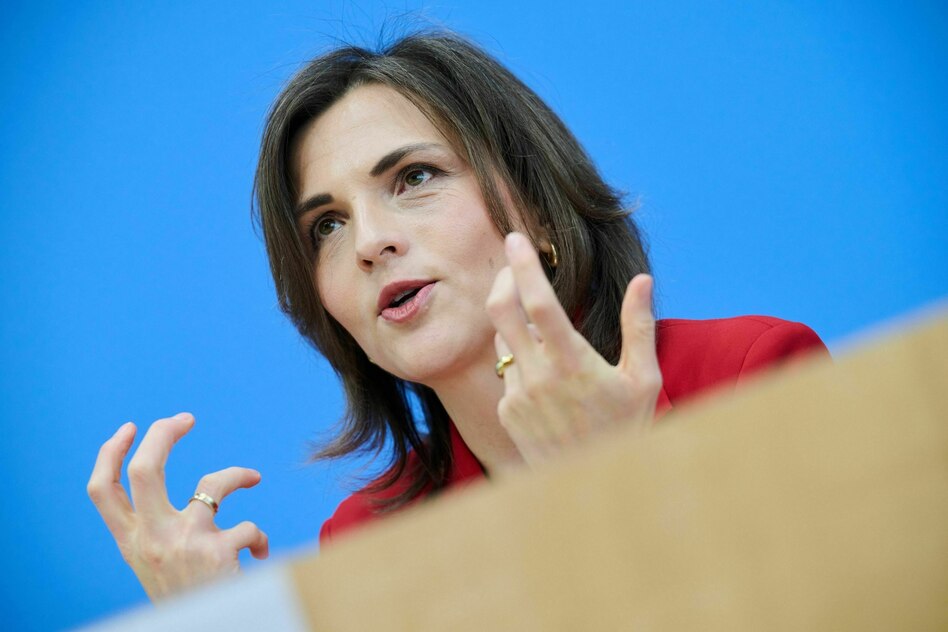
dpa | Kurz vor dem Tag der Deutschen Einheit fordert die Ostbeauftragte Elisabeth Kaiser (SPD) eine stärkere finanzielle Umverteilung zwischen den Bundesländern mit Hilfe der Erbschaftssteuer. The background is the very unequal distribution of wealth between East and West and the perception of many people in a survey that opportunities for advancement do not depend on performance and hard work, but on wealth and relationships.
“That’s why we also have to talk about inheritance tax,” wrote Kaiser in the Rheinische Post shortly before presenting her annual report. "I think we should review exceptions and privileges for very large asset transfers and take the federal mechanism into account. If fairer taxation of large inheritances creates additional revenue, the states where inheritance tax revenue is particularly high should not only benefit from this."
Die SPD-Politikerin verwies auf die Statistik: „Das durchschnittliche Netto-Gesamtvermögen je Haushalt lag 2023 in Ostdeutschland bei 125.500 Euro, in Westdeutschland bei 257.100 Euro. Beim Immobilienvermögen waren es 97.800 Euro gegenüber 214.500 Euro.“ She concluded: “Different economic and property systems and the upheavals after 1990 continue to have an impact today.”
Kaiser linked this to survey results from the so-called Germany Monitor for her annual report as Eastern Commissioner. Demnach sagen 95 Prozent der Menschen, Leistung und Fleiß sollten für gesellschaftlichen Aufstieg zählen, 91 Prozent nennen Bildung und Ausbildung.
Doch in der Wirklichkeit gelten aus Sicht der meisten andere Maßstäbe: So sagen 80 Prozent, tatsächlich sei Vermögen für den Aufstieg entscheidend, genauso viele sehen Beziehungen als ausschlaggebend, 72 Prozent nennen die soziale Herkunft. 69 percent cite performance and hard work as actually important factors. “There are 26 percentage points between the claim and the perceived reality,” Kaiser wrote in the newspaper article.
She explained the connection to her push for redistribution through inheritance tax as follows: States finance schools, universities and infrastructure and thus create conditions for economic development. “Those who inherit little must not lose twice: in private wealth and in the public opportunities of their country,” wrote Kaiser.
There is already a mechanism for redistribution between the federal states, the state financial equalization. This is intended to approximately compensate for differences in financial strength so that all countries can fulfill their tasks. Financially strong federal states contribute, financially weak states benefit. All East German states are among the recipients.
In the ZDF “Morgenmagazin” Kaiser added: “We have to tax large assets or inheritances more heavily so that we ultimately have more money in the system so that the initial conditions for equal opportunities can easily be met.” People rightly expected that they could be successful through effort, but also through good education. That requires prerequisites.
„Wenn ich dafür sorge, dass wir sozusagen die gleichen Bildungschancen haben, dass wir gut ausgestattete Kitas und Schulen haben, dass ich dann auch unabhängig vom Elternhaus überhaupt die Chance erst habe, eine gute Ausbildung und Bildung zu erfahren“, sagte sie. With this and a good income you can then build up assets. Better wages in East Germany and strong collective bargaining agreements are also important for this.
In the Editorial Network Germany (RND), Kaiser once again brought up a “basic legacy” that her predecessor Carsten Schneider had already promoted. According to his proposal, the state should pay every 18-year-old 20,000 euros as starting capital. But no implementation followed. Kaiser told the RND: "A basic inheritance, for example, can give young people their own starting capital regardless of their parents' home. And we need to talk about how large inheritances will be taxed more fairly in the future."
Hier bezog sich Kaiser auf neue Zahlen des Statistischen Bundesamts, wonach 95 Prozent des Gesamtwerts der steuerlich berücksichtigten Vermögensübertragungen durch Erbschaft oder Schenkung auf die westlichen Bundesländer entfielen. The eastern German federal states with a population of 19 percent only accounted for 5 percent. This shows how different the material starting conditions still are in East and West, said Kaiser.
Read the full story at the source
Source: taz