
Politics taz
Hungary wants a new sports policy: devastating connections
In Hungary, the government will abolish ex-President Viktor Orbán's sports system. He used tax money to benefit political allies. more...
Deutsch (original) ·Auto-translated to English
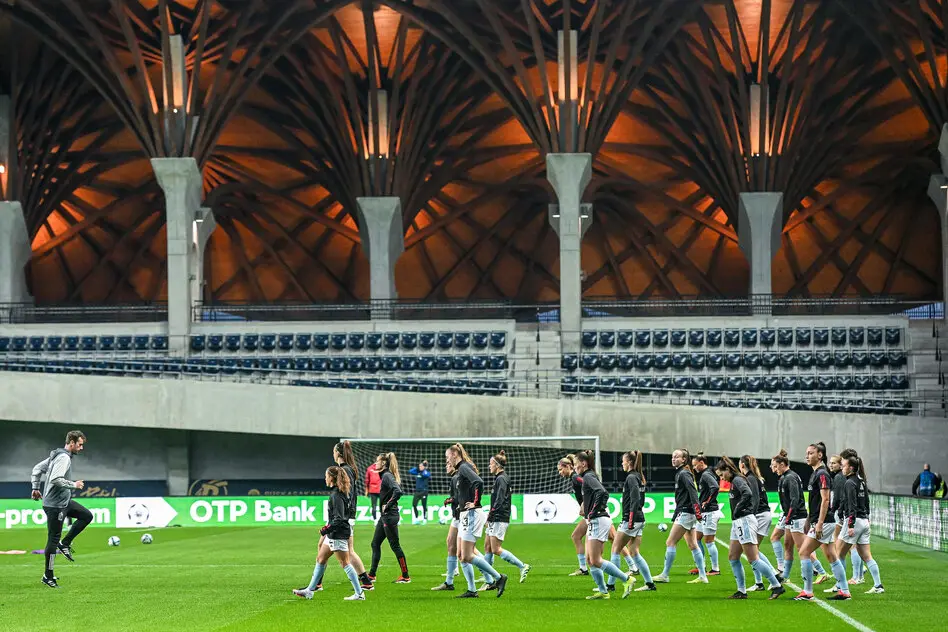
When Hungary's Prime Minister Péter Magyar announced a fundamental sports policy reversal from January 2027 with the abolition of the so-called TAO system from January 2027, the decision was met with strong criticism from the opposition. No wonder, because the companions of the elected Prime Minister Viktor Orbán had benefited from the confusing system.
In order to finance sport, the Orbán cabinet has come up with a sophisticated concept: The TAO (acronym for “Társasági Adó”, Hungarian for “corporate tax”), introduced in 2011, allows companies not to pay up to 80 percent of their corporate tax to the tax authorities, but to give it away directly to sports clubs or associations. Companies can claim 100 percent of these donations as a tax deduction.
Although the Supreme Court made it clear that these diverted funds are public funds, the system operates as if they were private donations. Because the necessary parliamentary control was missing. Six popular team sports are primarily eligible: football, handball, basketball, water polo, ice hockey and volleyball.
The economic dimensions should not be underestimated. According to official data published by the Government Office in October 2026, an estimated 3.5 to 4 billion euros have flowed into sport through the TAO mechanism over the last 11 years. The lion's share of this ended up directly in Orbán's favorite sport, football.
Critics – such as opposition politicians and Transparency International Hungary – describe the TAO system as a prime example of an institutionalized kleptocracy. Large corporations, which are almost exclusively owned by oligarchs close to the government and have become rich through state contracts, specifically passed on their corporate tax to sports projects run by politicians from the ruling Fidesz party. So the money stayed in the same political and economic cycle.
A particularly symbolic example is the Pancho Aréna in Orbán's home village of Felcsút, which is literally just a few steps away from his private home. The extravagant home stadium of the local Puskás Akadémia FC holds around 3,800 spectators - in a community with just under 1,800 inhabitants. The club's owner, the construction master Lőrinc Mészáros, the richest man in the country and Orbán's childhood friend, regularly channeled TAO funds from his companies directly to the club and thereby financed, among other things, the construction of the stadium, which was of course carried out by his own company. The club itself received around 85 million euros from the TAO pot over the years.
In order not to weaken the sports sector financially, state funding for sports should remain at around 1.24 billion euros from January. Instead of the previous TAO tax relief model, the government is now introducing a further direct subsidy worth around 400 million euros. The cabinet emphasizes that the money will flow transparently - particularly into youth sports and the infrastructure of successful Olympic sports instead of almost exclusively into professional football or selected large-scale projects. From January onwards, every forint should be fully traceable. Financing commitments are linked to measurable criteria and strict checks by state control bodies.
The opposition hypocritically warned that decision-making power would shift from the donating companies to state government departments if the state distributes the budget directly. This could create new dependencies. In doing so, they ignored the very thing that made the TAO mechanism the engine of corruption in Hungarian sport: the absence of clear and strict parliamentary control. In their opinion, this endangers the financing of numerous smaller sports clubs and youth development programs. In truth, these always came away empty-handed.
In addition, a bill was submitted in October that is intended to exclude conflicts of interest. Accordingly, active political officials, including ministers, state secretaries, members of parliament or party leaders, are not allowed to hold leadership positions in larger sports organizations. Under Orbán, the sports landscape functioned as a kind of “feudal possession”: a club or association received financial security and political advocacy in exchange for the absolute loyalty of its leadership to the ruling party.
Most of Orbán's allies have now resigned, realizing that they will no longer enjoy their previous personal and political advantages in the future. However, Gábor Kubatov, the chairman of the most popular and largest sports club Ferencváros, is still reluctant. Until recently he was vice president of Fidesz and was re-elected to head the association in the board election at the end of October. He proclaimed: "Our love for Ferencváros lasts a lifetime. It cannot be destroyed by any laws!" It should be clear to him that he has to leave soon.
At Ferencváros, there is also a police investigation into suspected embezzlement. From 2016 to 2027, the government had budgeted a total of around 70 million euros from the state treasury for the large-scale expansion of a multifunctional sports facility. However, the complex was never completed despite spending the entire amount. Politicians looked the other way. Investigations by the new cabinet revealed that huge sums had been spent on management fees, the signing of football players and the acquisition of playing rights.
Since the political tailwind will disappear and the previous money channels will dry up, the clubs and associations that were previously favored will have to learn the hard way to survive in a real, free-market sponsorship market. It is not impossible that some of them will declare bankruptcy.