
Germany · taz · · 3h
UN Security Council: A table set in 1945
Deutsch (original) · Auto-translated to English
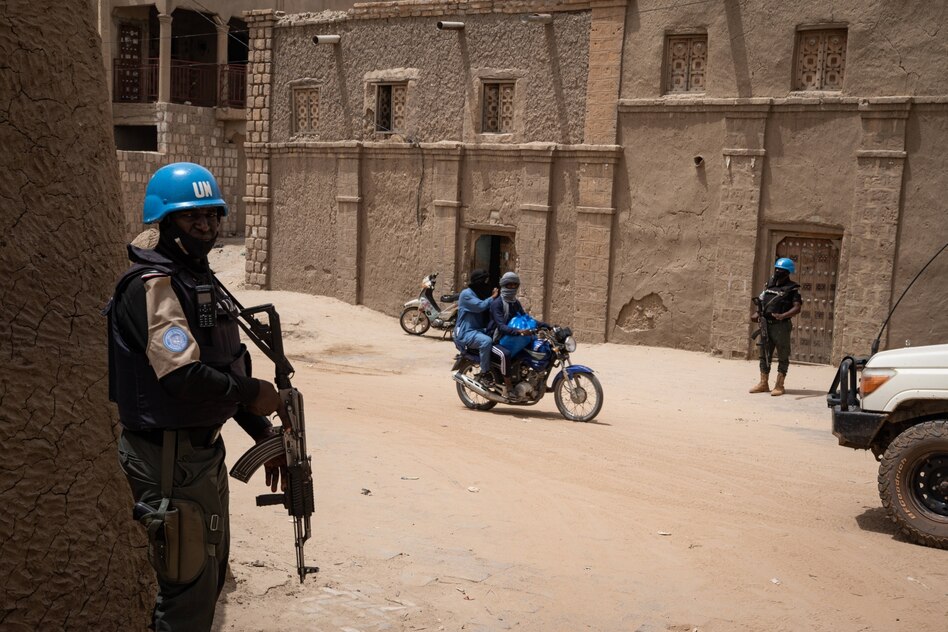
The number of armed conflicts worldwide has recently risen to 65 - more than ever since 1945. The epicenter of the violence is in Africa. Since 2016, conflicts on the continent have killed millions and displaced nearly 46 million people from their homes - more than four times the number a decade ago. They have also brought hunger and acute food insecurity to over 120 million people in 26 African countries, according to the NGO Oxfam.
During the same period, conflicts in Africa accounted for 80 percent of all UN Security Council resolutions. But not a single African country has a permanent seat on the UN Security Council.
There is reason to believe that "insecurity in Africa is increasing because Africa is not a member of the Security Council," said Jimoh Ibrahim, Nigeria's permanent representative to the United Nations. “Therefore, the policies and decisions to maintain global security neither have an African face nor do they take into account an African approach,” says Ibrahim.
Colleagues from 16 African countries are taking part in the 5th Africa workshop of the taz panter foundation. A 64-page, elaborately designed magazine was also created. It can be ordered now by email to stiftung@taz.de with the subject “Afrika-Magazin” and your name and postal address. Thank you!
The magazine's texts also appear here on taz.de.
Would you like to support the taz Panter Foundation:
• or via the foundation’s account details:
Like the regional powers Brazil and Germany, Nigeria is also seeking a permanent seat on the Security Council. At the same time, the country supports the demand for Africa to be permanently represented on the committee. Nigeria bases its claim, among other things, on its population size - with around 240 million inhabitants, it is the sixth most populous country in the world - its economic weight and its contribution to the UN peacekeeping missions. Added to this is the extent of the internal conflicts that Nigeria itself is facing. Yusuf Tuggar, former Nigerian foreign minister, describes this as part of a wider 'global disorder'. In order to end it and prevent it from spreading to other regions, stronger international cooperation is needed.
For Musa, a former Nigerian UN peacekeeper whose name has been changed to protect himself, the consequences of the world order negotiated in New York reach far beyond the Security Council chamber. For more than a decade, Musa wore the blue helmet in different parts of Africa - where conflicts had hollowed out entire communities. He has heard grief in a wide variety of languages and experienced how loss affects people regardless of origin or skin color. The memory of it still seems to shake him.
His mission as a peacekeeper was clear on paper: protect civilians and prevent attacks. But in practice, he says, peacekeeping ultimately depends on forces that reach far beyond the actual battlefield.
“I go into the field and see conflict – cattle theft, men killed in villages, children,” he says. Imagine there is a mission whose job it is to protect civilians. Their military units would have the mandate to go into the villages, show their presence and thus prevent violence.
"And then a decision is made at the last minute. It says: 'Sorry, guys, we no longer have the means to support you. We have our own priorities. Russia will attack us' - and all these stories. Then you have to see for yourself how you get along," complains Musa.
The budget will be released, but the scope of the mission will be reduced. Certain areas that were supposed to be covered were omitted. "Then what happens to these villages? Insecurity returns." The Security Council makes such decisions. “The fact that Africa has no representation there puts us in a hugely disadvantaged position from the start.”
When it comes to the subject of reform, the former peacekeeper almost resigns himself. He does not believe that the five permanent members are willing to voluntarily give up their special position that gives them power.
“There are so many political interests, so much influence that they derive from having one of these five permanent seats,” Musa says. “It is surprising how many weapons that end up in the Democratic Republic of Congo are likely to be sold by China and the United States.” At the same time, the same countries in New York would say, “We must contain the conflict.”
So why, Musa asks, should they allow another country to be involved - especially a country from a region where the people are the victims? And what would African participation in these decisions mean for the geopolitical balance of power?
Support the taz panter foundation and its international projects with a donation. Learn more
The ex-peace soldier doesn't believe in waiting for the world order to change on its own. Rather, Africa must address its problems itself and strategically.
The diplomat Ibrahim sees it similarly. Africa must continue to pursue its demand for a permanent seat on the Security Council. But it should not be limited to moral appeals. “Even if we vote, Africa will not automatically become a permanent member of the Security Council,” he said. Africa has 54 of the 193 votes - that's not even half.
The chances of fundamental reform of the UN system are considered slim. Changing the UN Charter requires a two-thirds majority of member states and then ratification by two-thirds of states. This also includes all permanent members of the Security Council. They can hardly be expected to support measures that would limit their own influence.
The UN itself is sticking to its reform efforts. Only in May, UN Secretary-General António Guterres emphasized that the Security Council must be expanded in order to counteract the impunity of the “superpowers” with veto rights.
Ibrahim says Nigeria will pursue its demands for a seat on the Security Council. He hopes that there will be changes during his term in office.
Read the full story at the source
Source: taz