
World taz
Controversial deforestation in Brazil: Complaint against Blackrock on suspicion of money laundering
Human rights activists complain to the financial regulator. They accuse the fund company of violating due diligence obligations under money laundering law. more...
Deutsch (original) ·Auto-translated to English
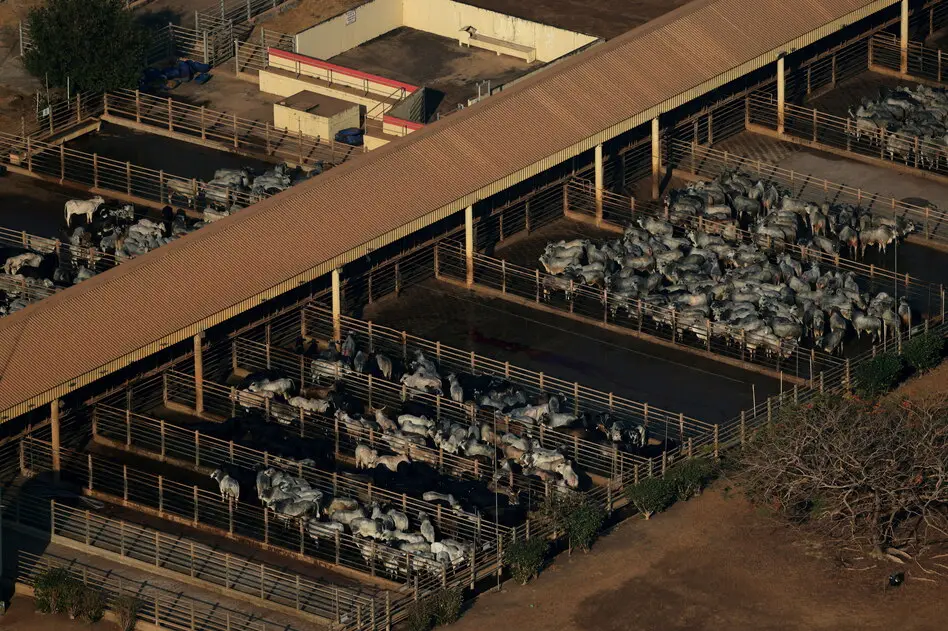
Beef and money laundering are two words that don't go together at first. But complainants against Blackrock Asset Management Deutschland AG argue that proceeds from cattle raised on illegally cleared land in Brazil could result from criminal offenses. They suspect that an investment in shares of the meat company JBS and the receipt of dividends by Blackrock Germany could trigger money laundering obligations.
That is why the human rights organizations have now filed a complaint against Blackrock Germany with the financial regulator Bafin. The allegations have not yet been officially established. BlackRock Inc., based in New York, is considered the largest asset manager in the world. He controls around 14 trillion euros. For comparison: German economic output in one year is around a third of this size.
It is well known that virgin forests in the Amazon are sometimes illegally destroyed in order to gain pasture land. Also the fact that cattle farmers sometimes steal land from indigenous residents and damage the world's green lungs. However, the conclusions that the complainants derive from this regarding the suspicion of possible money laundering are new.
The human rights lawyers of the Transnational Legal Coalition (TLC), which includes the European Center for Constitutional and Human Rights (ECCHR) in Berlin, have filed 14 complaints or lawsuits in four countries. There are also two criminal complaints against JBS in the Netherlands and Great Britain. The critics describe the company as the “world’s largest meat company”. There is a suspicion that JBS also processed beef that came from illegally created pastures in the Amazon. TLC also targeted JBS banks as well as lawyers, tax advisors and auditors.
In its complaint, TLC documented several suspected cases of cattle farming and meat production on illegally deforested land in JBS's supply chain. In 2024, the Brazilian environmental agency fined the company, wrote the AP agency. JBS told the taz that since 2010, livestock suppliers have been monitored using a satellite-based system, among other things, and farms with illegal deforestation have been excluded.
Among other things, Miriam Saage-Maaß, lawyer at ECCHR, says about Blackrock Germany: “According to the anti-money laundering regulations derived from EU law, cattle that were raised on illegally deforested areas are the proceeds of crime.” Specifically, according to the critics, the transactions looked like this: Blackrock Deutschland is said to have held JBS shares and received dividends through the iShares MSCI Brazil UCITS ETF (DE) exchange-traded fund. Small investors can also buy shares in such funds. The investment in the meat company is said to have existed between 2018 and 2025. By mid-2025, dividends of over 2 million euros “will have been attributed to the Brazilian meat business,” writes ECCHR.
BlackRock rejects the allegations: "The iShares MSCI Brazil UCITS ETF (DE) is managed by BlackRock Asset Management Deutschland AG and tracks the MSCI Brazil Index. It therefore also holds JBS shares. Any dividends are income from the fund assets and not income from BlackRock Asset Management Deutschland AG. BlackRock is of the opinion that the fund's participation in JBS does not establish a commercial relationship between the issuer and the capital management company."
The complainants rely on EU money laundering law and obligations under the German Money Laundering Act (GWG). They also see a possible reference to Section 261 of the Criminal Code, which criminalizes money laundering. However, whether these regulations apply to the specific fund investment and the claimed dividend payments has not been clarified by authorities or courts.
For example, Section 5 of the GWG states that financial institutions must analyze the potential risks of their business. Blackrock could have noticed that the JBS dividends come from possibly illegal deforestation and cattle breeding based on it, and therefore may represent illegal income. According to Section 43 GWG, investors must inform the customs investigation department if there is a suspicion that money could flow from criminal activities. In certain circumstances they even have an obligation to terminate their business.
Blackrock Germany may have violated these duties of care, the critics explain. The financial regulator Bafin should “clarify the suspicion of money laundering, put an end to it and, in the event of a violation, impose a fine”. Some of the criticized transactions are said to have taken place during the period in which current Chancellor Friedrich Merz (CDU) served as chairman of the supervisory board of Blackrock Germany from 2016 to 2020.
What will come of this remains to be seen. Because such a procedure did not yet exist, it is likely to take longer. If the plaintiffs are successful, many investors in other industries and banks would also have to warm up.