
World taz
Ukrainian counteroffensive in Donbass: “Operation Vivaldi” throws Russia out of sync
Ukraine is currently liberating more territory than it is losing. An important Russian advance was stopped and pushed back. more...
Deutsch (original) ·Auto-translated to English
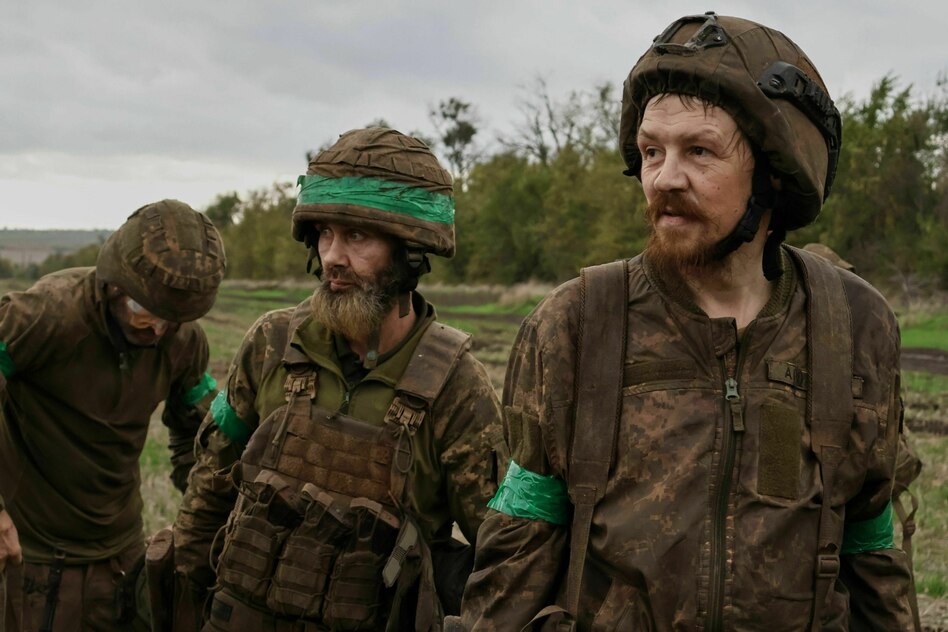
Largely unnoticed by the public, Ukraine has achieved significant successes on the war front in Donbass in recent months. According to the US Institute for the Study of War, “Operation Vivaldi”, the details of which are only now becoming public after its end, has initially thwarted the Russian war goal of conquering the entire Donbass.
The operation took place north of the small town of Lyman, an important railway junction in the north of the Donetsk region with a peacetime population of almost 30,000. Whoever controls Lyman controls the region's transportation routes. At the beginning of the major Russian invasion in 2022, Lyman was under Russian occupation for a good six months, but the city was liberated during the first major Ukrainian counteroffensive in autumn 2022. The front then stabilized in this area along the Sherebez River.
From autumn 2024, Russian units crossed the river again, established themselves on the western bank and advanced to the outskirts of Lyman at the end of 2025. Infiltrations in the hilly forests all around threatened to roll up the Ukrainian “ring of fortresses” around the Donbass cities of Sloviansk, Kramatorsk and Konstantinywka from the north, i.e. from behind.
Lyman in the north and Dobropillya in the south are the two logistically most important locations, control of which will determine whether this last and most important Ukrainian defense line in Donbass holds or can be captured. If Lyman and Dobropillia both fall, Donbass falls.
The northern part of the pliers is now history. “Operation Vivaldi,” begun in May, first pushed back Russian troops from the Lyman area and then cleared the entire area west of the Sherebets River of Russian troops, with advances of sometimes over 20 kilometers and precise strikes against Russian logistics in the hinterland. On Monday, the Ukrainian military confirmed that it had reached the river on a broad front and thus the main goal of “Operation Vivaldi”. The liberation of up to 300 square kilometers and numerous largely destroyed villages is of little importance in terms of area, but pushing the Russians back behind the river and thus stopping one of their central offensive lines is of immense strategic importance.
The operation was only officially confirmed in September - probably so that people in Moscow would not become aware of it and not send reinforcements, because Russian front commanders are often afraid to report their failures to the top. Previous Ukrainian counteroffensives often failed because Russia was able to prepare for them in time. This mistake has not been repeated now.
What remains is the southern part of the pincer around the small town of Dobropillja. Russia claims control of the city, Ukraine denies this. This is also an issue in the ongoing talks between Ukrainian and US negotiators. The US apparently assumes that the increasingly fictitious Russian statements about its strength and territorial control are correct. Ukraine is now trying to refute this through more publicity. In the meantime, journalists were also able to see for themselves the successes of “Operation Vivaldi” on site. Since September, Ukraine has consistently regained more territory than it has lost to Russia.