
World taz
Ukrainian author on fighting: “We listened to AC/DC before we went to fight”
The soldier and writer Artem Chech fought in Bakhmut and published two books about the war. A conversation about hunger and healing music. more...
Deutsch (original) ·Auto-translated to English
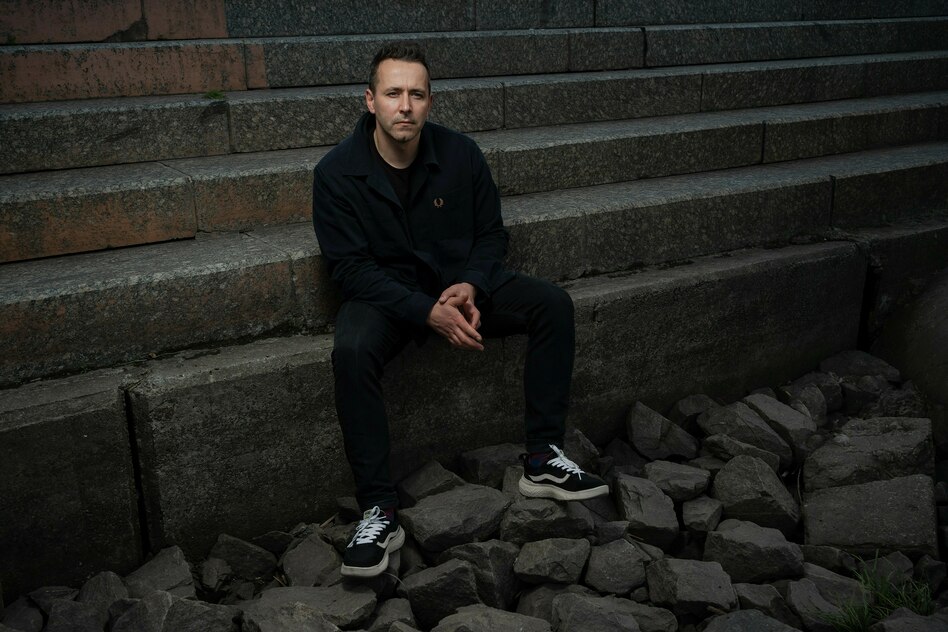
taz: Artem Tschech, you are currently presenting your new book in Germany, but you are actually a soldier in the Ukrainian armed forces. Did you get leave from the army?
Artem Czech: I'm officially on a business trip. The Ukrainian army enables artists to present their works abroad. And I'm not just presenting my book, I'm also spreading a message and reporting on Ukraine in times of war. I'm basically a cultural diplomat.
He was born Artem Cherednyk in Cherkassy, central Ukraine, in 1985. Czech studied sociology in Kyiv. His first publications as a writer appeared in Ukraine in the noughties. He became known in Germany with the novel “Zero Point” (Arco Verlag, 2022). In it he processes his experiences as a soldier in Donbass in 2015/16. After the Russian war of aggression began in 2022, Czech rejoined the Ukrainian armed forces.
taz: You are currently serving with the General Staff in Kyiv. The city is heavily bombarded with ballistic missiles. How much has the situation worsened there?
Artem Czech: The shelling has been enormous since the beginning of the summer. The problem we have is that we don't have enough Patriot defense missiles. We're good at intercepting missiles and drones - but not ballistic missiles. There are air alarms very often. The city is adapting as best it can. But the children can hardly learn in schools; unless classes take place in basements or online. But the children are also in danger at home. There is no escape.
taz: You have a son, does this affect him too?
Artem Czech: Yes. My son is 16 years old and is in the last year of high school. He sleeps poorly or not at all. Russia mostly fires ballistics until 3 a.m., which is how long he stays awake. Of course he is very tired the next day. He cannot learn normally. And there's nothing I can do as a father.
taz: In the meantime, urban life in Kyiv was almost back to normal. To what extent can we still talk about it now?
Artem Czech: You can hardly find a street where you can't see the traces of the war. Kyiv is not like London or Dresden in World War II, but you can just see the damage on every corner. Nevertheless, the shops, the schools, the universities are open, small businesses are functioning. Kyiv seems like a completely normal, modern European city where a rocket hits every now and then.
taz: They fought in the Battle of Bakhmut. You describe lying in a ditch for five days and barely eating anything. How did this come about?
Artem Tschech: Back then, soldiers were not yet supplied with food by drones - today it is often the case that drones deliver them water and food. It was hot days in May 2023 and Bakhmut was hotly contested. Our comrades tried to bring us water and food, but the food supplies were also immediately destroyed by the Russian artillery. At this time Bakhmut was completely taken over by the Russians. We should then provide cover for our own withdrawing troops. But we couldn't do that because we were shot at heavily as soon as we even put our noses out of the trenches. It was impossible. There were a lot of dead and injured. What saved us was that we stayed in the ditch. We had no water, we had no food, but we survived.
taz: Can language and literature convey such experiences?
Artem Tschech: You can explain this situation to readers with words. But no one who hasn't experienced it can understand or empathize with it. There are now thousands in Ukraine who have experienced something similar or even worse. There is nothing special about the content of my book there. I am very happy that the book is now published in German. I hope readers understand what it's like to be drawn into a war without wanting to.
taz: You write about barbaric acts committed by the Russian side, for example that soldiers leave their feces behind after looting houses. They also write about how terrible it is to “hate so much that you want to kill the other person, damn it, or they’ll kill you.” Does war make you a monster?
Artem Czech: In the passage you quote, I am referring to the call “Kill!” by the Soviet writer Ilya Ehrenburg. It is a text from July 1942, in which he writes: "The Germans are not people. [...] Whoever does not kill the German will be killed by him." I adapted this because there are parallels between Nazi Germany and today's Russian warfare. Does war make you a monster? That depends on the individual person. Depending on how resilient you are and how much inner strength you have to evade this terrible construct of war.
Artem Czech: “Music for a Soldier”. Translated from the Ukrainian by Alexander Kratochvil and Maria Weissenböck. Klett-Cotta Verlag, Stuttgart 2026. 192 pages 18.99 euros
taz: In your book you mention in passing that online sessions with a therapist would help you. I would like to know more about that.
Artem Czech: I felt very bad in the third month of the war. I had suicidal thoughts. I couldn't keep my emotions in check anymore. Our battalion's psychologist said: You need therapeutic support. I then went to Kyiv and regularly visited a psychotherapist. She diagnosed depression and I was prescribed antidepressants. During the army I continued the treatment online, and after a year I thought: that's it, I don't need this anymore. Later, when I was back commuting between the war and civilian life, I realized I was wrong - I wasn't getting any better. Today we meet once a week, mostly online. I continue to take antidepressants and other tablets.
taz: Many soldiers report that returning (temporarily or permanently) to civilian life is particularly difficult. On the one hand, you are now active in the international literary world, but on the other hand, you are fighting in the war. How do you cope with these starkly different worlds?
Artem Czech: First and foremost, I am a writer and then a member of the army. I do military service because there is no alternative for our country but to fight. I try to balance between these two worlds. I don't always do this well.
taz: Music plays an important role in your novel. They write: “Music is the only thing that raises reality to the level of a bearable existence.” Can music still help you even in the worst moments of war?
Artem Chech: When we were in Bakhmut and stuck in the trenches, I didn't think about music. The sounds of mortars, artillery fire, drones – that was the music we heard there. But there are songs that have saved me in other terrible situations. “O Children” by Nick Cave is one of them.
taz: As a soldier, do you need more comforting music or sometimes hard music to process something?
Artem Czech: Music has something healing for me. It is a piece of civilian life that I took with me to the war. Of course, I can only listen to music when there is no fighting going on. When I was first in the army in Donbass in 2015/16, we listened to AC/DC before we went to fight. It was about creating a certain aggressiveness.
taz: “Society will split into those who were there and those who were not there,” you write. Can you actually tell from the outside and expression of the people in Ukraine whether they had to experience this war or not?
Artem Tschech: I think I can sometimes tell from the outside. Those returning from the war have such a strange way of dressing. Not really a military look, but something like that. They wear strange pants and shirts, like those you see on the people who accompany Zelensky on his trips abroad. And in the cityscape of Kyiv you can of course increasingly see people who have returned from the war without legs or arms.
taz: In Ukrainian literature, the examination of the literature of the First and Second World Wars plays a major role - Erich Maria Remarque, Kurt Vonnegut, Ernest Hemingway and so on. Is that also important for your work?
Artem Tschech: Of course I also read Remarque and Ernst Jünger. But I am not a fan of comparing today's Ukrainian writers with those of yesteryear. The essence of war is the same, but the wars themselves are very different. When I was a child, I loved reading Soviet novels about World War II. Of course I had no idea about the false heroism and pathos that was being conveyed. When I was 16, I read a text by Nikołaj Nikulin in which he describes the behavior of the Soviet army in Pomerania and East Germany during World War II. My world collapsed like a house of cards. Today I understand where the cruel behavior of the Russian army comes from and that it has its origins in the Soviet military.
Sofiya Onufriv translated from Ukrainian during the conversation