
World taz
Sending troops to Niger: Algeria sends soldiers into the desert
In the future, Algerian soldiers will be stationed at a former French base in Niger. It's about oil interests - and defending against rivals. more...
Deutsch (original) ·Auto-translated to English
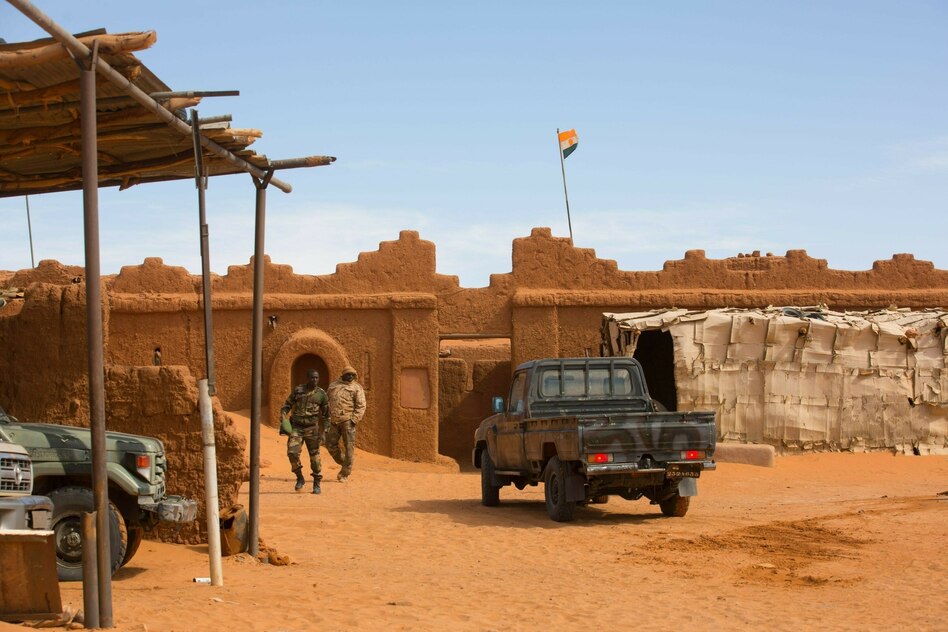
For the first time in over fifty years, North Africa's largest country, Algeria, is stationing soldiers abroad. The parliament in Algiers unanimously approved the sending of troops to neighboring Niger on Sunday. The military intervention, decided by President Abdelmadjid Tebboune under a bilateral agreement with Niger, of which no details have been officially announced, is intended to “protect energy interests,” the resolution says.
The military has ruled Niger since 2023 and there is war between the government and Islamist rebel groups, which are themselves enemies of each other. Two months ago, Russian intervention prevented mutinous soldiers from overthrowing the military government in Niger's capital Niamey. On August 30, Algeria stationed fighter jets in Niamey to ensure “security and stability,” as it was officially stated at the time.
Now this is being expanded. Last Wednesday, Niger's Defense Minister Salifou Modi signed a defense agreement with Algeria's government in Algiers. As a result, President Tebboune decided to send in troops.
According to analyst reports, Niger is making the Madama military base available to the Algerian armed forces. Madama is located in the far north of Niger in the middle of the Sahara desert, not far from the border with Libya. The former French colonial base was an important base of the French anti-terror operation “Barkhane” in Mali and Niger from 2014 to 2019.
At that time, Madama was not used for the direct fight against Islamist terrorist groups because it was too far away from the theaters of war in Mali. But from Madama, France monitored the central trans-Saharan route, which runs from the desert town of Agadez in Niger over the Salvador pass in the mountains on the Libyan border to the Mediterranean. It has long been popular with smugglers of goods, weapons and people and was at times the main irregular migration route from sub-Saharan Africa to Europe and an important transit route for weapons from Libya to armed groups in the Sahel.
France had stationed a paratrooper regiment with support troops as well as extensive intelligence and reconnaissance capabilities in Madama, a total of around 250 soldiers. In 2019 the base was handed over to the Niger army. France no longer has a military presence in any country in the region.
By stationing its troops not in Niger's capital, but thousands of kilometers away in the desert, and pointing to "energy interests" to be protected, Algeria makes it clear that its military intervention is not primarily intended to benefit Niger's rulers, but rather follows its own interests.
Not far from Madama, the state-owned Algerian oil company Sonatrach has held the production rights for the Kafra oil concession covering over 23,000 square kilometers since 2005. The first boreholes were put into operation there on August 13th at a ceremony attended by the prime ministers of Algeria and Niger.
With soldiers in northern Niger, Algeria is also countering the feared expansion of the sphere of influence of the eastern Libyan general Khalifa Haftar, who controls large parts of eastern and southern Libya and does not recognize Libya's government in the capital Tripoli. His power is based, among other things, on control of the trans-Saharan routes, including those to Chad and Sudan.
Haftar's environment maintains good contacts with Nigerien exile opposition members who are close to President Mohamed Bazoum, who was overthrown by Niger's military in 2023 - Bazoum belongs to Niger's Arab minority and is still imprisoned in Niamey today.
The Libyan general also sees himself as a force of order in the region: Last week, an Austrian woman and a Swiss woman who were kidnapped by the terrorist group IS (Islamic State) in Agadez, Niger, in January and April 2025, respectively, were released in Benghazi, eastern Libya, allegedly through the mediation of Haftar. The governments of Algeria and Niger are equally irritated by all of this.