
Germany · taz · · 2h
Drought and its consequences: Fighting drought with seawater
Deutsch (original) · Auto-translated to English
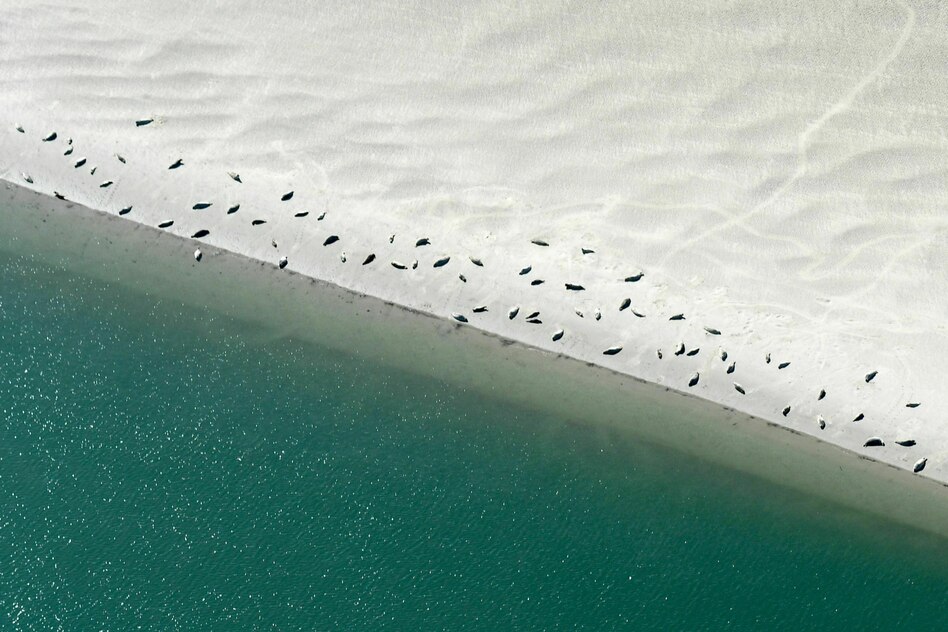
Water from the sea is salty and therefore not drinkable - actually. There is only one place in Germany that has been different for years: Helgoland. North Sea water comes out of the tap there, desalinated and purified. Is this the future in Germany too? Is Heligoland ahead of its time?
There have long been large desalination plants that produce fresh water in Israel, Saudi Arabia, Spain and the USA; there are already 23,000 worldwide. However, Germany currently gets its water from rivers, lakes, mostly groundwater. In this country, each person uses 126 liters per day for drinking, cooking, showering and so on. Then there are the farmers who have to supply their cows or tomatoes with water, and the industry. But with global warming, droughts are increasing in Germany and water supplies are dwindling.
That's why it's no longer just Heligoland that has to worry about drinking water from the oceans, "but Germany as a whole, even regions further away from the coast such as the Ruhr area could benefit," says Claus Mertes from DME, the Institute for Seawater Desalination in Duisburg. The Baltic Sea has an advantage over the North Sea: its salt content is lower, so is the effort and so is the price, explains the qualified engineer. “The Baltic Sea has around 7.5 grams of salt per liter, the North Sea has 34 to over 36, depending on the location.”
There is no need for new pipelines, says Mertes: "The resulting fresh water can be transported in almost any quantity via the existing shipping canals. For example, from Lübeck via the Elbe-Lübeck Canal and the Elbe into the Mittelland Canal, and from there at the Bergeshövede waterway junction near Hörstel into the Dortmund-Ems Canal to the south." The water is then treated on site as usual. Distributing seawater over hundreds of kilometers in the republic sounds like a far-off plan. But the extraction of drinking water from the ocean also brings others into play.
Example Rostock, Mecklenburg-Western Pomerania, directly on the Baltic Sea. Investors in Germany currently always have two issues, says Rostock's mayor Eva-Maria Kröger (left) - "the supply of energy and that of water." The Hanseatic city had to decline when an Asian electric car manufacturer, the computer chip giant Intel and others inquired about a location there - because of water consumption. But Rostock wants to attract promising industries.
Large electrolysers are to be built there, i.e. factories that produce hydrogen. These need a lot of pure water, i.e. free of salt. The water is energized so that it is split into oxygen and hydrogen. Hydrogen is called green if it is produced with green electricity, with renewable energy such as wind and sun. It plays a crucial role in the climate-neutral transformation of the steel industry, for example. It can also be used to store excess wind and solar power. In the rare cases of a dark calm, for example when there are clouds and no wind, it can be converted back into electricity.
The Rostock regional planning association recently examined whether seawater desalination could be carried out. Result: yes, technically and economically. The idea: Initially only the Rostock region should be supplied, later the system should be expanded and then water should also be brought to Brandenburg and Berlin. Ultimately, 240,000 cubic meters of fresh water would be produced every day.
Where the water for new technologies will come from is also a question elsewhere. For example, in the northwest of Lower Saxony: In Emden, the largest city in East Frisia, the regional energy supplier EWE is currently building the largest electrolyzer in Germany. A lot of wind power can be produced on the North Sea coast. That’s why there are numerous hydrogen projects there.
Kerstin Krömer heads the industrial water supply company for Northwest Lower Saxony, iwag, a subsidiary of the Oldenburg-Ostfriesian Water Association, OOWV. She imagines the future and looks for new sources of water. Including: the North Sea. “We are currently researching processes that are as environmentally friendly as possible with the University of Bremen,” says the qualified engineer.
Because desalination poses problems. The demand for electricity is large. That's one thing. The other thing: Desalination creates highly concentrated brine. So far it has mostly been dumped back into the sea, damaging the animals and plants in the area. "It's a cloudy soup. Not much grows anymore," says Volkan Filiz, who conducts research at the Helmholtz Center Hereon in Geesthacht, Schleswig-Holstein.
Basically there are two technologies. On the one hand, thermal desalination – with heat. When salt water is boiled, the water evaporates and the salt remains. On the other hand, reverse osmosis: The salt water is pressed through a membrane using large pumps. The water gets through, the salt doesn't. The latter method is currently the most common, says Filiz, and is also more efficient. But what remains is the brine.
It also contains valuable metals such as lithium, which is used for batteries, says the doctor of chemistry. He and his colleagues were researching how this could be achieved. Other scientists investigated whether the brine could be used to make building materials.
In Rostock, the experts now want to examine the exact ecological effects of discharging brine into the Baltic Sea. Is there no alternative to desalination? In the future, wastewater in both northwest Lower Saxony and Rostock will also be treated so that industry can use it to produce hydrogen. Water is then recycled instead of being discharged from the sewage treatment plant into the sea as before.
In view of increasing dry periods, new industries and increasing green electricity, Jörgrechnerberg, who is responsible for water issues at the Federal Environment Agency, also says: “We have to examine all options.” This also means the transformation of water from salty to sweet.
Read the full story at the source
Source: taz