
World · taz · · 2h
Hendrik Wüst's visit to Turkey: visas for business people, a pat on the back for the opposition
Deutsch (original) · Auto-translated to English
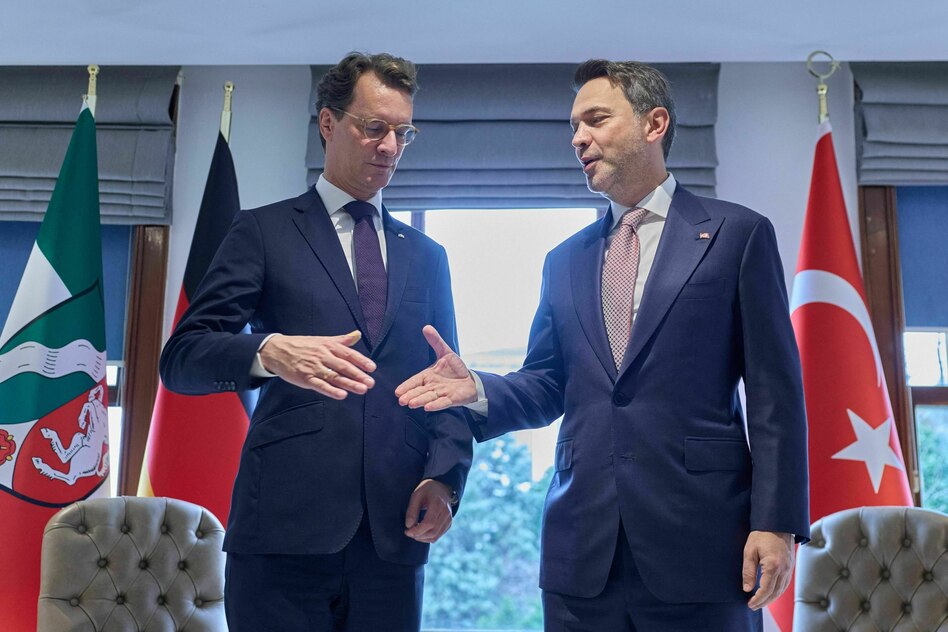
No trip without gifts – Hendrik Wüst knows that too. The North Rhine-Westphalian Prime Minister was on a kind of chancellor test trip to Turkey until Wednesday. There he not only met Turkish President Recep Tayyip Erdoğan, but also several ministers in the AKP government. Visa issuance should be quicker for business people from Türkiye in the future. The circle of companies that can use an expedited procedure without the need for a complex individual case assessment will be significantly expanded. This “creates the basis for new investments and closer partnerships,” praised Wüst.
The deal was orchestrated by the German Embassy, supported by the German-Turkish Economic Council headed by former Federal President Christian Wulff. A letter from the embassy to the Economic Council dated September 25th states that the expansion should start this year. Companies that have a strong connection to Germany should particularly benefit from this. The goal is to better integrate smaller and medium-sized companies.
So far, the fast-track procedures apply to around 400 Turkish companies, whose visa applications are processed quickly and unbureaucratically. However, not even 4 percent of all visa applications are processed this way. For the 270,000 applications that were processed in 2025, it often took significantly longer. Business representatives from Wüst's delegation reported to the taz that the slow and very restrictive visa issuance was an important reason why Germany is unattractive for investors.
In general, there is a clear imbalance in travel between Germany and Turkey. While Germans are allowed to travel to Ankara with their ID card, Turkish citizens need a visa.
Jannes Tessmann from the Mercator Foundation in Istanbul would therefore welcome it if visa relief also applied to other sections of the population. “That would make our cooperation and dialogue with civil society much easier,” says Tessmann to the taz. The foundation works, among others, with the Anadolu Kültür cultural foundation, founded by the imprisoned Turkish patron and human rights activist Osman Kavala. The existing visa restrictions would have made network meetings in Germany and other European countries more difficult in the past. “Partner organizations sometimes had to cancel events or relocate them to third countries because participants from Turkey could not get a visa,” reports Tessmann.
However, Wüst was able to achieve little for civil society, which was increasingly persecuted and oppressed under Erdoğan. According to delegation circles, on the last day of his trip he met with representatives of organizations that promote the rule of law, freedom of expression, democracy and LGBTQ+ rights. But the talks took place on the sidelines and almost clandestinely, while there were photos and press releases of the meetings with Erdoğan and his ministers.
Wüst, who wanted to open a “new chapter” in relations with Turkey at the beginning of his trip, is following his party’s line: economic interests are in the foreground, “critical issues” are discussed behind closed doors. It is not clear that this “closed doors” strategy is any more successful than the previous publicly expressed criticism.
In mid-September, the police took action against LGBTQ+ activists and their organizations across the country, searching rooms, blocking accounts and, according to information from the Friedrich Ebert Foundation, arresting several hundred people in Istanbul alone. With his visit to Erdoğan and the emphasis on common interests, Wüst also gives the impression that this is unfortunate, but not a hindrance. This must be a gift for Erdoğan.
Read the full story at the source
Source: taz