
World taz
Trilateral meeting in Abu Dhabi: Europeans at the table? Are you kidding me? Are you serious when you say that!
The Kremlin insists on talks between Washington, Moscow and Kyiv. In any case, Vladimir Putin is not concerned with Ukraine, but with geopolitics as a whole. more...
Deutsch (original) ·Auto-translated to English
Talking to each other is better than talking about each other. From this perspective, it is definitely positive that talks will take place again in Abu Dhabi on November 10th and 11th in order to end Russia's war of aggression against Ukraine through negotiations. The announcement by US President Donald Trump that he would focus on the issue of security architecture there has set an unexpected dynamic in motion.
Several European countries and NATO are said to have then declared their intention to take part in the meeting. Kremlin spokesman Dmitry Peskov reacted on Monday with a categorical rejection: The planned trilateral format with the participation of Russia, Ukraine and the USA will remain.
Russian President Vladimir Putin upgraded the composition of the Russian delegation on Saturday. For the first time on the Russian side, two proven experts on European and global security issues, Russian Deputy Foreign Minister Sergei Ryabkov and Army General Yuri Zhigarlovsky, are to take part in such a meeting.
At the same time, people in Moscow are emphatically cautious in view of the domestic political turbulence that Trump has to contend with in the wake of his party's election defeat in the midterms.
Maria Zakharova, for example, who likes to make a fuss as spokeswoman for the Russian Foreign Ministry, doesn't seem to expect any significant changes. In response to the US elections, she accused the old US Congress of “open sabotage of ideas and initiatives” aimed at a “relative normalization of bilateral relations”. She cited a clear “anti-Russian consensus” as the reason.
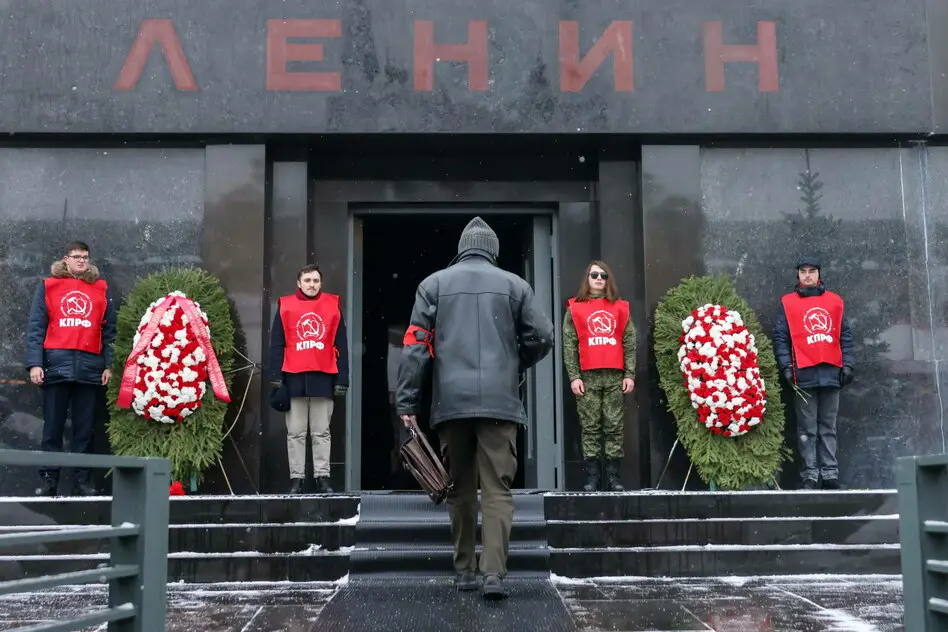
One way to discuss political issues with people on the street used to be rallies of all kinds. Because the privilege of gathering has long been granted to only a select few, you can't be too picky these days. So just stop by the Karl Marx Monument, where the Communist Party KPRF celebrated the 109th anniversary of the October Revolution on November 7th.
On this day, a man is offering the last two issues of the “best left-wing newspaper” for sale – free of charge. Have the hammer and sickle already reacted to Trump's election defeat? The man says no, but has his own opinion on the subject. He has no objection to Trump as US President, but he thinks it's good that the Democrats have now formed a counterweight to Trump: "Now they can't just blackmail us anymore."
Fighting voices can be heard from the improvised stage behind Marxen's back. There is talk of the “party’s victory program,” of “victory over fascism” – then and now. The word Ukraine is not mentioned once. A rally participant has a shiny silver peace sign that cannot be missed pinned to his coat and in his hand he is holding a handwritten poster with the inscription “Iran – socialist solidarity”.
After the short vote on the resolution, which is mandatory for such events, around 200 people made a pilgrimage to the Lenin Mausoleum. On the way there, an older gentleman asks a young couple to compare their clocks with the one on the Kremlin tower. It shows 12 o'clock, but it's actually ten minutes later. “Time has stood still – what a coincidence!” the gentleman exclaims excitedly. Many lay flowers at the graves of Soviet leaders. Also at Stalin's grave.
Communist leader Gennady Zyuganov then says in front of rolling television cameras: “Trump’s deadline has expired.” It is difficult to say whether Vladimir Putin shares this view. Especially since Trump will remain in office and business with him, especially the agreed export of Russian diesel fuel, will continue, Peskov hopes.
But these are trivialities. In Abu Dhabi, Putin gets exactly what he wants: He doesn't want to discuss peace, but rather geopolitics. With a supposedly equal counterpart, not with representatives of a group of politically disunited states.