
Germany · taz · · 2h
Trend towards the left-wing alliance in Berlin: SPD “ancestral gallery of decline” faces headwind
Deutsch (original) · Auto-translated to English
SPD member of the Bundestag Jan Dieren speaks of a “campaign” against a red-green-red alliance in Berlin. Such an alliance gives “hope for a real left-wing alternative,” says the 35-year-old. But some people, for example housing companies, were afraid of this. Dieren is chairman of the “Forum Democratic Left 21” (DL21), a left-wing movement within the SPD. In this role he supports its Berlin members who are in favor of negotiations with the left and the Greens, he tells the taz. The SPD should not take part “in social cuts and the attack on employee rights,” says Dieren.
His SPD comrade Hakan Demir still has suspicions. The vehemence with which there is currently sentiment against a left-wing alliance in Berlin is not only due to “the fact that there are anti-Semitic incidents in parts of the Left Party and apparently contacts with organized crime,” says the 41-year-old Bundestag member from the Berlin-Neukölln constituency to the taz. It's not just because some people fear the corporatization of large housing companies. “There are forces in the country that don’t want Karlsruhe to ban the AfD,” says Demir. At the forefront is the AfD itself and “its front line”.
Demir points out an aspect that has received little attention: “A change in the Berlin state government can change the majority in the Federal Council and thus also the chances of a Federal Council decision to ban a party,” says Demir. “The four votes from Berlin could become important and be enough for a majority to push forward an AfD review process.” Then the Federal Constitutional Court would have to take action.
Derya Türk-Nachbaur, the parliamentary director of the SPD parliamentary group in the Bundestag, emphasizes: The state SPD is leading coalition talks at the state level. But she has “confidence in the decisions of the Social Democrats in Berlin,” explains the 53-year-old and adds: “What I expect from every alliance in which the SPD is involved: a crystal-clear and uncompromising stance against any form of anti-Semitism.” But she also says: “The Berlin SPD has made it more than clear that there is no room for negotiation.”
The Left became the strongest force in the House of Representatives election last Sunday and could enter into a three-party coalition with the Greens and the SPD. However, the Berlin Left is in the crossfire because of allegations of anti-Semitism, particularly against its Neukölln district association. The Left party leadership rejects the allegations. However, there are strong reservations within the SPD about joining a possible left-wing government. The SPD federal chairwoman Bärbel Bas described it as “very difficult to work with a party that is largely anti-Semitic.” Lars Klingbeil expressed himself a little more cautiously, but also skeptically.
The SPD member of the Bundestag Isabel Cademartori sees it differently. “There have often been coalitions between the SPD and the Left in Berlin,” she reminds the taz. The previous city government was voted out of office, the Left “very clearly won” the election in Berlin and was therefore given the task of holding talks. The SPD in Berlin should “not allow itself to be driven by this completely overheated media debate of the last few days, which has lost all measure and appears to be increasingly politically motivated,” advises the 38-year-old.
Some SPD grandees are also contributing to this overheating. Former SPD leader Sigmar Gabrel warns that the SPD must not “form a coalition with any anti-Semitic party.” There are people on the left “who have nothing in common with this state,” said the 67-year-old. Brandenburg's SPD Prime Minister Dietmar Woidke, 67, also spoke of a "security risk for Berlin" with regard to the left and also spoke out against the socialization of Berlin real estate companies.
On Wednesday, several former Berlin SPD leaders spoke out, including former Governing Mayor Michael Müller, 61, and his predecessor Walter Momper, 81. In an appeal entitled “SPD renewal,” they wrote that there was “currently no basis for talks with the Left Party” and that the SPD should not work with “anti-Semites” and “terrorists.” In their letter it is said that the left “partyed and danced with the boss of a criminal clan” and that some were also promoting the “extinction” of Israel.
Mark Rackles, SPD senator in Bremen and former state secretary in Berlin, has burst his hat because of this. In an angry post on Facebook on Friday, he described the veteran comrades who spoke out against a left-wing alliance in Berlin as the “ancestry gallery of the decline of the Berlin SPD”. They stand for the “sell-out of the city in the 90s” and the “failed housing policy of the 2000s”. Their call is “unserious” and “so incredibly close to the tone of the right-wing populists that as an SPD member you can only be ashamed of it,” says the 59-year-old angrily. In Bremen, where he works as a senator, a coalition of the SPD, the Greens and the Left has been working together for years.
The federal chairman of the SPD youth organization Jusos, Philipp Türmer, also does not share the concerns about a possible left-wing alliance in Berlin. “Berlin is a progressive city and also needs a progressive coalition,” says Türmer to the taz. “The doomsday scenarios that are now being invoked everywhere if red-green-red were to govern seem to me to be greatly exaggerated.”
A red-green-red coalition could just as well be “an opportunity,” he believes. Anti-Semitism is a problem in all parties, adds Türmer and recalls that the current Berlin CDU general secretary Lukas Krieger “drew attention in his youth because of Nazi slogans and a swastika badge.” All parties “have a responsibility for Jewish life and have to make it clear where they stand,” said the 30-year-old.
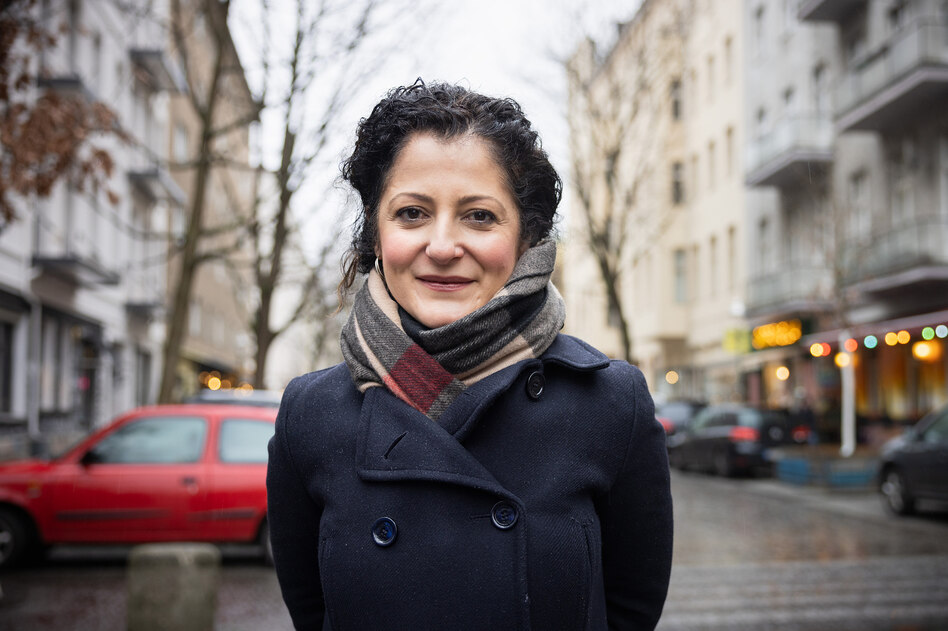
People seem to see things similarly in Berlin. There on Friday, the Berlin SPD vice-chairwoman Cansel Kiziltepe spoke out in favor of coalition negotiations between her party and the election winner, the Left Party, and the Greens. “The people of Berlin decided on left-wing politics on election day,” said Kiziltepe. “Our intersections with the Left and the Greens are obvious,” said the politician, the Senator for Labor and Social Affairs in the current black-red Senate. Kiziltepe is the first leading SPD politician in Berlin to take a clear position on this issue. She belongs to the left wing of the party.
In addition to red-green-red, a coalition between the CDU, the Greens and the SPD would also be mathematically possible. But that is becoming increasingly unlikely.
Read the full story at the source
Source: taz