
World taz
Transatlantic regatta Route du Rhum: record times despite calm
Impressive winners in the traditional French solo race to the Caribbean. Boris Herrmann has a good chance of second place in his class. more...
Deutsch (original) ·Auto-translated to English
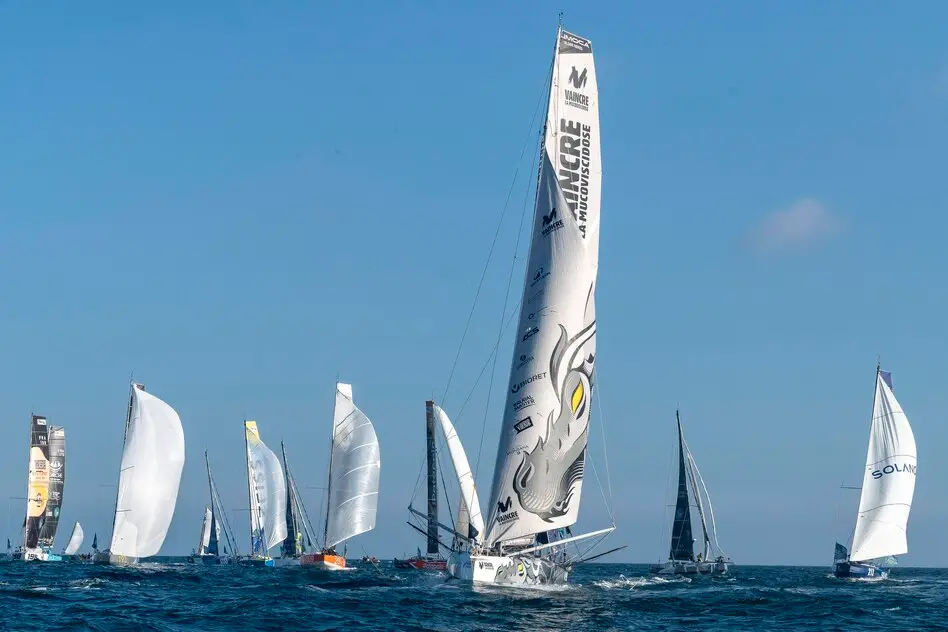
On Wednesday morning at 1:14 a.m. local time, Frenchman Corentin “Coco” Horeau crossed the finish line in front of the French overseas department of Guadeloupe as first in the Imoca class. The 37-year-old Breton made only slow progress in the nerve-wracking calm zone of the last two days. Nevertheless, with his total time of 9 days, 17 hours and 9 seconds for the officially 3,540 nautical miles (approx. 6,500 kilometers) long route to the Caribbean, he beat the previous record by a sensational 2 days, 24 minutes and 16 seconds.
“To arrive here with the record – it’s like a dream,” said Horeau in Pointe-à-Pietre. The professional sailor, who also has a captain's license for merchant ships, is well known in the French ocean scene. But he had not yet made a name for himself internationally. By winning his first solo regatta in the Imoca, he made a statement. The traditional Route du Rhum race for so-called single-handed sailors, which takes place every four years and is one of the major sporting events of the year in France, has taken place every four years since 1978. The start now took place on November 1st off Saint-Malo.
The race, which was originally intended to promote Caribbean rum, is considered the most important preparatory regatta for the non-stop Vendée Globe circumnavigation regatta, which also takes place every four years. In contrast to the Route du Rhum, where 115 boats are starting in six classes this year, the Vendée Globe is only for Imocas. With his victory, Horeau immediately made himself one of the favorites for the next Vendée Globe 2028/29.
He had already laid the foundation for his victory on the second day when, unlike the leading competitors at the time, he chose a different route through a calm zone and was then the first to leave it with a fresh wind. At times he extended his lead to 320 nautical miles. He confidently controlled his proven and fast ship and was spared from material damage such as collisions with UFOs (“Unknown Floating Objects”) floating in the water.
When Horeau crossed the finish line, the runner-up, the only German participant Boris Herrmann, was still around 270 nautical miles behind. He now has some wind again and is expected to cross the finish line on Thursday afternoon local time. The 45-year-old described the previous bobbing in the calm on Instagram as follows: “Those long hours with almost no wind were actually quite nice.” Everything was so peaceful and he was even able to sleep on deck under the stars.
Herrmann would achieve his best result to date with second place in his third participation in this regatta. Third place, Frenchwoman Eldie Bonafour, was 46 nautical miles behind him at midday on Wednesday. Before the start, Herrmann had set his sights on placing in the top six.
Of the 22 Imocas that started, four have had to give up so far. The young French sailor Violette Dorange (25) collided with a trimaran shortly after take-off. Of the six participating boat classes, three are for three-hull boats (trimarans), including the Maxis of the so-called Ultim class, the fastest current offshore cars.
The Ultims, which are up to 32 meters long and up to 23 meters wide, now sail with wings (foils) like the Imocas and, when there is more wind, lift themselves out of the water with all three hulls. They reach top speeds of up to 50 knots. For the skippers, these boats are extremely stressful to sail and involve many risks of injury, which is why helmets are often worn.
Of the eight starters in the Ultims, three have already had to give up, including the former Vendée Globe winner Armel Le Cleac'h. It capsized at night on November 4th, but was rescued by a cargo ship. The winner after just 6 days, 13 hours, 27 minutes and 40 seconds was the 29-year-old Breton Tom Laperche. He crossed the finish line on Sunday evening and beat the previous ultimate record by more than six hours. He called his victory the “highlight of my entire life’s journey.”