
Germany taz
Trotting track in Mönchengladbach: One last time at the trot
As a farewell, the trotting track in Mönchengladbach is once again very busy. This brings back memories of the heyday of this sport. more...
Deutsch (original) ·Auto-translated to English
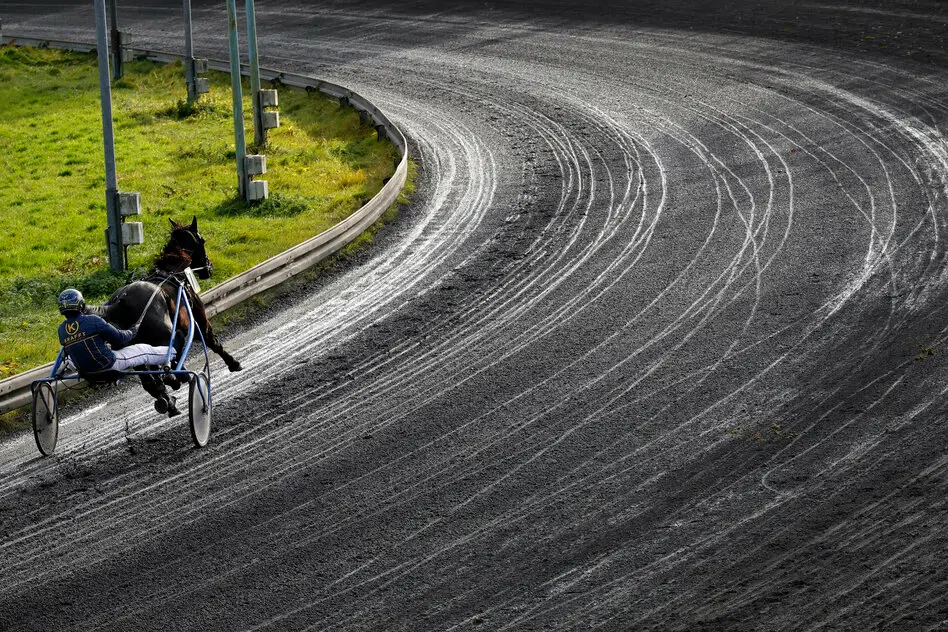
Large crowds on the spectator terraces and at the betting counters, eleven races for professionals and amateurs, an impressive crowd of photographers: at the Mönchengladbach harness racing track on Sunday afternoon, all sorts of symptoms of a supposed lightning comeback of the sulky sport were registered. In fact, it is not a renaissance, but rather a swan song. A surprising number of people want to expose themselves one last time to the strange charm of betting and watching fun, which has now definitely come to an end on the Lower Rhine - a good 133 years after the very first race with four horses.
So you can feel a good pinch of sentimentality on the partly dilapidated facility, as well as a certain amount of regret. “If so many had come every time, we would have had different sales,” says Frank – a former driver and horse owner who, after 43 years of activity, has retired to a coffee in the main building’s casino. “Who knows what would have happened then.” But because that wasn't the case, this world has noticeably shrunk over the last three or four decades. “And now we are in a situation where we can no longer change it,” said Frank. “There’s nothing to sugarcoat.”
This is probably a little easier to say when someone is already “out”. Others would like to stay in and have one less valuable option in the future. Like the young Doreen, who is launching “Extrem Dream FK” and “Penny Lane Newport”. Two trotters from her modest property, which she trains herself, “because it’s just incredibly exciting.” As an employee of the city of Essen, she is not dependent on big prizes, “but the horses have to run.” So she will orientate herself towards Gelsenkirchen, where the last remaining A-Bahn in the west is. "It's just that it's a right-hand track. That doesn't suit all horses that usually run left-handed. Plus, as an amateur, you have to get into it first. It's not that easy."
Similarly, the six-person gaming group from Doesburg in the Netherlands will have to take different paths in the future. For years she has been setting up in the small casino near the paddocks to place win and place bets - up to a total limit of 50 euros, as one of them assures. These were afternoons full of little joys and flops, during which they followed the race via live stream on their smartphones. As of today, these excursions are “kwijt”, i.e. lost. That's why they will probably go to Belgium instead: "It takes us two hours or more to get to all other trains."
Only Elmar Esser doesn't have a plan B. The 71-year-old with the trimmed mustache just wants to finish his voluntary management of the racetrack with dignity. To do this, he positions himself in front of the main grandstand after each of the eleven races to honor the last winners with members of the city's carnival guard. It is the “Grand Prix of the Rhenish Carnival”. However, there is no mood for extensive foolishness. Behind the scenes, Esser has waged a persistent battle for the survival of this railway. But the city of Mönchengladbach only ever guaranteed its continued existence for another year - and has now pulled the plug, as announced.
This has to do with tangible interests. The city wants to use its development company to develop the area bordering the local airport as a “potential area” for innovative companies. According to optimistic estimates, this could create up to 1,000 jobs. It is sometimes not clear whether so many interested parties can really be acquired. Nor is there any effort to sustainably raise the frequently flooded areas in the oval. Nevertheless, it was clearly conveyed to Esser and his racing club in recent discussions that they should get away. This is also how the best German driver and local hero Michael Nimczyk, who was sitting at the table, took it. “I don’t think we were important enough to the city,” he was quoted as saying in a betting portal.
The record winner from nearby Schiefbahn would have loved to win the very last race in his living room with “Trouble”. This would have come full circle for the former youngster, who did his first laps here after school. But at the crucial moment, his stablemate Robbin Bot and “Junique” pushed ahead of all other eight starters. The last flowers went to the Dutchman, while Elmar Esser remained in the finish area for a long time with a gift basket. A small consolation from the Main Association for Trotter Breeding (HVT), which is losing the third historic railway in the West within 20 years - after those in Dinslaken and Recklinghausen.