
Germany · taz · · 2h
Deadly global warming: four days in June
Deutsch (original) · Auto-translated to English
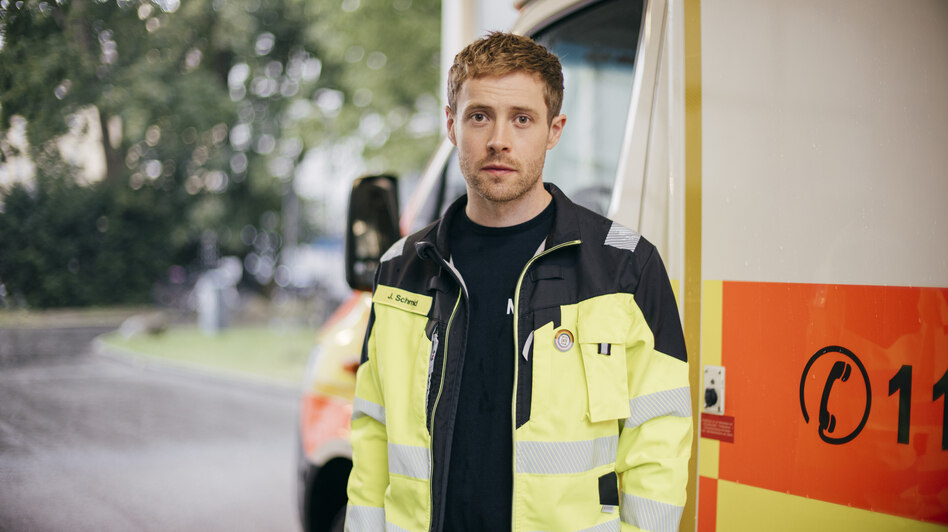
It is Wednesday, June 24, 2026, one of the hottest days this summer. Jörg Schmid's 24-hour shift begins at a quarter to seven. Schmid is an emergency doctor in Munich. As always, he first checks the equipment in the emergency vehicle and fills the backpacks with medication and bandages. Then his pager sounds the alarm and “resuscitation” is shown on the display.
In the last week of June, shades of red are no longer enough to represent what is to come for Germany. The weather maps are colored dark purple: 38 degrees, 39 degrees, 42 degrees. It is the second heat wave to hit Europe this summer. New records are being set and - particularly strenuous for the body - the average temperature is also well above the normal level in June. Because it hardly cools down at night and the body cannot recover while sleeping.
9,600 people will die in Germany this week because of the heat. At the end of this summer, the Robert Koch Institute expects 16,000 heat deaths. A number that far exceeds all previous years. For comparison: 2,500 heat deaths are expected for 2025, compared to 8,400 in the previous record year of 2018.
So 16,000 people died this summer because it was too hot. This number is statistically calculated by the Robert Koch Institute based on excess mortality in the hot weeks. But who are these people who died between June and August because it was too hot? And why did they die?
Answers can be found in Jörg Schmid's shift on June 24th. And in the emergencies that were admitted to the university clinic in Freiburg this week. And in the emergency calls from a facility for people with disabilities in West Palatinate. In order to recapitulate those hot days at the end of June, emergency doctor Schmid, a clinic doctor and a facility manager shared their service protocols with the taz.
In the emergency services there are quick keywords that are intended to roughly classify which emergency awaits the paramedics and doctors on site. When he hears the word “resuscitation,” says Jörg Schmid, he knows that he is often too late. At the scene he meets a distraught woman who leads him into the kitchen. Her husband is lying on the floor. When she woke up in the morning, she noticed that he was no longer lying next to her in bed and found him that way, she tells the emergency doctor. The man lies on his stomach. Schmid grabs his arm and notices that rigor mortis has already set in. He must have been lying here for hours. It's too late to revive.
“The man had chronic heart failure,” says Schmid. This means he belongs to a group that is particularly vulnerable in hot weather. When it's hot, the blood vessels in the skin, arms and legs expand so that the body can cool down better - the heart has to transport more blood and beat faster. However, a weak heart often does not have enough strength to keep the circulation stable. Schmid suspects that it must have been the same with this patient. He must have gone into the kitchen at night to get a glass of water and collapsed. All Jörg Schmid can do is confirm the death and call psychological care for the wife.
When Schmid arrives at the patient's apartment, the man is lying in bed. He can hardly be woken up. The skin on his arm forms wrinkles - a sign to the emergency doctor that the man is dehydrated. In the past few days, her husband has become increasingly weaker, says his wife, who looks after him. He ate and drank less and hardly spoke anymore. The patient has a fever, Schmid notes, he is breathing quickly and his blood pressure can hardly be measured. The dark urine in the bag looks like a bladder infection to the emergency doctor. Jörg Schmid suspects sepsis, blood poisoning. If you sweat for days and don't drink enough, your kidneys dry out and bacteria are no longer washed away in the urine, but can rise and enter the bloodstream.
“Many problems in the heat start with drinking and sweating,” says Schmid. On the one hand, older people are less thirsty. But he also often experiences that old people don't drink much because they have difficulty swallowing, or they are incontinent and deliberately drink little so that they don't have to go to the toilet on the go. But the problem is: dehydration weakens the immune system, making it easier for infections to occur.
With the 86-year-old patient's wife and the family doctor on the phone, Schmid decides on a palliative approach - the primary aim is to alleviate his symptoms, but the man stays at home. According to his wife, he didn't want to go to the hospital anymore and the chances of recovery are slim. Schmid injects him with morphine for the shortness of breath and possible pain and explains to his wife about possible end-of-life outcomes. It is very likely that her husband will die that day. Schmid then reports for the next mission.
In West Palatinate, around 400 km away, Barbara Gude repeatedly reminds her living group to drink. She runs a facility for people with disabilities. It actually has a different name, but heat deaths in care facilities are particularly sensitive, so it's better to remain anonymous. Heat represents an acute danger for the residents of your facility. Many of the residents cannot interpret how their bodies feel, says Gude. “They don’t understand that they have to drink a lot in the heat, they don’t realize that they���re dizzy and they don’t understand why they should wear a sun hat.”
In the past few days, Barbara Gude and her team had to call an ambulance several times because residents couldn't cope with the heat. A man suffered heat stroke after an excursion and had to stay in the hospital for days. With every resident picked up by the paramedics, the unrest in the facility increases, says Gude. Many are afraid that they will be the next emergency services to come for them, says Gude.
On Saturday her team will call an ambulance again. A man, 67, is becoming more and more apathetic. “It’s only late that you notice that your clients are feeling bad,” says Gude. “They become quieter, their gaze changes and they no longer want to get out of bed.” These are signs. But the moment that the person faints, it happens completely suddenly. The man dies in the hospital that night.
In Munich, Jörg Schmid has just taken a student to the hospital with severe abdominal pain when he is called back to the patient with blood poisoning.
Schmid drives back to the man's apartment; maybe he needs more painkillers so that he doesn't have to suffer. When the emergency doctor arrives, the man is already dead.
About half of this summer's heat deaths were over 85 years old. Just like Schmid's patients this morning. In articles published online about the thousands of heat deaths, users repeatedly comment that these people would have died anyway because they were old and sick. And they ask: “Did they die from or with the heat?”
Schmid finds it “pretty crass” to act as if it doesn’t matter that these people died because they are old. "Every time a grandfather died, a husband, an aunt. They could have had a few more beautiful years." Schmid sees things the other way around: “In many cases you can say that the person died from the heat because of their previous illness.” From the excess mortality during the heat wave determined by the Robert Koch Institute, you can clearly see that people would still be alive without the heat, says the emergency doctor. But the death certificates say heart failure or blood poisoning instead of heat or climate, Schmid criticizes.
Shortly before 12 p.m. Jörg Schmid is back at the station and is waiting for his lunch.
At the Viktualienmarkt, a few kilometers further in downtown Munich, it is now over 30 degrees. The paved square has heated up, the air is building up between the walls of houses and market stalls. A woman leaves a bakery and suddenly collapses in a side alley.
At around the same time, a 42-year-old woman was admitted to the Freiburg University Hospital and was unconscious. Katrin Fink is working in the emergency room that day. The doctor ventilates the patient in the shock room. She is an alcoholic and was found in her hot apartment. The woman then spent several days in the intensive care unit, recalls Fink.
She remembers even more dramatically a patient who was still working on a construction site that Wednesday. The 54-year-old construction worker stands in the blazing sun for hours. The man does not take a siesta, as is common in southern European countries at these temperatures and is particularly important for these professional groups. The next day he was found unconscious in his car. Fink suspects that he must have been so weakened by the heat and direct sunlight that his circulation collapsed. They tried to resuscitate him in the trauma room, his circulation was restored briefly, but then the man died.
On Friday, another construction worker was admitted to the Freiburg University Hospital. The man is 42 years old. He also worked for hours in the sun. He originally had sunstroke, but when Katrin Fink takes him in, his whole body convulses. The thermometer no longer shows his body temperature because the scale only goes up to 42 degrees, the doctor reminds her. He is cooled down and put into an artificial coma.
The woman at the Viktualienmarkt in Munich is lucky. A fire team is standing not far away when she collapses. The group immediately begins to resuscitate her. Passers-by block the alley with a cloth. When Jörg Schmid arrives, he takes charge of resuscitation and intubates the woman. After twelve minutes her circulation is back. Schmid gives her an infusion and notices that her heart is beating very slowly.
This could be due to the resuscitation, says Schmid, or to a medication the woman is taking. A beta blocker, a very commonly prescribed heart medication.
Schmid often encounters this problem on hot days. It affects people who take heart rate-lowering medication and then drink too little. Because they absorb too little fluid, the kidneys dry out and work less. This causes the drug to collect in the blood and have a stronger effect. “It’s like taking a double dose, but you’re taking the normal amount,” says Schmid. The result: the heart rate is reduced too much. Schmid suspects that this also happened with this patient. He drives her to the clinic.
“Everything I knew from the textbook I experienced like a magnifying glass that day,” says Schmid about his service on June 24th. Overdosed medications, dehydrated people, dilated blood vessels and weak hearts. The German Weather Service later calculated in a study that this heat wave would not have been statistically possible without climate change. The World Health Organization therefore called the days at the end of June a “dress rehearsal” for future summers in Europe. During this “dress rehearsal” 16,300 people died in Germany.
In West Palatinate they are currently submitting a construction contract for a new house in which people with disabilities will be better protected. The current building from the 80s heats up too much in the summer. When asked when the house should be finished, the manager said: “Yesterday.”
Read the full story at the source
Source: taz