
Politics taz
Suicide assistance as a service: advertising death
Commercial companies advertise suicide assistance on the Internet. A medical guideline is available, a law is coming. But both are controversial. more...
Deutsch (original) ·Auto-translated to English
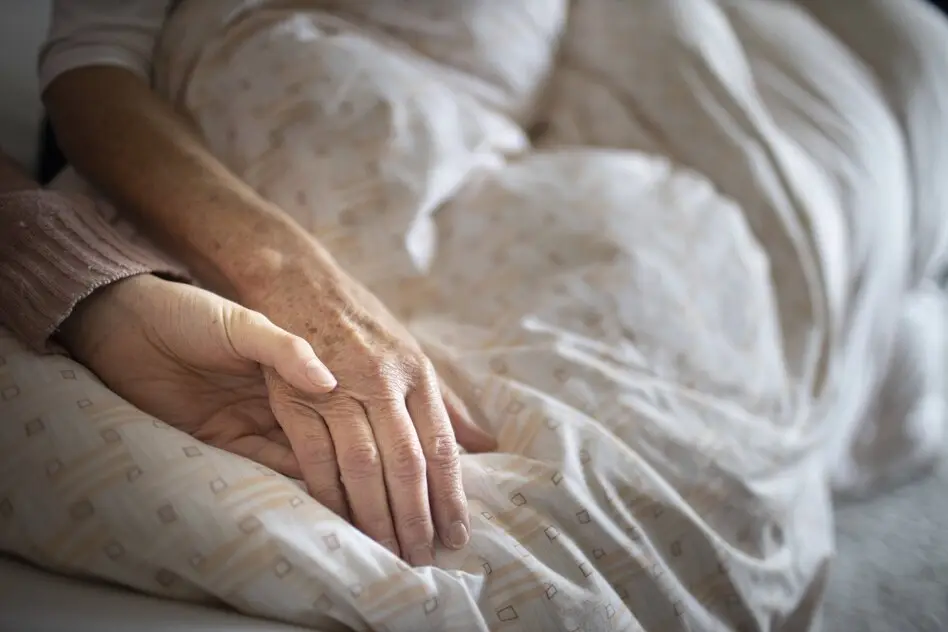
Martin Köhler no longer wanted to continue living when the cancer in his body progressed unstoppably and his wife suddenly died. Köhler turned to the private euthanasia company Linus, which is based in Stuttgart and works nationwide. Linus promises: “a self-determined end of life” – with an “experienced” and “empathetic” advisory team.
Köhler sent his medical records there. Shortly afterwards, a doctor came over for a lengthy discussion. Some time later, the same doctor and an assistant appeared at Köhler's Berlin apartment at noon on the agreed day. They installed the intravenous line and Köhler opened it himself. Linus charged around 8,900 euros for the service.
Do you suspect you are suffering from depression? Or do you even have suicidal thoughts? Other people can help you. You can contact family members, friends and acquaintances. You can also get professional or volunteer help – even anonymously. Please seek help, you are not alone. Below you will find some contact points.
Acute suicidal thoughts: Call 911 if you have acute suicidal thoughts. If you would like to be treated immediately, you can find help at the psychiatric clinic or the crisis service.
Depression and depressed mood: Get help through psychotherapy. The German Depression Aid Foundation can also offer you help and information on dealing with depression.
Sorrow: Are you sad and want someone to talk to? Do you want to get rid of worries and want someone to listen to you? The telephone counseling service is anonymous, free of charge and staffed around the clock. The telephone numbers are 116 123 or 0800 111 0 111 or 0800 111 0 222. You can also take advantage of the written offer via chat or email.
Online advice for suicidal thoughts: MANO Suicide Prevention offers anonymous online advice. If you are over 26 years old, you can register on the website. If you are younger, you can write a help email here.
Offer of help for children, young people and parents: The number against grief has set itself the goal of helping children, young people and parents. Children can get support there on 116 111, parents on 0800 111 0 550, and you can also find help in Russian and Ukrainian at the Helpline Ukraine on 0800 500 225 0.
Offer of help for Muslims: You can reach the volunteers of the Muslim pastoral care hotline anonymously and confidentially on 030 443 509 821.
You can search for other pages and numbers that meet your needs at the German Society for Suicide Prevention.
Linus is just one of several suicide assistance companies that providers refer to as “suicide accompaniment”. The placement agency Humania, also based in Stuttgart and operating nationwide, is part of claimsValue GmbH, which, according to the commercial register, also deals with the “provision of services, advice and brokerage in the field of automotive technology”. At Humania, suicide support including telephone calls, preliminary discussions and document reviews also costs around 8,900 euros. When it comes to suicide counseling, Humania promises “respect, real human closeness and an attitude that allows freedom without steering it.” The taz's inquiries to both companies remained unanswered.
The area of suicide assistance was originally dominated by associations, the best known being the German Society for Humane Dying (DGHS). Those wishing to die generally have to be a member of the association for at least six months. A lawyer and a doctor carry out separate preliminary discussions and then, if necessary, suicide support. They each receive a fee of 1,500 euros plus expenses and expenses; in total, suicide support at the DGHS costs 4,000 euros.
While the associations do not explicitly advertise suicide assistance, the private providers present themselves on the Internet with sometimes bizarre advertising that hardly fits the serious topic. On Linus' website you can see a gray-haired couple on a couch who look neither seriously ill nor very old. They are smiling and studying something on a tablet, as if they were planning to move to a retirement home or go on a cruise. At least not her suicide. In an information brochure, Linus advises having “drinks, seating or small snacks for relatives” ready on the day of suicide.
The Vitaexit platform, which was set up by a lawyer and provides private medical suicide assistance, writes about “weariness of life” as an accepted reason for suicide: “Tired of life ... describes a quiet, deeply felt feeling of completeness - the awareness that one's own life can come to its end in a natural way.” Suicide researchers' hair stands on end at such glorification.
All private companies advertise that they do not require a longer membership or a long waiting period. DGHS President Robert Roßbruch is critical of the private providers' websites. "There is a lack of transparency when it comes to costs. I also have a bad feeling about these companies' advertising on the Internet, which is reminiscent of product advertising. That is ethically problematic," says the association president.
The very liberal ruling of the Federal Constitutional Court from 2020 on suicide assistance also allows suicide assistance by private companies. However, “free responsibility” and a certain permanence of the wish to die must be proven. Otherwise, end-of-life care is a violation of the law. A Berlin doctor who helped a severely depressed woman commit suicide was sentenced to several years in prison.
Both the associations and the private companies have preliminary expert procedures due to the legal situation. According to their websites, the companies request all medical documents from interested parties, make telephone calls and, as a rule, at least one doctor comes to a personal preliminary consultation on site, also to be sure of the “free responsibility” of the person wishing to die. If there is an acute psychological crisis, or even psychosis or dementia is visible, the wish to die is usually rejected.
Several medical societies recently published guidelines on “Dealing with Requests for Suicide Assistance.” It provides for an assessment by an independent specialist and a psychiatrist or a licensed psychotherapist at intervals of four weeks. "Finding this is almost impossible, especially for the terminally ill, help is then unavailable in practice. Therefore, such a regulation would be unconstitutional," says doctor Matthias Thöns, who himself leads a palliative care team and also provides suicide assistance for the seriously ill.
Active euthanasia is banned in Germany. This includes, for example, a doctor injecting a person with a lethal drug. According to local law, this is killing on demand and therefore a criminal offense.
Passive euthanasia, i.e. suicide assistance, has been permitted since 2020. The Federal Constitutional Court decided that. For example, a doctor places an infusion. However, the person wishing to die must open access to the infusion with the lethal agent themselves. According to the ruling of the Federal Constitutional Court, the prerequisite is that the person wishing to die is personally capable of insight and judgment and that no one exerts any influence from outside. Assisted suicide is therefore not tied to a serious, painful and fatal illness. It can also happen if someone is severely limited by age and illness and therefore wants to end their life.
A draft law by a cross-party group of MPs that is intended to legally regulate preliminary expert procedures and access to the lethal drug is currently in the works. It is still unclear whether and how this will restrict the current work of clubs and companies.
A guideline is only a recommendation for doctors and not a legally binding law. A draft law on assisted suicide is currently being drawn up by a cross-party working group made up of members of the Union, the SPD, the Greens and the Left in the Bundestag.
Kirsten Kappert-Gonther, psychiatrist and health expert in the Green Party, is a member of this working group. She “essentially” welcomes the guidelines presented. However, she recommends that the deadlines be differentiated “between people with an illness that is likely to lead to death in the near future and other suicidal people who do not have an immediately life-shortening illness,” says Kappert-Gonther. In the second group, the assessment period of four weeks “should be longer, because suicidality can change again”.
Those involved have so far agreed not to disclose the content of the upcoming draft law. The cross-party group includes MPs who presented a draft law a few years ago with sanctions for those assisting in dying who do not adhere to a strict assessment process. But the group also includes members of parliament who rejected sanctions years ago in a much more liberal draft law. A joint draft is expected to come out at the beginning of next year.
The question is what consequences a new law will have for current providers and those seeking help. The family of Martin Köhler, whose real name is different, did not welcome the suicide assistance provided by the service company, but in the end they accepted the terminally ill man's decision, says a relative: "He didn't want to go anymore and he didn't see any other way out."