
Germany taz
Substitution in danger: The search for replacement
Addicts can regain their everyday lives with substitute drugs. But there is a threat of a supply crisis: doctors are retiring and there are no successors. more...
Deutsch (original) ·Auto-translated to English
Gesine Hoeft prescribes substitutes and seems irreplaceable herself. In an ideal world, she would probably have been retired for seven years. “My family really wants me to finally slow down,” she says. But Hoeft can't stop. If they did, a hundred people would suddenly lose the basis for a stable life.
Hoeft is a convinced addiction doctor. But the 74-year-old cannot find a successor who shares her convictions. She sold her own practice in Hamburg in 2019. For almost three decades, she worked 60-hour weeks there and prescribed methadone and other medications. Substitution is the name of this treatment, which enables addicts of opioids such as heroin to live a regular life. However, the doctor who took over Hoeft's position seven years ago did not want to continue the substitution therapy. It doesn't fit the image that the practice should give off.
So instead of retiring, Hoeft continues to work. Two days a week, in another doctor's office. For Hoeft, abandoning her opioid-dependent patients is out of the question. She is always recording new ones. There is no end in sight.
This text first appeared in wochentaz, our weekly newspaper from the left!
Every week, wochentaz is about the world as it is – and as it could be. A left-wing weekly newspaper with a voice, attitude and the special taz view of the world. New every Saturday at the kiosk and of course by subscription.
Gesine Hoeft is not an isolated case. German substitution medicine rests largely on the shoulders of a few doctors who have long since reached retirement age or are close to it. More than half of them are over 60 years old. There is hardly any offspring. Nationwide, the number of substitute doctors is falling year after year - while the number of patients remains almost the same. This year, the Federal Audit Office called on the Ministry of Health to close these gaps in care. Only about half of the approximately 166,000 opioid addicts in Germany are even in substitution therapy. According to the Court of Auditors, the rate in neighboring France is over 80 percent. Germany is in a serious supply crisis, and it threatens to get even worse.
For a long time, substitution therapy was a success story. It is considered the most effective treatment for opioid addicts. The principle is simple: Instead of buying drugs from the black market, people addicted to opioids receive medically controlled substitutes such as methadone from doctors. These relieve the pressure of addiction, but usually do not cause intoxication. The patients remain dependent, but can stabilize themselves both healthily and socially.
If the daily purchase of illegal drugs is no longer necessary, the risk of drug-related crime also decreases. This makes it easier to get out of the drug scene. This also reduces the risk of secondary illnesses, such as those caused by infected needles. Studies show that substitution patients live longer, are healthier and are less likely to commit crimes.
In Germany, however, substitution was difficult for a long time. While other countries rolled out methadone programs in the 1960s, German doctors and the local authorities resisted the new form of treatment.
“Drug addicts were not viewed as individuals in need of help, but rather as a marginal and criminal group,” says Uwe Verthein from the Center for Interdisciplinary Addiction Research at the University of Hamburg. Until the early 2000s, only addicts with serious secondary illnesses such as AIDS or cancer were allowed to receive substitution. “You had to come into practice with your head under your arm,” says Verthein.
Hamburg, the city where Gesine Hoeft practices, was considered a pioneer in restrictive Germany. Progressive doctors fought for a “methadone contract” in 1990. Substitution thus became a health insurance benefit, for the first time throughout Germany. For a long time it was easier to find a substitution place in Hamburg than anywhere else.
One person who was picked up by this Hamburg model is Thorsten Hansen*. The 64-year-old says he had a “classic drug career.” He was depressed even as a teenager. He looked for a way out through drugs. Alcohol, amphetamines, cocaine, and finally opiates. “I was actually addicted to everything.”
In 1982, almost ten years before the first nationwide methadone programs, Hansen entered inpatient therapy. “It was clear: If I continued like this, I would be kicking the bucket.” He was drug-free for a few years, studied and founded a company. As he himself says, he led a normal middle-class life. Then the depression came back and Hansen relapsed. “It wasn’t life anymore, it was just survival.” He tried to go through withdrawal again - without success. It wasn't until the mid-1990s that he came to the Hamburg substitution program through a doctor friend. A few years later he moved to Gesine Hoeft's practice. Hansen now leads a regular life again, goes to work and has a stable circle of friends. “Today everything is actually paletti,” he says.
But Hansen's future depends on Gesine Hoeft continuing or finding a successor. He says he doesn't know of any other doctor in the north of Hamburg who looks after substitution patients. There are also long waiting lists everywhere. So what happens to Hoeft's patients if she one day stops? “So far I'm relatively at a loss,” says Hoeft herself. She sighs. “We would try to put them somewhere, mainly in the outpatient clinics.”
The addiction clinic in Hamburg-Altona looks like an ordinary family doctor's office. There is a reception and several treatment rooms. Photos with Hamburg motifs hang on the walls: boats, ropes, lifebuoys. In a way, the whole place is a life preserver. Opioid addicts often end up here first when looking for help. Senior doctor Annina Carstens says the address is known in the drug scene. The outpatient clinic is the largest of its kind in Germany. 7 doctors treat more than 600 people suffering from addiction here.
The goal of therapy varies from patient to patient, says Carstens. Young people who have only used opiates for a short time should become abstinent for the long term. In the case of a long-term addiction, it often makes more sense to stabilize people permanently with substitution drugs. Sometimes it is a success if the patient does not consume illegal drugs for a few months.
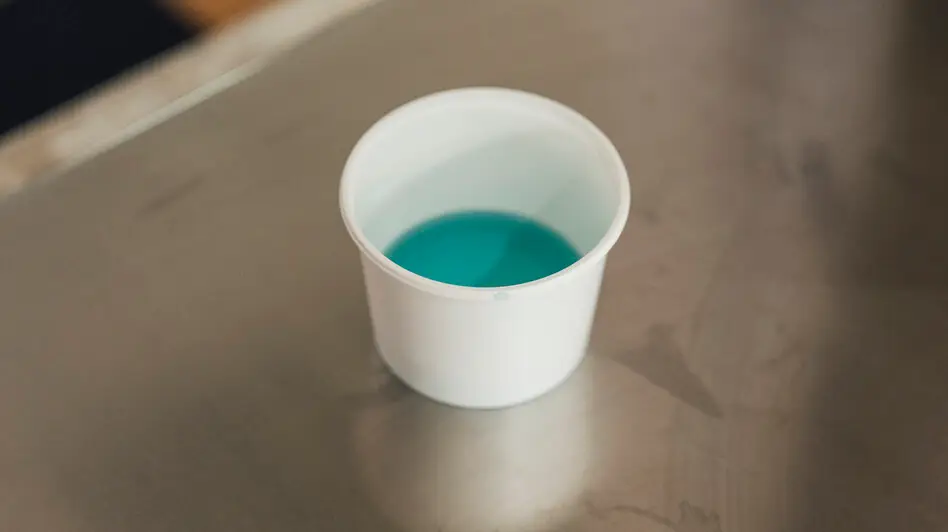
Anyone who is admitted to substitution therapy must first come to the outpatient clinic every day and take the medication in front of the doctor. There is a machine behind a counter that is reminiscent of a mulled wine dispenser from the Christmas market. But liquid methadone comes out of the tap. It is served with woodruff syrup. The greenish liquid is ready to be mixed in large measuring cups. “Once we bought raspberry syrup because the woodruff was out,” says Carstens, “that didn’t go down well at all.” She laughs. Some patients even reported that the methadone supposedly had a worse effect - even if that didn't correspond to reality.
The syrup is not just added for taste reasons. It is also intended to prevent patients from injecting themselves with the substitute medication. For some, the addiction manifests itself in a longing for the needle. Only after three to four months without concomitant use of other drugs are patients allowed to take doses home for several days. This is called take-home allocation.
At this point, it would be ideal for patients to switch to a family doctor. The practice around the corner is usually easier to reach than the central outpatient clinic. The change also creates distance from the open drug scene. Anyone who picks up their substitution medication in the outpatient clinic will meet many other patients, including possibly people in unstable situations. This can make it more difficult to leave the old circles. However, breaking off contact with acquaintances who are addicted to drugs is crucial in order to avoid relapses, says Thorsten Hansen. “You basically have to give up everyone you knew before.”
But finding a substitute family doctor is difficult. Due to the shortage of doctors, Altona, together with two other outpatient clinics, shoulder a large part of the care in the Hanseatic city. “The supply situation is dramatic,” says Annina Carstens. When a Hamburg doctor died in 2022, the ambulance suddenly had to accommodate 80 people. An additional burden.
In 2014, the Hanseatic city still had 106 substitution doctors, last year there were only 86. In Hamburg, too, almost half of the substitution doctors are over 60 years old. The success story of the Hamburg model seems to be over for now.
And Hamburg is still comparatively well positioned. In many rural areas of Germany there is not a single substitute doctor. Why aren't there any young doctors coming up?
“Addiction medicine has never been popular,” says Annina Carstens. She herself sits on a commission of the Association of Statutory Health Insurance Physicians that controls substitution in Hamburg. In order to be able to provide substitution, doctors must complete further training in addiction medicine. A while ago, the commission wrote to all those who had attended further training but still did not offer a substitution, says Carstens. The reaction was sobering. Some doctors said they would rather give back their further training than start substitution. Why is that?
On the one hand there is the dear money. Resident doctors complained about the low remuneration, especially for consultation services, says a spokeswoman for the Hamburg Association of Statutory Health Insurance Physicians (KVHH). Better pay could possibly motivate doctors to get involved in addiction care, according to the KVHH spokeswoman.
But is it just because of the money? Annina Carstens has another explanation. Many people have no idea what things actually work in a substitution clinic like the one in Altona. “People always have fantasies that there is always a ruckus here and the police are coming,” she says, “but very few people know that things are almost quieter here than in some family doctor’s offices.” Addiction medicine hardly plays a role in studies, nor does it play a role in specialist training. At most, during an internship in the emergency room, prospective doctors encountered intoxicated patients who sometimes rioted. “That doesn’t necessarily increase the motivation to deal with the subject,” says Carstens.
Many people are still reluctant to talk about addiction. They see it as a self-inflicted evil rather than a treatable illness. Hoeft suspects this is another reason why some doctors resist addiction therapy: “Perhaps colleagues are suppressing their own addiction structure,” she says. Addictions, such as those caused by alcohol, gambling, opiates or work, are more widespread than you think. Does that apply to you too? “Of course some people tell me that I’m a workaholic,” says Hoeft. But she doesn't believe that. “I’m just still having fun.”