
Germany · taz · · 1h
“Vote strategically” in Saxony-Anhalt: “It’s about democratic threat prevention”
Deutsch (original) · Auto-translated to English
taz: Mr. Kolb, Campact tried to prevent an AfD government with the large-scale “Strategically Vote” campaign in Saxony-Anhalt. The right-wing extremists ended up with 44 percent. Given this result, what is your conclusion?
Felix Kolb: The election result is a disaster, a turning point. It directly threatens people with a migration background, queer people, people with disabilities and leftists. But our campaign certainly worked: 60 to 70 percent of SPD and Green voters voted for these parties to prevent the AfD, and both made it into parliament. I'm proud of that. If these people had voted for the CDU and the Left, the AfD could easily govern now.
is a political scientist. He did his doctorate on the effects of social movements and was press spokesman for Attac. Together with Christoph Bautz, he founded the movement foundation and initiated Campact. He has been managing director there since 2008.
taz: You can also see it the other way around: The CDU would have a better negotiating position, and a stronger left would have more chances to formulate a social alternative to the austerity policy in the federal government, which is driving many to the AfD. Didn't your campaign make the situation worse?
Kolb: With a few percentage points more, the losses for the CDU would still have been devastating. I feel very sorry for the left because it is a solidly anti-fascist party. But I do believe that most leftists understand that the losses were just an unfortunate side effect of our campaign. And a large part of the left-wing losses went to BSW and AfD anyway.
taz: The argument from many on the left is that anti-fascist politics always have to address the question of distribution, that there needs to be a substantive counterpoint to neoliberal politics.
Kolb: I think democratic security is more important in this situation. Of course, one can say that a party is needed that is strong in the economic conflict lines and can better fight with the AfD. But then you just accept that the AfD is in power. And I haven't met anyone on the left who really says that a stronger left is more important than keeping the AfD out of government power.
taz: But why didn't you call on the voters of the Greens and SPD to vote for the Left or the CDU?
Kolb: Simply because of the mathematics. As few votes as possible should be lost. It would have been a disaster if the Greens had failed with 4.9 percent despite this campaign. But it was clear that we need far fewer people who go from the CDU, Left and small parties to the Greens and SPD than the other way around. By the way, when the Greens were at 3 percent a few months ago, we told the party: If that's the case before the election, we'll call on your voters to vote for something different. They weren't happy about that either. But then it was different.
taz: You don't think that "strategic voting" also strengthens the AfD's narrative that there are no longer any differences between the parties next to it?
Kolb: No, the AfD was already at 43 percent in polls at the beginning of our campaign. I think other factors were more crucial, such as the long-term development of right-wing extremist structures in Saxony-Anhalt and the fatal actions of Chancellor Merz. Of course, it can always be the case that you trigger something among AfD voters. But I think we should not base our actions on AfD voters, but rather on what the AfD means for people who are threatened by it.
taz: The BSW is now threatening to become the stirrup holder for the AfD, and there could also be dissenters from the ranks of the CDU. What is your strategy for the next few weeks?
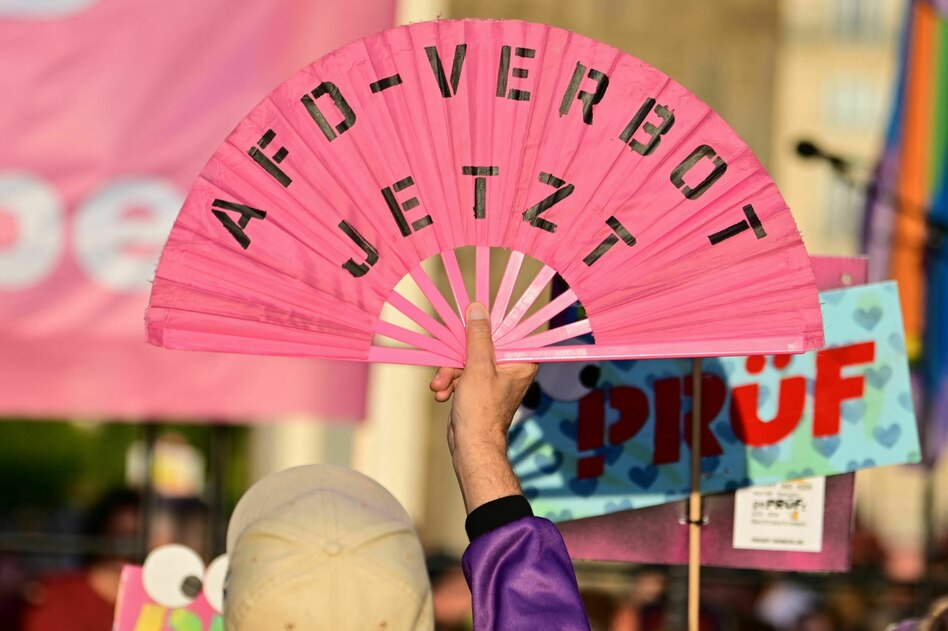
Kolb: On the one hand, we are not prepared to release the members of the BSW and CDU from their responsibility towards those who are threatened by the AfD. We will put pressure on this - after all, BSW MPs also have a free mandate. The second point is that we see how those who have always wanted to put an ax to the firewall now feel vindicated. Against this, we will make it clear with a wave of protests on the streets: No, the firewall is not the reason why the AfD is so strong. The firewall is the instrument right now to deny the AfD access to state power. And then we finally have to talk about a ban on the AfD! Demonstrations for all of this are already planned nationwide this weekend, from Hamburg to Magdeburg and Berlin to Freiburg.
taz: The last wave of demonstrations against the right was huge, but could not bring about a turnaround. Do you plan to change anything about your protest strategy?
Kolb: The wave of demonstrations against the right from January 2024 was an incredibly important signal that a large majority of society is against the AfD's deportation policy, as was discussed in Potsdam. And after Merz broke taboos in the 2025 election campaign, we stabilized the firewall again with the demos. That was important. I would say that far too little has been done by politicians with this impulse. I would have liked more support back then, including from the traffic lights. But that doesn't mean that these demonstrations achieved nothing. They have created a great sense of community and support. And made it clear where the Democratic majority stands. I wouldn't underestimate that.
taz: In the past, the demos were unable to provide enough counterpoints because politicians from government parties were allowed to speak at them. Will that continue to be the case?
Kolb: If we offer politicians a platform, I would make it dependent on the people in question. There are also important voices in the CDU who clearly reject the AfD's nationalist ideas and support the firewall. I would definitely offer such people a platform, even if I don't agree with them much else. The common consensus must be: The AfD is to be rejected as a nationalistic and anti-constitutional party and accordingly any form of cooperation with it is to be rejected. Of course, a common strategy for all democrats would be desirable. But as long as that doesn't exist yet, we should keep talking.
taz: How should things continue in the long term?
Kolb: What is important now in Saxony-Anhalt and beyond is to strengthen civil society. We have just decided that we will transfer one million euros to the German Fund for Democracy. This is a non-partisan association, to which Marco Wanderwitz belongs, which sees itself as a civil society safety net. The association wants to ensure that all structures attacked by the AfD can continue. We want to make our contribution.
taz: Will there also be a “Strategically Vote” campaign in Mecklenburg-Western Pomerania?
Kolb: That hasn't been decided yet. We have now commissioned a survey to see what the mood is like in Saxony-Anhalt. As I said: Basically, the “Choose strategically” tool worked. If, based on the new survey data, we have the impression that this strategy can make a contribution, then we will call for it. In Mecklenburg-Western Pomerania, however, the risk of AfD participation in government is probably lower.
Read the full story at the source →
Source: taz