
Germany · taz · · 3h
Nitrogen threatens drinking water: Environmentalists and waterworks want stricter fertilizer regulations
Deutsch (original) · Auto-translated to English
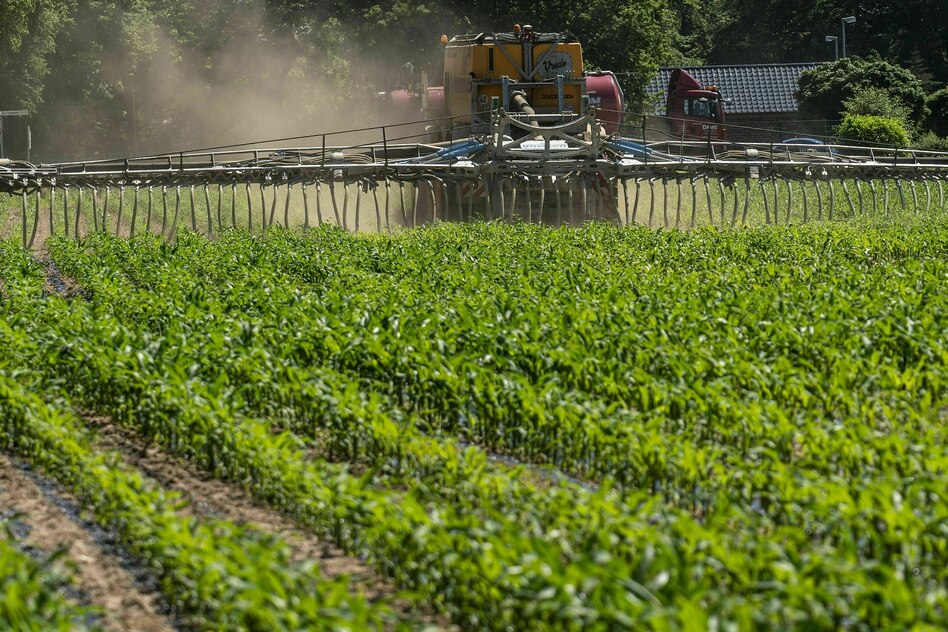
Environmental and water associations are calling for fertilizer laws to be tightened in order to protect drinking water instead of being relaxed, as planned by Agriculture Minister Alois Rainer. In a current position paper, the Federal Association of the Energy and Water Industry (BDEW) as well as BUND, Greenpeace, Umwelthilfe, Nature Conservation Ring and Green League demand, among other things, a secure legal basis for defining “red areas”. There is too much of the nitrogen compound nitrate from fertilizers in the groundwater, so farmers have to reduce fertilization. The organizations also want agricultural businesses to record in a nutrient balance how much nitrogen and phosphate they potentially release into the environment.
Because nitrate concentrations that are too high make groundwater unsuitable as a source of drinking water, for example. Finally, the substance can be converted into carcinogenic substances in the body via nitrite. According to the associations, drinking water in regions contaminated with nitrates is at risk of becoming up to 62 percent more expensive because suppliers have to invest in technology to treat contaminated water. Around every fourth groundwater measuring point in the EU nitrate measuring network in Germany recently exceeded the threshold of 50 milligrams per liter. “The main cause of nitrogen excesses, from which nitrate can enter the groundwater, is agriculture,” say the organizations.
But the federal states no longer enforce the red areas. In October 2025, the Federal Administrative Court ruled, among other things, that the states cannot, as before, rely on a mere federal administrative regulation for such extensive fertilizer restrictions.
The associations therefore demand: “The federal government must quickly bring the announced area designation ordinance into force so that the states can redesignate the areas as planned by the end of 2026 and the requirements take effect again from the start of the 2027 fertilizing season.”
The most important requirement in the areas so far has been that farmers use 20 percent less nitrogen fertilizer than the plants officially need. The German Farmers' Association has criticized this because the harvest quantity would then decrease. In addition, the protein content of wheat often drops, so that it can no longer be sold as baking wheat, but only as cheaper feed wheat.
But the associations complain that “the recommended requirements for the crops are systematically set too high”. For corn, for example, they would be up to 20 percent higher than the actual nitrogen requirement. The paper therefore demands: The values for determining fertilizer requirements “must be revised based on current scientific findings and the data sources must be disclosed”.
In order to determine who fertilizes too much and who sticks to the rules, the associations say a “company nutrient balance” should be introduced. It must record how much nitrogen and phosphorus come onto the farm through fertilizer and how much flows out in the form of products. The difference ends up in the environment in the long term.
In 2025, Minister Rainer lifted the obligation to calculate this “material flow balance”. Now he also wants to delete the possibility of prescribing such a balance sheet by regulation in the Fertilizer Act. The CSU politician considers the material flow balance to be a “bureaucratic monster”. The National Regulatory Control Council has calculated that agricultural companies would have to spend 4.8 to 5.3 hours preparing the balance sheet - per year.
Rainer now wants to introduce “impact monitoring”, probably to satisfy the EU Commission, which has already successfully taken Germany to the European Court of Justice for violating the EU directive on the protection of water from nitrates from agriculture. However, this monitoring cannot replace the nutrient balance, according to the associations. Because it is only based on data from test companies and models. What is needed, however, is a balance sheet for the majority of farms, so that exceptions to the fertilizer restrictions would also be possible for companies that behave correctly.
Read the full story at the source
Source: taz