
Germany taz
Start of coalition talks in Berlin: Between enthusiasm and rejection
Elif Eralp is beaming, the SPD is keeping the ball low and the CDU now wants to explore. The left-wing faction still has to clarify the issue of Vanessa Emde. more...
Deutsch (original) ·Auto-translated to English
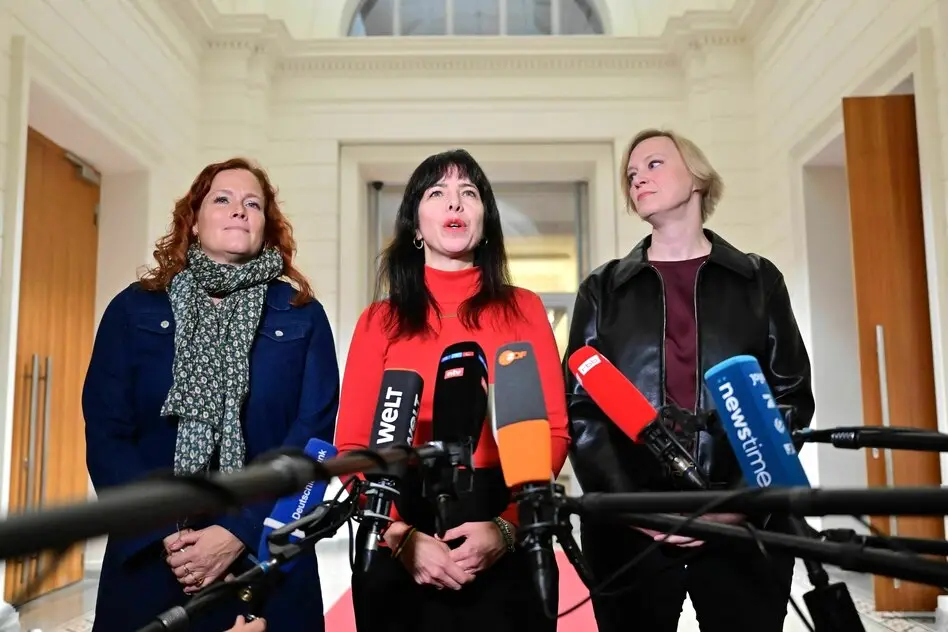
The Left Party Congress had given its approval for coalition talks less than a quarter of an hour ago when the press invitations were received on Saturday evening: Talks between the Left Party, the Greens and the SPD would begin at 10 a.m. on Monday morning - in the House of Representatives.
At exactly 10, however, it is only the Left and the Greens who hug and hug each other in room 113 of Parliament. “The SPD is coming,” Green Party state leader Nina Stahr assures a crowd of journalists and cameras. In fact, Steffen Krach, the state leader of the Social Democrats, is also in the room later.
However, in the Monday edition of the Morgenpost you can read sentences that sound completely different than the almost exuberant joy of the Left and the Greens about an imminent alliance. “Now we’re starting the coalition talks,” says Krach in the interview, “of course they can fail.”
His co-state chairwoman Bettina König seemed similarly open on Monday morning, even if she did not present failure as a possibility. “We’ll see how the negotiations go,” she says in front of room 113, as leading negotiators say a few sentences to the cameras before the conversation begins, without wanting to answer any questions.
“We will now deepen many discussions in detail,” announced Left Party leader Elif Eralp, beaming as he looks forward to a “very happy day”. The Stahr Green Party promises a government “that is there for everyone in this city, regardless of whether they voted for it or not.” A party spokesman announced that they would like to comment on the initial results early in the evening. Then the wooden door of room 113 closes, the number of which still says “Main Committee”, even though it has not met there since Corona times.
Krach's reticence in the newspaper interview is overshadowed this morning by even more skeptical SPD voices. The Left Party's noise before the election didn't exactly help either. Ten days before their election success, he said in a press conference that “the Left Party is not capable of governing.”
Since then, numerous but almost all former leading figures in the SPD have advised against a left-wing alliance, including the former Berlin heads of government Michael Müller and Walter Momper. What is new, however, is the resistance from Germany's most popular politician, the SPD defense minister.
On Sunday evening on ZDF he stood against a left-wing alliance and also supported a paper titled “Not at any price” that warned against the Left Party and Elif Eralp as head of government. The Bundestag member and former minister Karl Lauterbach and by Monday afternoon almost 1,200 other SPD members, some of them very well-known, also joined in.
Also among the supporters of the paper: Franziska Giffey. The former governing mayor and ex-SPD state leader is currently playing the most bizarre role on the Berlin political stage. On the one hand, she is the incumbent Senator for Economic Affairs and continues to represent the SPD in the Senate, which remains black and red for the time being. At the same time, however, she is taking an offensive stance against a left-wing alliance that her state executive is striving for.
Giffey is now also cautiously promoting a Kenya coalition under the leadership of the CDU. “Black-green-red must at least find a discussion,” she said on Monday morning on ARD. Among other things, Giffey accuses the Left Party of the fact that MP Vanessa Emde, who denies Israel's right to exist, still belongs to the Left faction.
Nothing will change in the group meeting on Tuesday. Even if the parliamentary group leadership from Eralp and its co-leader Tobias Schulze actually want to exclude Emde quickly, certain deadlines must be adhered to according to the parliamentary group statutes. A request for exclusion must therefore be announced at least one week before the discussion about it. Emde is also “given the opportunity to make a detailed statement at the parliamentary group meeting,” as it says in Section 3 of the statutes.
It is unclear whether the 44 parliamentary group members will even achieve the two-thirds majority necessary for exclusion. Emde could therefore still be part of the parliamentary group at the next parliamentary session on November 12th. It is also unclear how long the SPD will tolerate the current situation. Party leader Krach said last week on the ZDF talk show “Markus Lanz” that if Emde remained in the left-wing faction: “Then we will not have a coalition.”
In addition to the parliamentary group meetings, there will be another meeting on Tuesday - between the CDU, the Greens and the SPD. CDU leader Stefan Evers has invited people to discuss budget issues for the period before a new government. In this conversation, however, he also wants to offer concrete exploratory questions. SPD leader Krach accused the CDU of “Markus Lanz” of not having suggested any talks.
This Monday, however, the Left Party and its potential partners will agree that there should be further meetings, the next one on Wednesday. “We had very good conversations today,” says Elif Eralp as she stands in front of the journalists again, more than seven hours after her enthusiastic opening remarks. The core of the issue is said to have been the state budget - where, according to CDU man Evers, in his role as incumbent finance senator, up to 5 billion will be missing in the future.
Eralp speaks of “very big challenges”, but also of the fact that the country should have 400 million euros more in income annually than it currently does. Exactly how this should work is now up to the budget working group. It is one of 14 specialist working groups that is scheduled to meet by next Monday at the latest. The aim is “a solid, long-term budget strategy”.
The coalition negotiations should be completed before Christmas, i.e. in around seven weeks. But then there are the various membership decisions and the survey of the Greens. The black-red Senate will therefore live to see the year 2027.