
Germany taz
Stanišić piece in Osnabrück: Against the shittiness of the here and now
Widow Gisela is real: Saša Stanišić's stories rumble about the Yugoslav wars. Director Demjan Duran brings them to the stage in Osnabrück. more...
Deutsch (original) ·Auto-translated to English
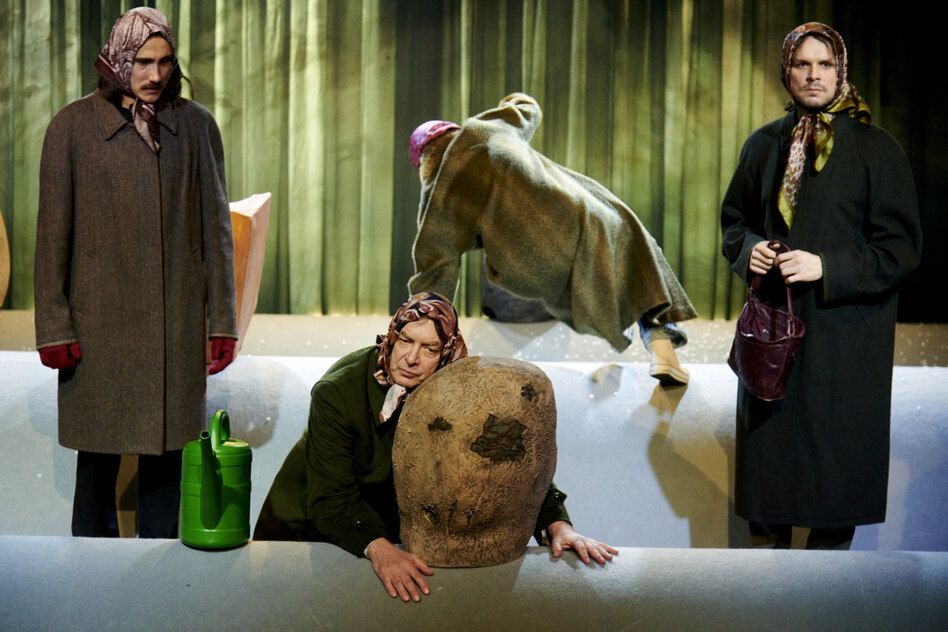
“On a hot vineyard afternoon in June 1994, Fatih throws a stone into the air …” The text projected onto the stage is gently transformed by an actor into spoken narrative text, from then on packed into the characters’ speech in a direct address to the audience and casually transferred into scenic play. This is how literary adaptation works.
The book title “If the widow wants to be addressed, she places the watering can on the grave with the spout facing forward” was not shortened for advertising purposes at the Osnabrück Theater. But director Demjan Duran left only 49 of the 256 book text pages for his dramatization.
From an immigrant perspective, these are lovingly satirically prepared impressions of strange self-evident things, quirky idiosyncrasies and frightening developments that the author encountered in the German provinces and which no longer allowed him to “sleep safely”. "Hanau. The AfD. Fight and hardship. Mother who cries silently in the kitchen in the morning before work while she butters bread. Feeling guilty in front of the cops without having made myself guilty."
This is how Stanišić describes the feeling of life in the context of poverty, exclusion, racial profiling, everyday racism, right-wing populism, social division, the threat of deportation, etc. Despite the sadness, the stories come across as empathetic, witty and with wonderfully crazy literary ideas. Duran seeks appropriate theatrical means with playful seriousness. Which don't always make sense, but are usually amusing.
Or the regulars at an anti-woken card game. They only take off their pebble-design full-head masks when someone greets a man in a Wehrmacht uniform with a Hitler salute who has had a full-sized tank delivered to his front door.
And because music is important to Duran, a service must not only be mentioned, but also acted out: the five-member ensemble intones “Kumbaya, my Lord” and “Amazing grace” until the audience hums and claps along: an interaction without any consequences in terms of content or aesthetics.
What is convincing, however, is the performative ease with which the players always act from their own unique style while constantly changing roles. It becomes clear what the director and author have in common. Both came to Germany as a result of the Yugoslav wars and grew up there. Now they are dealing with the search for identity between coming from a foreign country and arriving and belonging in a foreign homeland.
Heinrich Heine, who has already been written into the book as reinforcement, comes into clear focus as a revolutionary romantic on stage. Saša imagines encounters and exchanges about freedom, fairy tales, exile, political awakening and the feeling of marginalization.
“Are we trying hard?” speculates Michel. Saša: “The answer was correct and immediately made sense to everyone!” So the following applies: Get out of the prison of your own biography and project yourself into your own future scenarios. Escape into reality.
Of course, the performance shortens the original and does not finally bring together the plot threads and the personnel in the episode dramaturgy. But the characters blossom in a warm-hearted, pointed way and the encouraging thesis comes across the stage as an animation for action with theatrical flair.