
World · taz · · 1h
Sport and regime and Russia: you don't have to do that
Deutsch (original) · Auto-translated to English
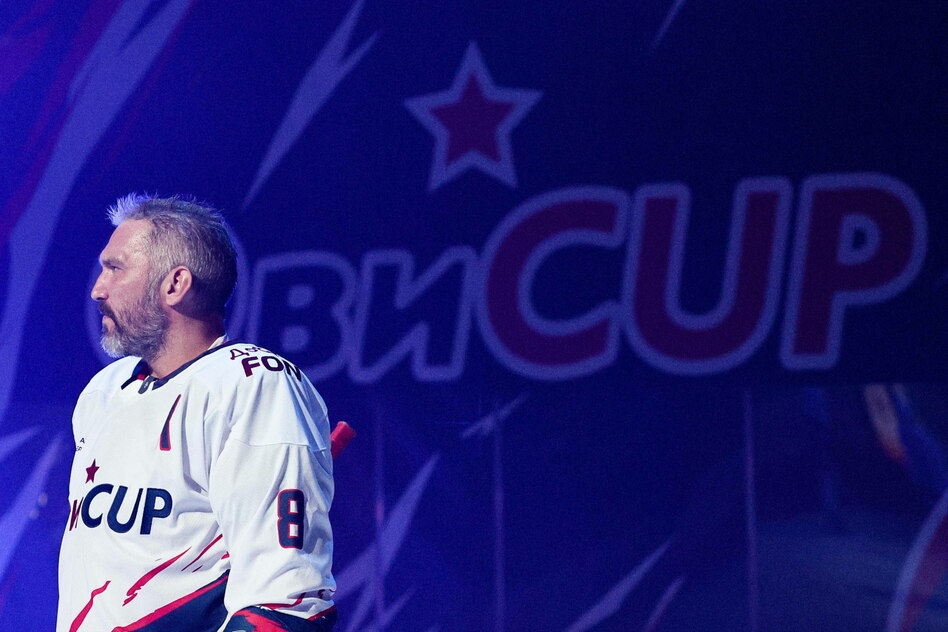
Alexander Ovechkin is one of the most famous ice hockey players in the world. No one has scored more goals in the US professional NHL league than the Russian striker. Since he shot his club, the Washington Capitals, to the title in 2018, he has been revered almost like a saint in the US capital.
The veneration for him is even greater in his Russian homeland. A sports portal described September 17, 1985, when Ovechkin was born in Moscow, as a historic day. The country's political elite are only too happy to adorn themselves with the famous sports star.
The latest example of the propaganda power of sport is a promotional video by Russian Foreign Minister Sergei Lavrov, with which he is canvassing for votes for Putin's United Russia party in the parliamentary elections that run until Sunday. Although Ovechkin was only in the second row alongside other celebrities from politics, media and culture, while Lavrov swore the audience to the election slogan “If we are united, we are unbeatable”, he was an absolute eye-catcher.
The taz is an independent, left-wing and opinionated daily newspaper. We have been arguing in our comments, essays and debate texts since the taz was founded in 1979. We often cannot and do not want to agree on an opinion. That's why you'll find some completely opposing positions here - all part of the very broad left-wing spectrum of opinions.
Ovechkin is an experienced propagandist. In 2017, he founded a “Team Putin” and brought together athletes who expressed their support for Vladimir Putin ahead of the 2018 presidential election. Like no other, he knows how to avoid questions about his opinion on Russia's criminal war against Ukraine.
And when he faces criticism from the USA, as he did after the commercial, he has an army of former athletes behind him who sit as deputies for “United Russia” in the State Duma, the parliament of the Russian Federation. The criticism only reflects the Russophobia that is common in the West, said Vyacheslav Fetissov, a former ice hockey hero who has been a Duma deputy for 10 years.
These are the small, everyday propaganda battles that are waged with the help of sport. They are just as important for Vladimir Putin as the appearances of Olympic champions at the really big propaganda events such as the one on the anniversary of the annexation of Crimea in March 2022 in the huge Luzhniki Stadium in Moscow, which was also about celebrating the recent attack on Ukraine.
How leaders like to use sporting successes to demonstrate the strength of their own nation can be seen almost everywhere in the world. The consecration games to the glory of the ruling party, which could be admired at the 2008 and 2022 Olympics in Beijing, are the most prominent examples of this.
In this respect, the appearance of the US ice hockey team with its Olympic gold medals won in Milan at the end of February at Donald Trump's State of the Union address in the Capitol is certainly one of the darkest propaganda appearances by athletes this year.
All too often, female athletes allow themselves to be exploited for such performances in praise of the nation. In Germany too, athletes should win medals primarily for the glory of their fatherland.
The sports funding law recently passed by the Bundestag states the purpose of state support for top-class sport: “In this way, Germany’s international competitiveness and national representation at home and abroad are to be strengthened.” This can be described in a friendly way with the word national marketing. However, in times of rising nationalism in the country, this can quickly turn into exactly what is rightly described as dark propaganda when it comes to Russia.
Freeing yourself from this as an athlete certainly requires great courage. The players of the Serbian national volleyball team showed this when they recently refused to applaud their President Aleksandar Vučić.
He had invited people to a reception after the Serbians won bronze at the European Championships and wanted to be celebrated for it. With their heads bowed, the athletes then marched past the dismayed-looking President. This scene should not be missing from any serious review of the sporting year 2026.
Read the full story at the source
Source: taz