
World taz
Espionage affair at Nvidia: What Jensen Huang's crash means for China
Nvida boss Huang's alleged espionage affair is being celebrated in the People's Republic. In the long term, however, the scandal is likely to harm Beijing. more...
Deutsch (original) ·Auto-translated to English
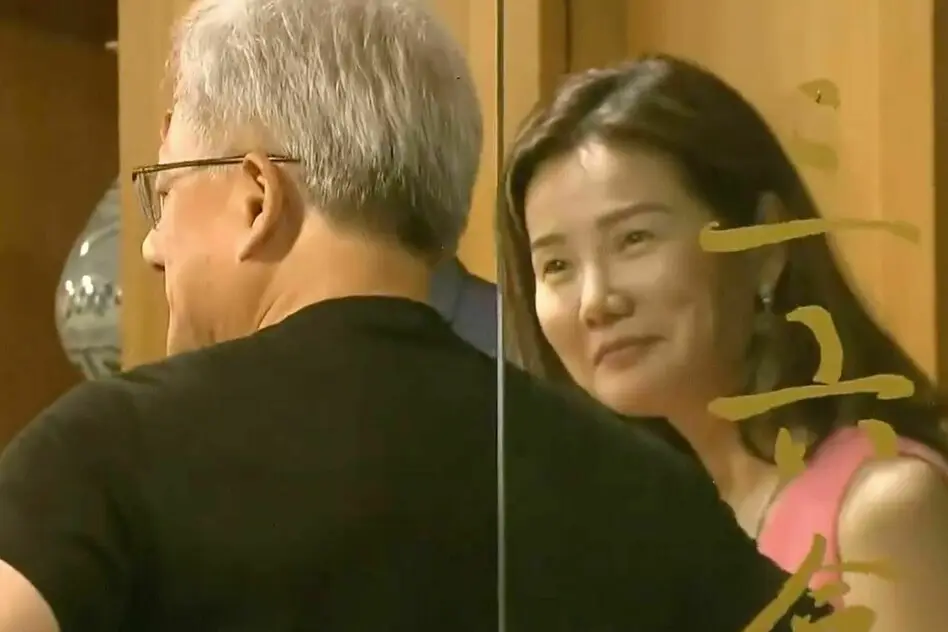
It is still unclear whether Jensen Huang's affair was actually in the service of Beijing's state security. But for many Chinese, Alice Huang is undoubtedly seen as a patriotic rebel who secured her home country access to Nvidia's high-performance chips. The fact that the 42-year-old comes from the same province as state founder Mao Zedong also contributes to her myth.
But was Alice Huang's mission actually successful? Or has it actually done the People's Republic a disservice?
An initial assessment is extremely ambivalent. In fact, the now-resigned Nvidia founder's romance with a suspected spy on Wall Street has caused company values of over $500 billion to vanish into thin air. In addition, the world's most important AI company will be significantly weakened in the foreseeable future. After all, Nvidia was heavily invested in the genius personality of Jensen Huang. All of this points to a tactical victory for China's leadership as it seeks to overtake the United States in the race for technology leadership.
At the same time, the immediate damage in the Middle Kingdom is also huge. While the US stock markets had recovered somewhat by Friday, the sell-off in Chinese tech stocks continued. Alibaba and Tencent alone, two of the country's leading Internet empires, have collectively lost over $75 billion in market capitalization. And the Hang Seng Tech Index, which tracks China's top technology firms, has fallen nearly 7 percent since Tuesday.
Above all, the long-term consequences for the People's Republic are likely to be painful. The Nvidia scandal has brought the danger of Chinese industrial espionage into greater public awareness than it has in years. And in Washington, the China hawks are currently experiencing massive tailwind among both Democrats and Republicans. The Huang case gives them strong arguments to call for further tightening of US export controls on technology to China.
The government in Beijing reacted sharply to critics. Foreign Office spokeswoman Mao Ning warned on Friday that the alleged abuse of export control measures by the USA “disrupts the stability of global production and supply chains”.
It is interesting to see how the country's most important political commentators classify the case. Hu Xijin, former editor-in-chief of the nationalist party newspaper Global Times, called Jensen Huang's resignation a "tragedy for Chinese-Americans who are not trusted in the United States." Just like Hu, a number of patriotic influencers consider the Nvidia founder to be a pawn of racist, “white America”. It is the typical anti-American reflex that overshadows almost all discourse in the Middle Kingdom.
But critics of Beijing also have doubts that Jensen Huang was actually involved with a spy. “I suspect that Alice Huang is primarily a commercial intermediary who acted for other business interests - and not necessarily as an agent of the Chinese secret service,” analyzes Desmond Shu, who was a real estate developer in Beijing in the 1990s who socialized with the “red aristocracy” in Beijing and now lives in exile in Britain as a Communist Party critic.
According to his argument, Alice Huang is much more what is called in China a “Bai Shutao,” a “White Glove.” Intended people work on behalf of entrepreneurs or government officials to arrange delicate transactions - and to conceal the real people behind them.