Germany · taz · 2h
Feature film “LifeHack”: Well hacked is half stolen
Deutsch (original) · Auto-translated to English
Sometimes the technology-saturated world feels strangely gray and overwhelming at the same time. At least when you indulge in it too much, get caught up in constant loops of reels and other “content”, and have animal videos, war pictures and purchase recommendations presented to you in quick succession. Whether YouTube, Instagram or Tiktok: Everything demands attention, is sometimes even said to be very important for your career and rarely leaves a feeling of satisfaction after its dull consumption.
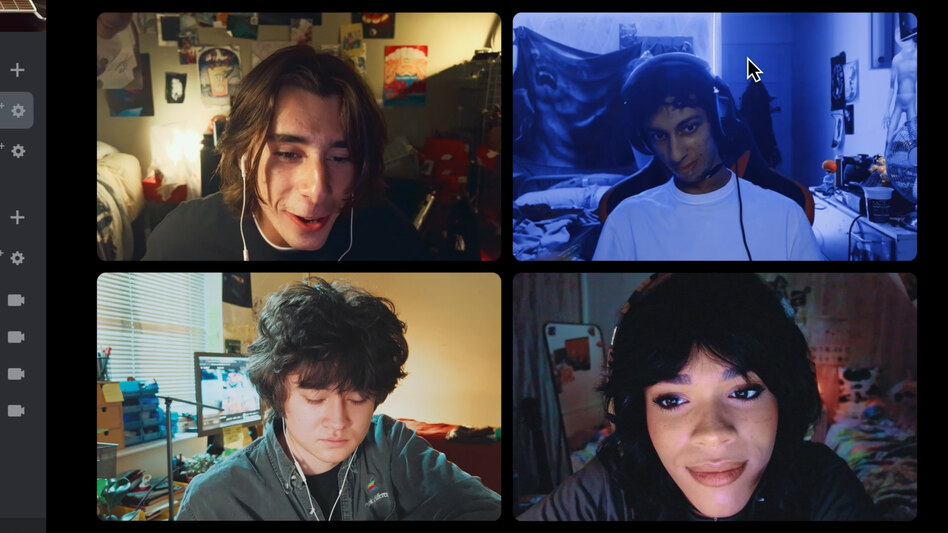
Maybe you're wondering why you should indulge in this mass of pings and pushes in film too. “LifeHack” is a so-called “desktop film”, meaning it is shot exclusively on the screens of its characters. Films like these now even form their own genre in cinema that describes the whole thing even more accurately: the “screenlife” genre. Which of course immediately raises the question – Adorno may excuse me –: Is there even a real life in the technotope?
This question certainly resonates in the new film by the still largely unknown Irish director Ronan Corrigan. But first, “LifeHack” is about so-called “script kiddies”. A text panel explains exactly what this is: It is a derogatory term coined by hackers for immature, but often no less dangerous, people who exploit security gaps on the Internet. It can also be read that the perpetrators in the “cybercrime” sector are particularly young. A short research suggests, at least in the USA, that the average age is just 19 years old.
“LifeHack”. Director: Ronan Corrigan. With Georgie Farmer, Yasmin Finney and others United Kingdom 2025, 97 min.
This is the exact age of Kyle Peters (Georgie Farmer) when he sits at a hearing at the beginning of the film. It is intended to clarify whether there is a risk that he will commit a crime again if he is allowed to use the Internet without supervision in the future. “LifeHack” thus already anticipates where all of the following will lead: The recording is made after Kyle’s release from prison. The plot tells what led him there two years earlier. But above all, he tells us why the young Briton did what he did.
Ronan Corrigan, who also wrote the screenplay for the film with Hope Elliott Kemp, first outlines the life of a student, which takes place almost exclusively online. Shooting game on “Steam”, playlist on “Spotify”, plus a parallel video chat on the “Discord” platform, which is popular with gamers. There, and only there, are Kyle's social interactions. His only friends are on until the early hours of the morning: Sid (Roman Hayeck-Green), whose alcoholic father sometimes riots in the background, Petey (James Scholz), who is groomed to achieve top performance by his mother, and Alex (Yasmin Finney), who once sold Kyle a fake ID card.
This implicitly sums up the connection between the characters around which “LifeHack” revolves: They are teenagers who primarily have to struggle with family problems and worries. If Alex's mother is addicted to pills, Kyle's absent father quickly comes into the picture. In the meantime, the son wishes him a happy birthday on Facebook, where a briefly displayed chat history shows how long he has been holding off Kyle from visiting him.
In general, you have to be quick so as not to miss any information in “LifeHack”. Ronan Corrigan and Aleksandr Kletsov quickly cut back and forth between tabs, chats and applications, messages appear and disappear again while the next window is already opening elsewhere. It can be overwhelming at first, but you get used to it surprisingly quickly. After all, you know it all too well.
It gradually becomes apparent that Kyle's father works as an IT expert in Dubai and has, to a certain extent, forgotten his wife and child at home. This also explains why Kyle comments on Petey's plans to study at Stanford with barely concealed cynicism: his friend is more qualified than most people there anyway. So why spend years dealing with mediocre programmers only to later land a stressful middle management job and lose sight of real life?
This doomsday mood, the impression of a damaged life that finds its surrogate in being constantly online, is perhaps not particularly original. But “LifeHack” convincingly brings to the screen the feeling of a young generation that is repeatedly said to have fallen into a collective depression with the pandemic at the latest.
Of all things, Kyle's father's timeline ultimately sets the "heist" plot in motion, which is what the "what do we have to lose" attitude in "LifeHack" leads to. There he shared a video of Don Heard (Charlie Creed-Miles), a tech billionaire whose behavior is sometimes reminiscent of an - admittedly slightly less wealthy - version of Elon Musk. For him, cryptocurrencies are the only real thing, but “Woke” is absolute nonsense. It quickly becomes clear to Kyle and his friends: They want to hack Heard and take the Bitcoins that he so readily brags about.
This is particularly exciting because the group moves from one clever coup to the next. They initially gain access to Don Heard through his daughter Lindsey (Jessica Reynolds). They build a fake website for a fake modeling agency, lure Lindsey with a fake casting and have Alex appear as a fake agent in the video chat. The consent of a legal guardian, which they require to conclude the contract, leads the quartet to the mother's data. A phishing email that supposedly comes from the law firm handling their divorce opens its way to their email inbox. And that's where you'll finally find the data that Kyle and his friends need to get to Don himself. Bingo.
From then on, it takes a few more hacking maneuvers and anonymous phone calls to get the sum of $100,000. The fact that “LifeHack” never gets boring is mainly due to how comprehensible each individual move is, without the film falling into lengthy explanation loops. Strangely enough, even though Ronan Corrigan never leaves the screen world, the admonition “Show, don’t tell” is consistently adhered to.
By the way, this also creates discomfort. Not only because it shows you an almost fetish-like self-documentation, but also because “LifeHack” shows the vulnerability that comes with it. More than once, the film reminds us of what an easy target we make on the Internet - and how little is generally known about the methods that can be used to spy on, manipulate and deceive people.
Above all, the film develops an incredible pull. All the more so as the young people's machinations gradually spill over into real life due to further unforeseen twists and turns: at some point it's no longer just about software hacking, but also about tangible hardware theft.
Is this pull connected to the fact that “LifeHack” has such a good command of the rules of the attention economy that the film itself tells about? That the rapid switching between applications may serve the same dopamine mechanisms as the platforms whose “aesthetics” are adopted here? Or is it mainly due to the sympathy that one develops for these young people over time?
Hard to say. One thing is certain: after an hour and a half of “LifeHack” you have an enormous need to touch grass.
Read the full story at the source →
Source: taz