
Housing taz
Exploratory results in Berlin: Is the socialization of apartments a good idea?
The Left, the Greens and the SPD want to socialize 160,000 apartments. This is controversial: politically, legally, financially. A pro and con. more...
Deutsch (original) ·Auto-translated to English
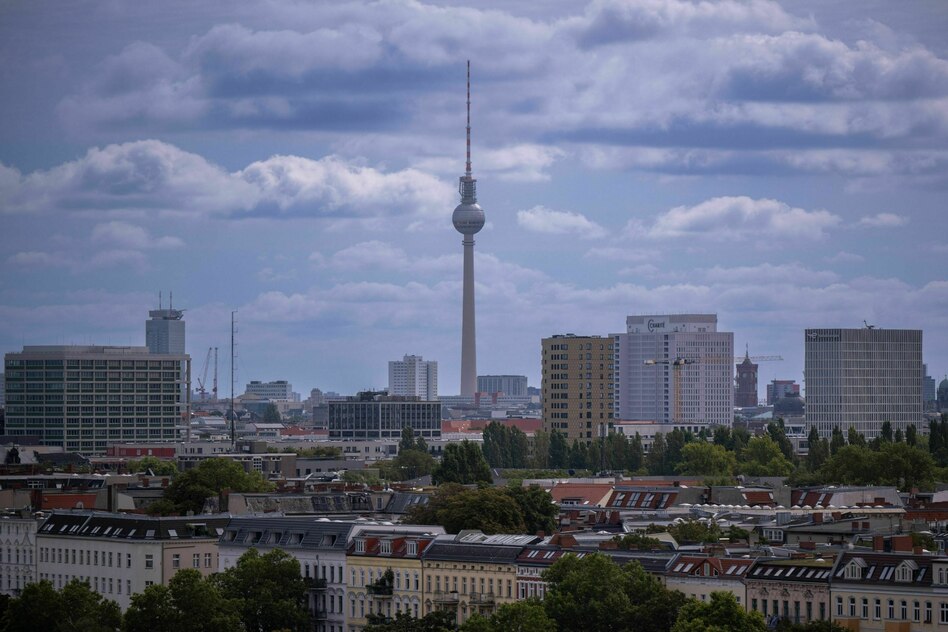
T he Left Party's idea of socializing apartments in Berlin will cost a lot of money. Can that be done?
To paraphrase the band Tocotronic: The idea is good, but the world isn't ready yet. We live under capitalism, and it is a pretty crazy idea to simply override the rules of capitalism in Berlin. Even if it involves housing, which is a human right and not a commodity.
The taz is an independent, left-wing and opinionated daily newspaper. We have been arguing in our comments, essays and debate texts since the taz was founded in 1979. We often cannot and do not want to agree on an opinion. That's why you'll find some completely opposing positions here - all part of the very broad left-wing spectrum of opinions.
Yes, leftists roll their eyes at this argument, but it's true: Which housing construction company - reliably called a "corporation" among leftists to make it sound nice and evil - will invest in Berlin if a law requires the socialization of large housing stocks? The problem: The exploratory paper from the Left Party, the Greens and the SPD promises 100,000 new building permits for apartments - which is only possible together with private investors, as even the explorers admit in their paper.
Vonovia and Co will do everything legally possible to drive up the - unrealistically low - price of 100,000 euros per apartment. It is likely that they will win. Highly indebted Berlin will therefore have to spend much more than the 16 billion euros mentioned - money that will be missing for the construction of urgently needed new apartments.
A central argument for socialization is that by removing large housing stocks from the profit-oriented market, the housing market as a whole will be stabilized because it dampens the increase in the rent index, which in turn is the benchmark for new rentals. It is only questionable whether this will still work with a much smaller number of apartments than originally thought - 160,000 apartments are to be socialized out of a total of 1.7 million rental apartments in Berlin. This will also be crucial in court: the stabilization argument is intended to legally legitimize socialization.
The proponents of socialization suffer from tunnel vision. Counter-arguments are ignored or denounced as fear-mongering by the “real estate lobby”. It is this head-against-the-wall policy that will end in disaster.
This historic and necessary project can be financed without putting any strain on the budget if it is cleverly designed. In contrast to the billions spent on armaments, the money is not simply spent and flows into the pockets of large companies. The country receives something in return: assets in the form of the material value of the apartments and a constant source of income through rents that can be used to repay the interest.
Ultimately, courts will decide on the exact amount of compensation and thus also future rents. You have to wait and see before declaring the project a failure. In the long term, tenants will be better off if the apartments are removed from market logic - even if rents do not fall or even rise moderately.
No new apartments were created as a result, that's true. However, pitting new buildings against existing ones against each other is whataboutism, a rhetorical device to distract from the problem of high rents. Investments are needed in the inventory here.
After all, 84 percent of Berliners live in rent, and 60 percent are entitled to a housing entitlement certificate - which is of no use to them because there are no rent-controlled apartments. To say that their concerns don't count and that affordable housing is not as important as new housing is a slap in the face to the majority of the population.
The fact that socialization could deter some investors is not a disadvantage: anyone who only builds high-priced apartments that can generate very high returns has no place in Berlin. There is no need for housing here at any price, it also has to be affordable.
The Berliners have made this clear, and now it's about implementing the voters' will. And given the current violent protests against high rents and living costs across Europe, this could set a precedent. This is exactly what the real estate lobby is afraid of - rightly so.