
Germany · taz · · 2h
Solos with Albanian anti-fascists: International support for Paris exile Antifas
Deutsch (original) · Auto-translated to English
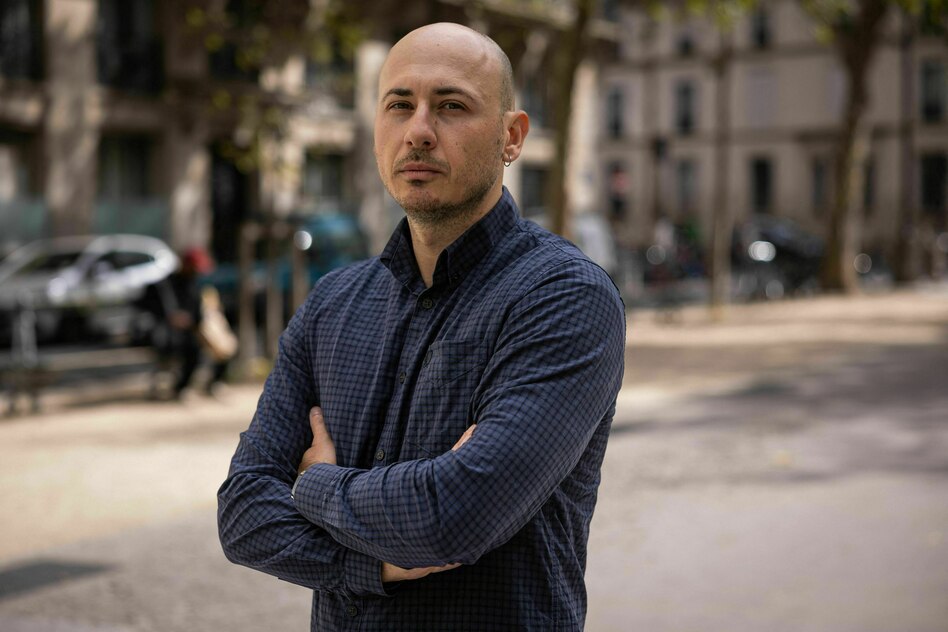
Can the anti-fascist Rexhino Abazaj, better known as Gino, be extradited to the Hungarian justice system via Germany? The French Court of Cassation will decide on this, indirectly, on September 30th.
In advance, well-known personalities from Europe have now called for solidarity with Gino in a joint declaration, including all members of the socialist party La France insoumise, the director of the Venice Film Festival, Alberto Barbera, the sociologist Vanessa E. Thompson and the author Esther Dischereit. On Thursday the text was published in several European daily newspapers (such as Humanité in France or Manifesto in Italy).
It's not just about the personal fate of the Albanian anti-fascist, but also about something fundamental, it says: the question of whether anti-fascism is criminalized across Europe. In France, a committee of cultural workers headed by filmmaker Robert Guédiguian and Goncourt book prize winner Eric Vuillard is also campaigning for Gino to be allowed to stay.
Gino is accused by the Hungarian justice system of physically attacking and injuring right-wing extremist rally participants together with other European anti-fascists at a demonstration against a neo-Nazi march in 2023. Since there are also German citizens among these, the German judiciary is also involved. In June 2024, they had already extradited Maja T. - an anti-fascist who was also accused - in a questionable cloak-and-dagger operation to Hungary, where she was sentenced to eight years in prison. According to T.'s father, he suffers from unacceptable prison conditions there.
In April 2025, the French judiciary rejected the Hungarian extradition request because the investigations and legal uncertainty in Hungary under the rule of Viktor Orbán, who is associated with the extreme right, could not rule out arbitrariness. Specifically, the court asserted in April 2025 that there were fears of disproportionate punishments, mistreatment and inhumane prison conditions in this case.
But then a new extradition request came, this time from friendly Germany. And on August 19th of this year, the Paris Court of Appeal ruled that Gino could not be transferred (directly) to Hungary, but could be transferred to Germany. The Court of Cassation will now decide on an appeal against this decision. The declaration criticizes a disproportionate sentence - Gino faces 24 years in prison in Hungary and 10 years in Germany - and the fact that the investigations against him were carried out by Hungarian authorities.
The anti-fascist Zaid A., who is accused of the same crime, is also in France. Last year, after being spared from prison, the man from Nuremberg fled to France and turned himself in to the police there. There is an extradition request against A. from Hungary, where he also faces 24 years in prison. Last week, the appeal court wanted to decide on the request, but then postponed its decision until October 7th.
Meanwhile, there is good news for another anti-fascist who is associated with the “Antifa East” complex, although not with the attacks in Hungary: Lina E. On Thursday, the Federal Constitutional Court suspended E.'s detention, which had been imposed after E. refused to testify in the Dresden Antifa trial.
However, the Federal Constitutional Court has now restored the suspensive effect of a constitutional complaint for a maximum of six months, on which a decision has not yet been made. The decision was a “right signal,” said E.’s lawyer Erkan Zünbül: “No one should be forced to accuse themselves of a crime.” After two and a half months in custody, E. is now being released from custody until a decision has been made on the constitutional complaint.
Read the full story at the source
Source: taz