
Germany taz
Smartphone-free school: “It works without it, but with it is better”
The possible next red-green-red Senate in Berlin wants to ban smartphones from primary schools. At a high school, students learn how to use their cell phones more consciously. more...
Deutsch (original) ·Auto-translated to English
The answer is clear. When workshop leader Jacob Weizman asks: “Who has ever experienced that the smartphone becomes too much?” All 26 students in a 9th grade at the Vincent van Gogh School in Hohenschönhausen point out. “Who has ever picked up the phone to send a message to a friend and realized after half an hour on Instagram that you still haven’t sent the message?” adds Weizman. Everyone reports here too. It was also unanimous on the third question: When he asked who among the 15 to 16 year olds would throw away their smartphone, the answer was – no one.
This is where Weizman comes in. In workshops he wants to give students at least a little more autonomy in using their smartphones. Quite simply, it's about picking up and activating the device five times less per hour. Or that the students actually do exactly what they had planned when they were activated. Another goal is to slightly reduce the time they spend in front of the screen.
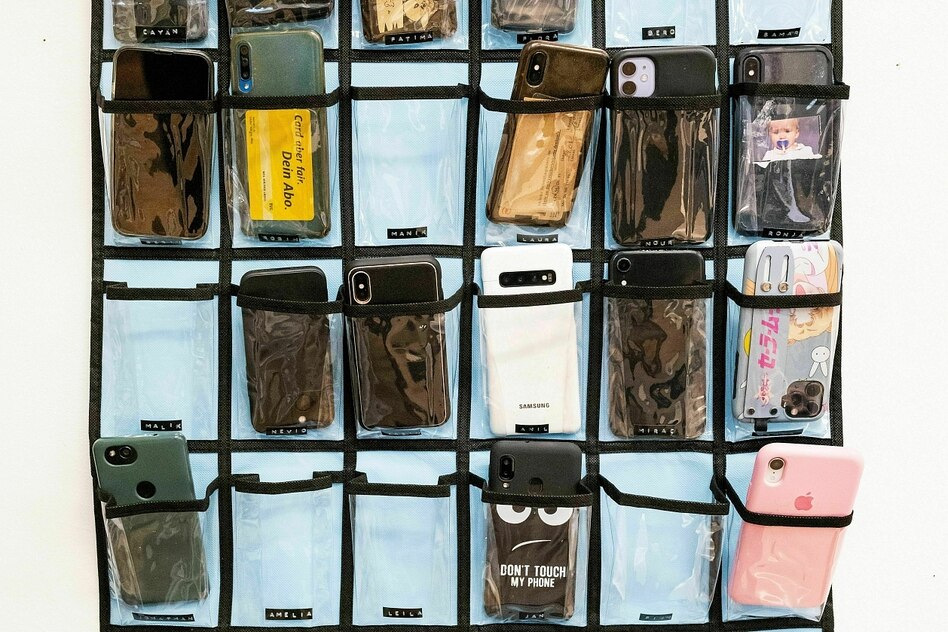
Smartphones have been banned at the Vincent van Gogh School since the last school year. Students are not allowed to turn on or use cell phones on school grounds or during school hours. If they are caught, the school confiscates the phone. Now all 750 students are supposed to practice using social media more consciously in their everyday lives through the multi-week program developed by Weizman.
In Berlin, schools are free to find regulations regarding the use of smartphones. The education administration has so far been unable to bring itself to a blanket ban. In contrast, SPD city councilors for youth and health from Marzahn-Hellersdorf, Steglitz-Zehlendorf and Tempelhof-Schöneberg pushed for a general ban on cell phones in schools around a year ago. In the exploratory paper, the Left, the Greens and the SPD have now agreed on a ban on smartphones in primary schools “so that children can learn and play in peace”.
In the opening workshop, Weizman asks the students to answer two additional questions. "Please write down: What do you think is great about smartphones? And what annoys you the most?"; he asks. The students see contact, fun, being able to look everything up, distraction against boredom and pictures as great advantages. “You usually spend too much time on your cell phone,” says one student. “You can feel pressure to always be online and not realize how much time you spend on your device,” says another.
“Over the next four weeks, you will practice how to use technology to your advantage without it being the center of your life,” says Weizman. At the end of this time, he hopes that young people will be able to shape their lives more consciously and decide for themselves how they use their smartphones, how often they turn them on and ultimately how many hours a day they devote to apps, algorithms and social media channels. “We pay with our time and attention,” Weizman tells the students and has them estimate how many hours young people spend on their smartphones on average per day.
Their answers are close to what studies say: it's an average of 7 hours a day in this age group, says Weizman, so young people activate their phones 180 times a day. “That means: every five minutes we reach for the thing,” he says, holding up his phone. “If we only activate it every 30 minutes, we would be at 32 activations per day.” And he says why he finds the 7 hours and the many activations problematic. "Not much happens during this time. Especially nothing that we later remember as an important experience or a great experience," says Weizman. “And memories are important, they are what defines our lives in the end,” he emphasizes.
“I would spend more time with my grandparents,” said one student when asked what she would do if she had two more free hours a day through less smartphone time. “I would go out with my friends,” said one student. The person sitting next to him says she would paint and draw with friends, another says she would do more exercise.
In order to do this, the students would need concrete tools: 30 minutes before going to sleep and after getting up without a smartphone; Issuing push notifications, creating offline times and having a smartphone-free bedroom are on a list that Weizman displays in the workshop.
For four weeks, the school's teachers will spend the first 10 to 15 minutes of their lessons reflecting with the students on their own use of smartphones using films or questions in order to gradually change it. The teachers are expressly invited to answer these questions for themselves and to reflect on their own usage behavior.
14-year-old Jakob says he mainly uses his smartphone to write to friends, but also spends time on Snapchat and other social media. “When I watch videos, I sometimes stay on the platform for a long time,” he says. “Once I actually wanted to go to the gym and just did it to have a short break,” he says. “And it wasn’t until three quarters of an hour later that I realized how much time had passed, and then it was too late for sport,” he says.
14-year-old Alicia says she mainly uses her cell phone when she's on the go. To text friends about where she is, to arrange to meet up, or to while away the time waiting for the bus. “I also think it’s good to have this on the way to school in case I need help,” she says. When her smartphone broke during the summer holidays, she would have spent more time with friends and her mother.
He says that he likes the times when the smartphone is deliberately turned off. “I wouldn’t say addicted, but just short of addicted,” he says. His phone was also broken for a week. “It works without it, but with it is better,” he says. At school, he would occasionally look at his cell phone in the toilet. "Many people do that, I'm not the only one. You can write that," he says. His mother can see how many hours he spends on his cell phone per day. “She then talks to me about it,” he says.
A teacher at the school says that it was the students who even demanded harsher punishment for violating the school's ban on cell phones. “If anyone gets caught for the third time, we will keep their smartphone at school over the coming weekend,” she says. In parallel to the complete ban on smartphones, the school decided to equip the schoolyard with more play and sports equipment. Meanwhile, students often sit together in larger groups during breaks and discuss or even play cards. The afternoon activities now also include watching films together or role-playing afternoons - things that the young people previously did alone at home.
“I initially had extreme concerns and feared that we would not be able to enforce a smartphone ban at school,” says Tobias Bischoff, Alicia and Jakob’s class teacher. “It’s also very convenient to park the young people in front of their cell phones,” says Bischoff. “We knew that if we really banned it, we had to offer them something too.” And: The teachers also want to try to be role models and have their cell phones in their hands less. “But situations arise where you see: We’re allowed to do it and they’re not,” admits the class teacher, who always records attendance via cell phone in the digital class register.
“We have actually been in constant competition for the students’ attention since 2015,” says Jens Frehmel, middle school coordinator at the Vincent van Gogh School. From then on, the algorithms became more sophisticated and companies introduced the “Like” button. The students “no longer achieve skills, their attention span decreases just because the cell phone is nearby,” he says. "There are strong advocates of the new media. But we experience it differently in everyday school life: the new media prevents a lot of things," he says.
After just one year of “smartphone-free school,” students can concentrate better, observes Frehmel. Nils Seidel, a psychologist at the school, confirms this. “We have a much greater risk of students becoming lonely,” he says. He also attributes increased self-doubt and anxiety to excessive smartphone use.
"Teaching time is lost. But we are also looking at the long-term effects. We think that what we are planning is more important than the specialist lessons, which are taking place at reduced volumes for this period," says headmaster Florian Hackmann. He sees the fact that they have found a clear regulation at the school without exceptions as an opportunity. "But it was a long process. I would actually like there to be a regulation from politics," he says.
Schools that decide to ban cell phones from lessons must then also consider how they will implement this. In some cases, teachers collect the devices in the morning and lock them in portable safes. But such safes are expensive. It is also sometimes unclear who is liable if a device breaks or disappears.
A uniform regulation for Berlin's schools would probably have saved them discussions with parents, says the headmaster. “Some people had problems accepting that they couldn’t reach their children around the clock,” says Hackmann. "We have almost total surveillance of children and young people. But no one monitors what they look at on their smartphones," he says. On the contrary: “The adults didn’t pay attention to what they were giving the children and what they were looking at on their devices,” says Hackmann.
And the headmaster emphasizes: “If the students here practice using the smartphone differently and get used to it, we will give them skills from which they can benefit throughout their lives.” That's precisely why the school decided to use funding from the StartChances program and offer the workshops closed to everyone.
Hackmann sees himself confirmed by the results. 670 of the students answered the survey after the workshop program. This means that the students have reduced their screen time by almost 30 percent and they have reduced screen activations by around 40 percent. Students say they exercise more, spend more time with friends and family, and sleep better. “Now we just have to make this permanent,” says the headmaster.