
World · taz · · 1h
Mercenaries for the Ukraine campaign: Russia recruits Africa's youth for its war
Deutsch (original) · Auto-translated to English
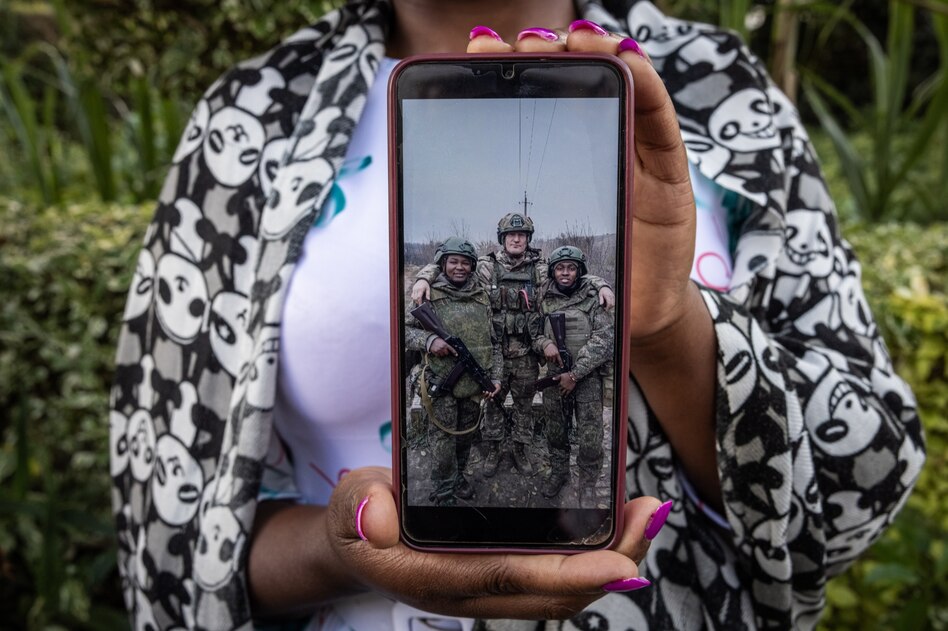
Maleck Diope said he didn't want to go back to Senegal. “I consider myself Russian.” If Senegal wanted to get him out of prison in Kyiv, he wouldn't mind. “But I won’t go back there.”
In May 2026, Diope was allowed to speak to some African journalists, including me, in a video conference from prison. Diope was captured by the Ukrainian army while fighting on the side of the Russian army.
The young man was once a student in Dakar. After receiving his first degree, he looked for a way to continue his studies. In 2021 he received a scholarship to study in Russia. But when the country invaded Ukraine in 2022, he joined the Russian army.
Colleagues from 16 African countries are taking part in the 5th Africa workshop of the taz panter foundation. A 64-page, elaborately designed magazine was also created. It can be ordered now by email to stiftung@taz.de with the subject “Afrika-Magazin” and your name and postal address. Thank you!
The magazine's texts also appear here on taz.de.
Would you like to support the taz Panter Foundation:
• or via the foundation’s account details:
Diope is not an isolated case. Africans were recruited in large numbers by Russlad to fight against Ukraine. Ukrainian authorities speak of a total of 2,982 recruits from 37 African countries. 772 of them are said to come from Kenya, 420 from Egypt, 74 from Algeria, 73 from Mali, 48 from Morocco, 19 from Senegal, 17 from Tunisia, 6 from Libya and 3 from Mauritania. 486 were killed at the front, and Ukraine took 35 prisoners of war from 17 African countries.
Diope is one of them. During the video conference, he and the other African prisoners gave various reasons why they decided to fight on the Russian side: a better life, for example, and the wages were attractive. They saw no prospects for themselves in their countries of origin in Africa because of the rampant corruption.
For a long time, most people in West Africa were not interested in what was happening in Ukraine, even though the war had a direct impact on their lives through increased prices for food and other imported goods. But now the situation has changed. Because Russia is massively recruiting Africans for its army.
Mauritania, with its population of just over five million, has also been targeted. According to Ukrainian authorities, at least three fighters from Mauritania have joined the Russian army and are fighting on the front lines. The actual number could be even higher.
Support the taz panter foundation and its international projects with a donation. Learn more
Russia uses various recruitment tactics to target young people. The most common scams used are social media. The NGO Truth Hounds in Kyiv documents the procedure. Accordingly, there are accounts on Facebook and Instagram that encourage young people in Africa to apply for vacancies in Russia.
The contracts are written in a language that those recruited do not understand. And after signing, the young men find themselves in the army - with no chance of returning. Truth Hounds reports that many people come to Russia without knowing they would go to war. In the past, there were some volunteers who joined the army for “ideological reasons,” Truth Hounds said. Today, economic reasons played a role. Many are promised a passport and Russian citizenship.
However, they would not receive this. Mouhamed Jiop is a Senegalese journalist based in Mauritania who covers the Sahel for national and international media, including Voice of Africa. “African governments must inform young people through educational campaigns about the consequences and dangers that they may face if they join the Russian army during a military conflict,” he says.
Some of the recruits, Jiop says, compared their decision to the decision to work as local personnel for armies in other countries, such as the United States. But that is misleading, says Jiop. "Many joined the Russian military only after the war had already begun. This is completely different than in peacetime." It is very important to monitor the activities of these fighters while strengthening communication between their home governments and their families. Such efforts, he believes, could strengthen accountability, put greater pressure on those involved and help prevent further recruitment.
The Coordination Center for the Treatment of Prisoners of War explains at a meeting at its headquarters in Kyiv that Ukraine has forwarded information about all prisoners to the embassies of their respective countries. However, some of these countries have not yet taken any steps to discuss the issue.
Russia would not take back prisoners of war from Africa as part of prisoner exchanges with Ukraine. This is critical for their situation: They are fighting on the Russian side, but there is neither the possibility of sending them back to Russia nor to their home countries.
The Mauritanian journalist Eghrini Meinouh points to the “significant geostrategic challenges” that the Russian presence in the Sahel has brought about. Russia has intensified relations with coup governments in Mali, Niger and Burkina Faso in recent years. Russia's “Africa Corps,” which emerged from the Wagner mercenary group, has expanded its activities in the region. Meinouh sees a connection to the “systematic recruitment” of young people from these countries – through financial incentives and military or technical training.
He fears that these activities will worsen the security situation in the region. “This promotes a culture in which violence is viewed as a means of political change,” says Meinouh. In the future, young people could be more willing to question state authority through violence - thereby exposing the region to ongoing instability and conflict.
African countries are now aware that Russia is targeting young Africans in its recruitment. But few governments have taken action to stop them. Mauritania and its neighboring states are not included, which could result in even more people being sent to the front.
Prisoner Maleck Diope reports being treated well in Ukrainian custody as a prisoner of war. However, he is waiting for Russia to take steps to release him. “I believe that even more young people will join the war if African governments do not change,” he says at the end of the video call. They would fail to offer prospects to the continent's youth.
Read the full story at the source
Source: taz