
Germany · taz · · 1h
Shida Bazyar's speech at the book prize: “There is no minority that does not have reason to worry”
Deutsch (original) · Auto-translated to English
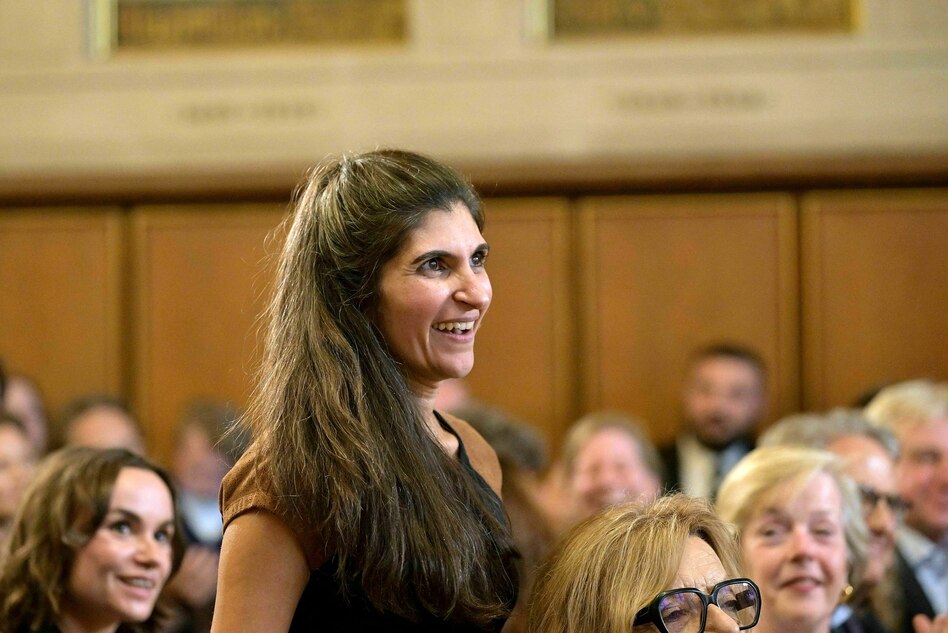
A brief moment of silence, a moment of collective pause – that can be something unexpected, something precious. Especially when it arises in connection with such a nonsensical event like the Frankfurt Book Fair, which, as the author Rainald Goetz once put it succinctly, is actually about “blabbering away”. The writer Shida Bazyar created such a moment, precisely when she was awarded the German Book Prize.
An award ceremony like this has its own rules. It should be entertaining, but not below standard. It should follow a well-rehearsed routine, but not too routinely. It should offer surprises, but not too exciting ones. In short, you should enjoy watching, but - apart from the name of the award winner - don't expect any revelations.
That's how it was on this Monday evening in Frankfurt's Römer. Accident-free moderation, intelligent greetings, professional film recordings in which the shortlisted candidates were introduced, everything went smoothly. That's how it was until Shida Bazyar's name was mentioned and the writer was invited to the stage to receive the award certificate and, if she wanted, to say a few words of thanks. She wanted. And from then on everything was different.
She couldn't deliver a happy acceptance speech, said the writer, and you could feel it through the live stream of the event right up to your desk at home: the audience present held their breath at that moment, and they themselves turned their full attention to their device. On such occasions we are used to authors who are speechless with happiness before they actually say anything.
The excitement is as understandable as the happiness. They have been working on their current novel for years, and now they are receiving a cornucopia of attention for it and a high circulation, while at the same time the tension of being a candidate is easing. Adrenaline reigns supreme.
But Shida Bazyar appeared composed. Not clarified, but surprisingly distant. And in her short acceptance speech she explained this. She wrote a novel about the history of the place where she grew up, she said, and in the process she came across expulsions and refugees, racism and anti-Semitism. She didn't say that as an accusation, but as a statement. And it's simply true: whoever drills in this country in the past will find these topics.
Many people now do this based on the public lists of NSDAP members and meet members of their own family. This didn't happen to her with her own family, said Bazyar. But based on her hometown, it just happened to her. Heimesbach is the name of the town in the novel, Hermeskeil in reality.
Like so many places in Germany (which ones don't?) it has a Nazi history. In the afterword to her novel, the author reveals that a historical study motivated her to write the novel. It is called: “Jews in the Gaumusterdorf – On the trail of former Jewish neighbors in Hermeskeil”. So she dug into the past.
All of this vibrated in this moment of pause at the awards ceremony. Shida Bazyar was happy to receive recognition for her novel The Gaps, but it didn't seem right to her to do so without reservation, since that novel is about people who were persecuted, terrorized, and murdered. This reaction is more than understandable, especially in a situation in which the expulsions of groups of people from German soil are once again being discussed publicly. Racist and anti-Semitic crimes are at an all-time high, says Shida Bazyar. “There is no minority at the moment that doesn’t have reason to be concerned.”
And at the same time, her reaction reveals something about a possible truth in literature: real human destinies lie behind it. By the way, “The Gaps” is a very good novel. We wish him many readers.
Read the full story at the source
Source: taz