
Germany · taz · · 2h
Swiss neutrality: Maximum neutrality
Deutsch (original) · Auto-translated to English
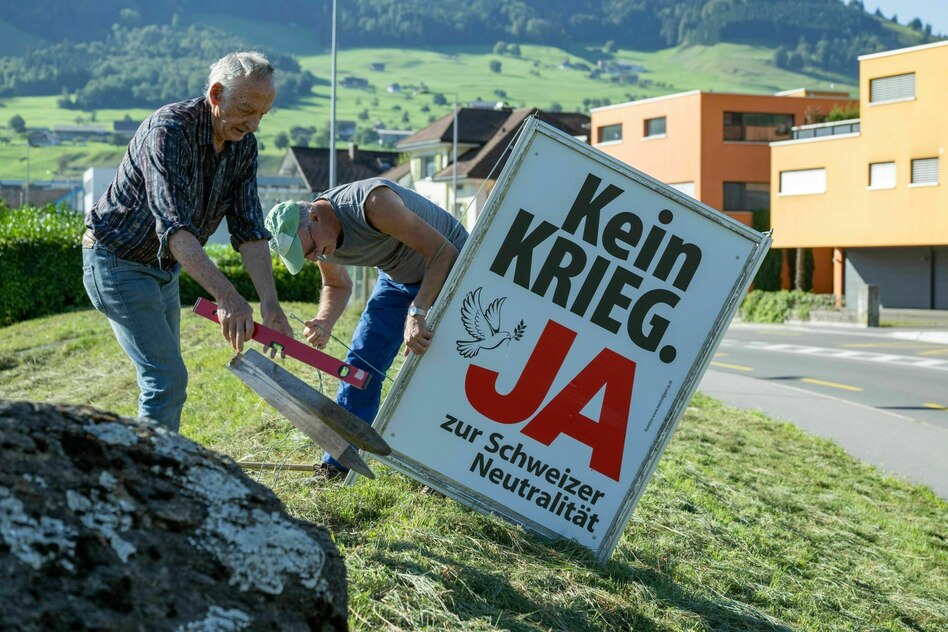
When Swiss citizens are called to the referendum on Sunday, nothing less than the country's political neutrality is at stake. This was the aim of the Swiss People's Party (SVP), which wants to keep the country as neutral as before.
The neutrality requirement has a long history. One of the most persistent myths and legends about Swiss statehood are the Helvetians - a Celtic tribe that settled in what is now Switzerland. All we know about them is what Julia Caesar, the Roman governor in Gaul, reported about his wars with them in Gaul. Under the pressure of the invasion of Germanic tribes, the Helvetii decided to leave their inhospitable and barren settlement area to the west, destroy their houses and stop taking food with them. Roman troops prevented them from passing through what is now France.
Although nothing precise is known about the Helvetians other than archaeological evidence such as coins, weapons and graves, a dark memory of them persists in the Latin version, the official name of Switzerland to this day: “Confoederatio Helvetica”, abbreviated to CH. This did not prevent the self-appointed custodians of traditional Swissness and its myths in the Swiss People's Party from distilling Switzerland's other myth - neutrality - into an initiative to supplement the neutrality article in the federal constitution. The referendum will take place on this next Sunday. The SVP of amateur historian and billionaire Christoph Blocher is the strongest party in parliament and has two ministers. But for the initiative, which is floating in the popular current of sovereignty madness of current European nationalism, the prospects of a majority among voters and the cantons do not look rosy.
The history of the concept of neutrality also provides little information. Even the nine-volume standard work by the Basel historian Edgar Bonjour from 1970 (“History of Swiss Neutrality”) remains almost silent in this regard. In 1962, Bonjour received exclusive access to the files in the federal archives that were closed to normal citizens from the Bern government for his studies and used an auxiliary construction, “old Swiss” neutrality. Because a term was missing until the early modern period. In contracts, “neutrality” is replaced by “impartial behavior.�� It was not until the 16th century that the terms “neutralité” and “neutralità” became common in French with the lawyer Jean Bodin and in Italian with the philosopher Niccolò Machiavelli and the politician Giovanni Botero.
Georg Kreis, a student of Bonjour, foresaw in a 1976 article in the then left-liberal national newspaper that Bonjour's work did not mark the end, but rather was the beginning of the complex history of Switzerland in the Second World War. Because Swiss politics at the end of the 20th century had become increasingly hotly debated nationally and internationally because of the National Bank's gold trade, the fate of dormant assets of refugee Jews in the safes of Swiss banks and the inhumane refugee policy between 1939 and 1945, and the maelstrom of rumors abroad, the Bern government convened an "Independent Commission of Experts Switzerland - Second World War" (UEK) at the end of 1996. This presented its 550-page final report in 2002.
is a German historian and journalist. He was born in Switzerland.
This was followed by 25 special volumes, some of them very detailed, by internationally renowned authors with legal opinions and historical analyses, which gave Switzerland, for the first time, a picture without nationalistic garlands and bigoted self-deception. When the UEK final report was presented, Die Zeit spoke of a “victory of the left-wing view of history”. And Jean-François Bergier, the president of the UEK, confirmed in a Swiss newspaper that he and his team demonstrated an “exemplary willingness to rethink”.
The government and the majority of the large chamber of parliament rejected the initiative, which will be voted on on September 27th, with 124 votes against and 65 votes in favor. In its handout for voters, the government emphasizes that the initiative to supplement the neutrality norm only contains demands that are already met by current Swiss political practice - unlike before. Which would make a change to the constitutional norm obsolete.
The SVP's rhetorical exaggeration of neutrality as a “protective shield that has made Switzerland strong” corresponds to the chauvinistic slogans of the right, but lacks any historical reality and is pure party propaganda.
The SVP's demand that Switzerland should only play a role as a mediator in conflicts between states also hits open doors. Because behind the demand there is probably only the SVP's motive to prevent aid to the attacked Ukraine in the future. Just as the party considers development aid for other countries to be a waste of money and fights it with sometimes only thinly disguised racist arguments.
Only the demand to amend the constitution and oblige it to comply with UN sanctions contains a grain of substance. Before Switzerland became a UN member in 2002, it circumvented the UN ban on delivering to the racist apartheid regime in South Africa - in the interests and under pressure of the domestic arms industry and the powerful big bank lobby. This is all long outdated - only the SVP, which is backward in every respect, hasn't noticed it yet.
Read the full story at the source
Source: taz