
World · taz · · 1h
School protests also in Belgium: “We have our own demands”
Deutsch (original) · Auto-translated to English
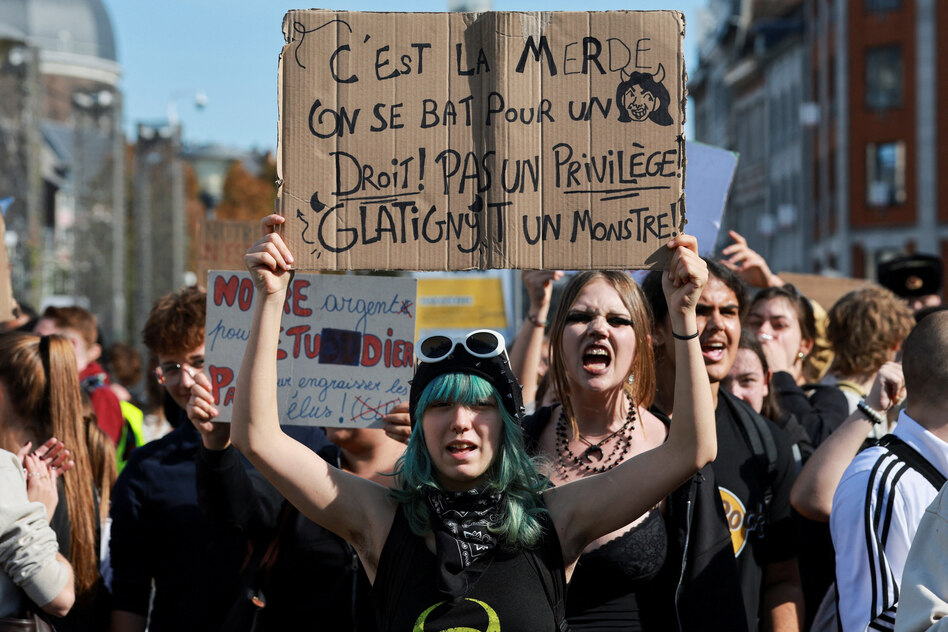
The Athénée Charles Janssens secondary school in the Ixelles district is just a stone's throw from Brussels' European Quarter - and is on strike. But the EU officials and diplomats who frequent the busy area in the city center have so far paid little attention to the student strike in Belgium.
All eyes are on France, where barricades are already burning. But Belgium? That hasn't been an issue so far. The Athénée Charles Janssens has been on strike since October 1st. “Toujours en colère – still angry” is written on a banner at the main entrance.
Still: This refers to the strike movement that has been keeping Belgium's schools in suspense for months - largely unnoticed by the public. It started with the teachers who protested against overtime and budget cuts of 500 million euros (until 2029).
Now the students are also taking to the streets. In addition to the Athénée, ten other schools in Brussels were on strike on Wednesday. The movement is likely to expand until Friday, when the Belgian unions have called for a nationwide day of protest.
Has the strike wave spread from France to Belgium? No, they say in Brussels. “We follow closely what is happening in France,” says one student. “But we have our own demands.” In addition, the problems are not the same.
In Belgium, the main issue is the tough reforms that Education Minister Valérie Glatigny has prescribed for schools and universities. The increase in registration fees for universities and colleges to 1,194 euros per year is particularly met with resistance.
The protesters say that hardly any student can afford that anymore, as it would ruin their future. Overcrowded classes, overwhelmed teachers (they have to work longer hours) and the shortage of teachers, which leads to lesson cancellations, also cause frustration.
Some reforms have been implemented since the start of the new school year at the end of August, so teachers and students are only now being confronted with the effects. However, many bitter pills are still in the “pipeline” – because Belgium is heavily indebted and has to make massive savings. The fact that pensions are being cut, unemployment benefits are being overhauled and the education system is being “streamlined” has already led to several large strike movements in the country - without any result: the liberal-conservative government and Prime Minister Bart De Wever are turning a deaf ear.
Now the danger is growing that frustration will turn into violence - as happened on Tuesday in Liège, where riots led to more than 50 arrests by the police. “We don’t want violence,” is what they say in Brussels. But Education Minister Glatigny is fueling the anger.
The right-wing liberal minister demands that the students should end the strikes immediately and return to the classrooms. At the same time, she accuses teachers of inciting students to violence with false information. “Some actors in the education sector are acting as arsonists,” claimed Glatigny. This is “unacceptable”.
That doesn't have a calming effect. After all, the minister agreed to hold talks with students on Wednesday. But she doesn't want to back away from her controversial reforms. Prime Minister De Wever also remains tough: so far he has not said a word about the wave of protests; His government apparently wants to wait out the crisis.
Read the full story at the source
Source: taz