
Germany · taz · · 3h
Debt and dependency in Malawi: When there is a lack of foreign exchange
Deutsch (original) · Auto-translated to English
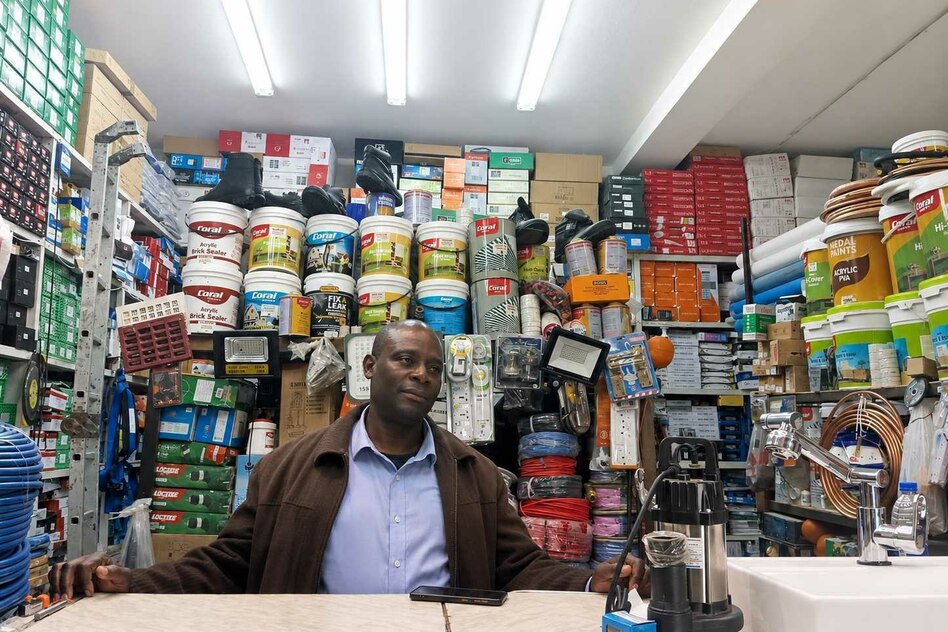
Every morning when Edward Mbeleko opens his shop in the center of Malawi's metropolis of Blantyre, one question is on his mind: Will he get enough foreign exchange to replenish his stocks?
Mbeleko sells electrical appliances and sanitary supplies. He imports most of the goods himself. But US dollars have become scarce. According to Mbeleko, suppliers keep increasing their prices and some goods can only be reordered after a long waiting period. Customers feel the consequences. Those who used to buy larger quantities can now often only afford a little. Others go home without shopping at all.
“When we apply for foreign currency at the bank, we have to wait longer and longer - and in the end we still get nothing,” says Mbeleko. That's why he and other traders are forced to buy dollars on the black market - at completely inflated rates. These costs are reflected in the prices of the goods, says the retailer. It has therefore been difficult to run the business for several years. Prices are constantly fluctuating, while many customers are increasingly having difficulty being able to afford the goods.
According to Mbeleko, he never followed the negotiations between the government and international lenders. But the negotiations determine his everyday life: They manifest themselves in late deliveries, rising prices and customers who put goods back on the shelf as soon as they exceed their budget.
Colleagues from 16 African countries are taking part in the 5th Africa workshop of the taz panter foundation. A 64-page, elaborately designed magazine was also created. It can be ordered now by email to stiftung@taz.de with the subject “Afrika-Magazin” and your name and postal address. Thank you!
The magazine's texts also appear here on taz.de.
Would you like to support the taz Panter Foundation:
• or via the foundation’s account details:
Mbeleko's situation highlights a problem facing Malawi and many other African countries: What does economic sovereignty mean when decisions about one's own economy are increasingly shaped by global financial systems?
Malawi gained political independence in 1964. However, the country is still fighting for greater economic independence today. Foreign exchange shortages and weak economic growth have forced governments to borrow heavily at home and abroad to finance development projects and ongoing government spending. Today public debt is around 75 percent of gross domestic product. This severely limits the government's financial flexibility.
The Malawian national budget for the year 2026/2027 amounts to a total of around eleven trillion Malawian kwacha, the equivalent of 6.8 billion US dollars. At the same time, there is a budget deficit of almost 3 trillion kwacha, which corresponds to around a tenth of GDP. And so public interest payments alone are estimated to grow to around 2.8 trillion kwacha - almost a quarter more than in the previous year. The Malawian state will probably have to take out new loans this year in order to finance the budget deficit and be able to service debts.
The Malawian economist Marvin Banda does not consider borrowing in itself to be unusual. Every country takes on debt. “The crucial question is how efficiently we use the funds and whether the investments generate enough economic growth to be able to repay the loans,” says Banda.
Support the taz panter foundation and its international projects with a donation. Learn more
Bertha Bangara Chikadza, lecturer in economics at the University of Malawi and president of the Economics Association Malawi, sees it similarly. For low-income countries whose own income is not sufficient to cover growing investment needs, borrowing remains an important source of financing. “The question is whether the debt remains sustainable in the long term and whether it enables sustainable development,” she says.
Both economists agree: Foreign financing gives countries access to capital that would otherwise not be available to them. But such partnerships come with conditions. These include fiscal consolidation, reforms in public financial management and measures to stabilize the overall economy. They are now an integral part of the programs of international institutions such as the International Monetary Fund (IMF).
Malawi's budget deficit of 9 percent of GDP must be reduced and the tax system reformed. “If the government fails to meet these targets, capital inflows could fail and the economy could fall into default,” says Chikadza.
Every state budget becomes a balancing act: On the one hand, urgently needed investments in social and economic development must be financed. On the other hand, public finances must remain sound enough to ensure access to financing in the future.
The decisions that are made in ministries, financial institutions and capitals are translated into exchange rates and purchasing power and also arrive at the counter of the trader Mbeleko in Blantyre. If things are going badly, more and more customers ask themselves: Can I still afford this?
Malawi is currently negotiating with the IMF on a program that will provide the country with much-needed foreign currency while signaling to other international lenders and development partners that Malawi is on a sustainable fiscal path. It would be an important financial support for Malawi. But at the same time there is growing concern that the country could be forced to devalue its currency again, as it did in 2012, 2022 and 2023. Rising import prices would be the direct result.
Critics fear that this would further weaken the already fragile economy and further fuel inflation. In June, Finance Minister Joseph Mwanamvekha dismissed fears that currency devaluation could be part of the new IMF program conditions. The government is focusing on consolidating public finances in order to stimulate growth driven by the private sector.
Economists like Banda, meanwhile, emphasize that economic sovereignty cannot be achieved by replacing one external partner with another. “Rather, it comes from strong institutions, productive industries and an economy that can generate enough of its own wealth to finance its own goals,” he says.
Read the full story at the source
Source: taz