
Politics taz
Battle of Brokdorf: Lost on the construction site, won in court
The anti-nuclear movement brought hundreds of thousands onto the streets at the end of the 1970s. The state tried to stop the protest - without any right to do so. more...
Deutsch (original) ·Auto-translated to English
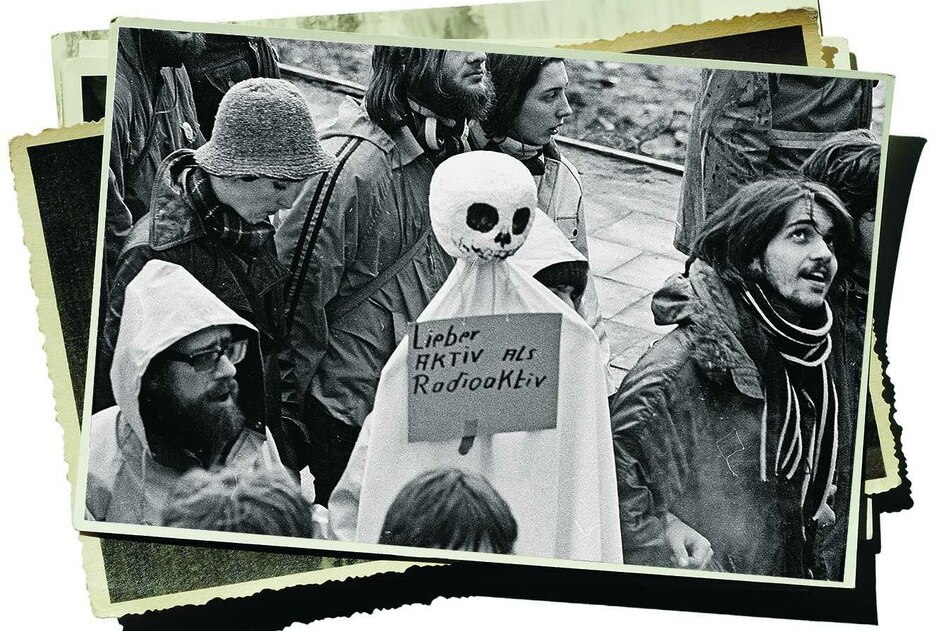
They come at night, police units in riot gear. It is October 26, 1976, and they arrive to cordon off a construction site with barbed wire in the town of Brokdorf an der Elbe near the town of Glückstadt, Schleswig-Holstein. One of the most powerful nuclear power plants in the Federal Republic is to be built here, shortly before the mouth of the Elbe into the North Sea.
To ensure that nothing goes wrong again, the state is trying to create clear conditions right from the start of construction. After all, the anti-nuclear movement had managed to prevent projects elsewhere with its protests. In Wyhl, for example, in the deep southwest of the Federal Republic, demonstrators occupied the construction site from February to November in 1975. Two reactor blocks of the 1,300 megawatt class were to be built there. Under the slogan “Nai hammer gsait,” “No we said,” the people prevailed and the nuclear power plant was never built.
Just four days later, on October 30, 1976, around 6,000 people gathered at the Brokdorf construction site for the first large demonstration. With speeches and singing, they go to the Wilstermarsch, the lowest accessible place in Germany. But then parts of the demonstration try to overcome the heavily secured construction fence.
They bridge the moat that had been dug around the building site with lumber and try to occupy it again. The police used tear gas and water cannons, and those involved denounced the use of batons and dogs. The police prevented the occupation. But the demonstration marked the beginning of what would later go down in history as the “Battle of Brokdorf”.
On the one hand, there is the promise of the energy companies that nuclear power will become so cheap that it is hardly worth installing an electricity meter. On the other hand, there are the risks of nuclear power and the unresolved question of nuclear waste, which will remain dangerous for hundreds of thousands of years. Here state violence and threatening gestures, there an anti-nuclear movement with growing numbers: on November 13th, 30,000 people were already demonstrating against the power plant.
A real battle ensues. In particular, the use of tear gas against peaceful demonstrators was later sharply criticized. From now on, Brokdorf is no longer just about nuclear power, but also about how the state deals with basic democratic rights - such as the right to freedom of assembly and freedom of expression. In February 1977, 50,000 people came.
You are reading a text from our future department. If you're interested in more positive perspectives, subscribe to TEAM FUTURE, the constructive newsletter on climate, knowledge, utopias. Every Thursday you will receive an email from us with strong thoughts for you and the planet.
🐾 Sign up now for the TEAM FUTURE newsletter – free of charge
In the same year, Robert Jungk's book "The Nuclear State. From Progress to Inhumanity" was published. The futurologist not only describes the technological risks of nuclear power. He also explains why it pushes societies towards surveillance, secrecy and authoritarian power structures.
In February 1981, more than 100,000 people marched to the construction site - even though the Lüneburg Higher Administrative Court banned the demonstration. Around 10,000 officials, including the Federal Border Guard, are on duty. It was the largest police operation in the history of the Federal Republic to date.
It has consequences. The anti-nuclear movement is taking the ban on demonstrations to the Federal Constitutional Court. It will take four years until the verdict is reached. The protest cannot prevent the construction of the Brokdorf nuclear power plant; The power plant will not be taken off the grid until the end of 2021, after several incidents. But the demonstrators are right in court. In 1985, Karlsruhe ruled: “The right to assemble unhindered […] has always been considered a sign of the freedom, independence and maturity of self-confident citizens.”